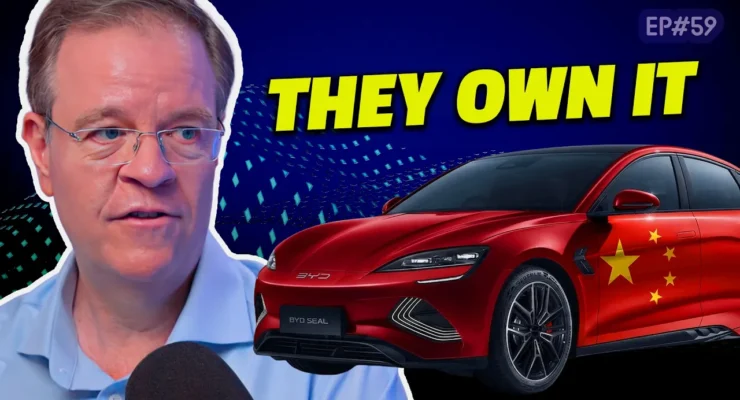
The Hidden Risk in Australia’s Battery Boom
Australia is racing ahead with rooftop solar and battery adoption, but beneath the surface sits a growing problem we’re not talking about enough: we are almost entirely dependent on overseas battery manufacturing.
At the same time, governments are pouring billions into battery rebates and energy transition programs without addressing where those batteries come from, how resilient the supply chains are, or what happens if global conditions change.
This isn’t just an energy issue. It’s an economic and national security issue.
The Energy Transition Is Real — But Fragile
Australia’s shift toward electrification is accelerating. More homes are installing solar, batteries, EV chargers, heat pumps and all-electric appliances. That means electricity demand is rising, not falling — and storage is becoming essential to keep the system stable.
Batteries are no longer optional add-ons. They are core infrastructure.
Yet almost all residential and grid-scale batteries installed in Australia are imported, often relying on complex global supply chains concentrated in just a few countries.
That creates a vulnerability we’re largely ignoring.
Why Battery Manufacturing Equals Energy Security
In a world of increasing geopolitical tension, supply chain disruptions, and trade disputes, assuming unlimited access to overseas batteries is risky.
If shipping routes are disrupted, factories shut down, or export priorities change, Australia could quickly find itself short of the very technology it now depends on to keep the lights on.
We’ve seen this before with fuel security, medical supplies, and semiconductors. Batteries are heading down the same path — except this time, they sit at the heart of our electricity system.
The Rebate Problem: Incentives Without Strategy
Battery rebates are helping households adopt storage faster, which is positive. But rebates alone don’t build capability.
Right now, public money is largely flowing offshore to pay for imported hardware, with limited requirements around local manufacturing, local skills, or long-term industry development.
That means Australia is subsidising demand without strengthening supply.
It’s a missed opportunity to:
Build domestic manufacturing capacity
Create skilled jobs
Develop local expertise in advanced energy systems
Improve long-term resilience
Without a broader strategy, rebates risk locking in dependence rather than reducing it.
Builders vs Bureaucracy
Australia has no shortage of engineers, innovators, or companies willing to build advanced energy technology locally. What holds many back is complexity, red tape, and policy uncertainty.
Approvals take too long. Support programs are fragmented. Long-term signals are unclear.
If we want batteries made here — not just installed here — governments need to shift from managing the transition to actively enabling it.
The Bigger Question Australia Needs to Answer
The real issue isn’t whether batteries are important. That debate is over.
The question is whether Australia wants to:
Simply buy the energy transition, or
Build it
If batteries are critical to our future electricity system — and they are — then treating manufacturing, supply chains and skills development as side issues is a serious strategic mistake.
Australia has the resources, the talent and the demand. What’s missing is alignment.
And until that changes, our clean energy future will remain more fragile than it looks.