How Australia’s Clean Energy Push Is Creating a Hidden Waste Crisis
Australia is spending $2.3 billion in taxpayer funds on battery rebates, positioning it as a major step forward in the clean energy transition. But beneath the headlines sits an uncomfortable truth: this policy is accelerating the premature replacement of perfectly functional solar systems — and sending thousands of panels to landfill.
This is the hidden cost of Australia’s renewable energy boom, and it’s a problem very few people are talking about.
When “Premium” Solar Becomes Waste After Just 5 Years
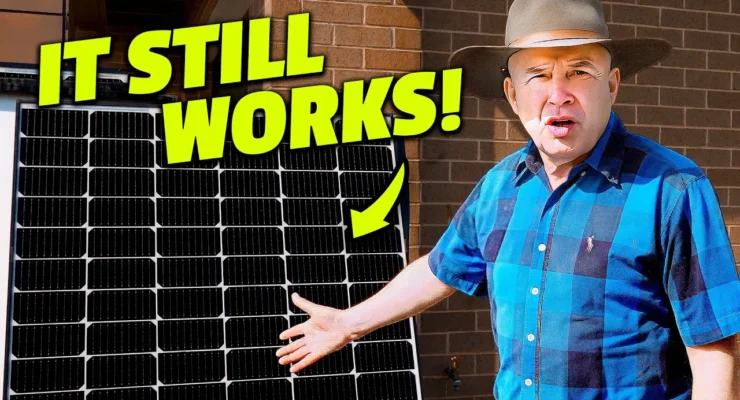
Five years ago, LG solar panels were the Rolls-Royce of the industry. They were sold with 25-year warranties, marketed as premium, long-lasting technology, and installed on rooftops across Australia with confidence.
Today, many of those same panels are being removed — not because they failed, but because the economics of solar have changed faster than the technology.
- LG no longer manufactures solar panels.
- Feed-in tariffs have collapsed.
- Battery rebates now reward larger systems.
The result? High-quality solar systems are being ripped off roofs years — sometimes decades — before their expected lifespan ends.
Why Feed-in Tariffs Are Killing Older Solar Systems
Five years ago, households were paid 15–20 cents per kWh for excess solar exported to the grid. Today, many Australians receive just 3–4 cents per kWh.
Selling power back to the grid no longer makes sense.
Instead, households want batteries — especially with the introduction of government battery rebates. But here’s the problem:
Older solar systems were never designed to charge today’s large batteries efficiently.
An 8 kW solar system installed five years ago may not be able to charge a 40 kWh battery effectively. That pushes homeowners toward system upgrades, even when their existing panels still work.

The Rebate Loophole That Encourages Waste
Under current rules, homeowners can:
Claim rebates on new batteries
Upgrade solar systems
And in some cases, claim solar incentives again
This creates a perverse incentive:
Replace an old system instead of optimising it.
Ironically, the rebate system designed to reduce emissions is increasing material waste.
Why Old Solar Panels Can’t Just Be Reused
A common reaction is:
“Why not give old panels to a charity, shed, or family member?”
Here’s the problem.
Many older panels:
Have fallen off the Clean Energy Council (CEC) approved product list
Can no longer be legally connected to the grid
Cannot receive distributor approval for reinstallation
That makes them illegal to reuse in most residential or commercial settings — even if they still function.
Exporting Old Panels: Legal Grey Area or Environmental Failure?
Some panels are sold overseas for a few dollars each. But this practice raises serious concerns.
Australia is a signatory to the Basel Convention, which regulates the export of electronic waste. Proper testing, documentation, and packaging are required — yet many exported panels receive little more than a visual inspection.
Worse still, developing nations can often buy brand-new, higher-efficiency panels for similar prices.
Exporting degraded or outdated panels:
Shifts waste offshore
Undermines environmental responsibility
Delays proper recycling
The Reality of Solar Panel Recycling in Australia
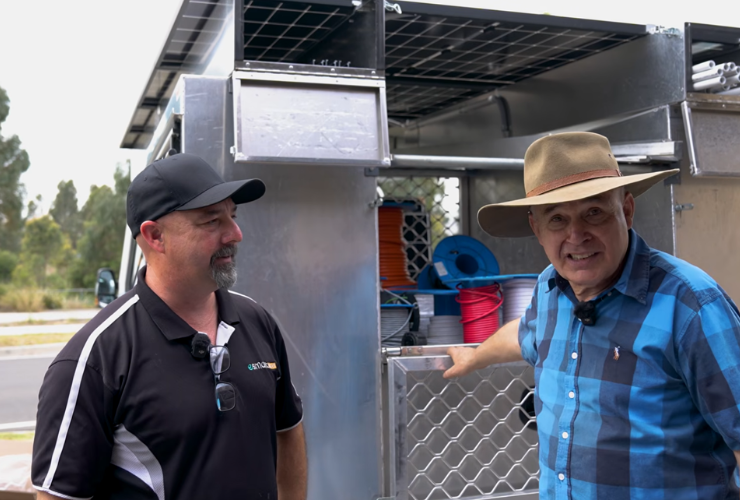
Only 10–20% of decommissioned solar panels in Australia are properly recycled.
Why?
Because recycling is:
Expensive
Logistically complex
Not yet economically viable at scale
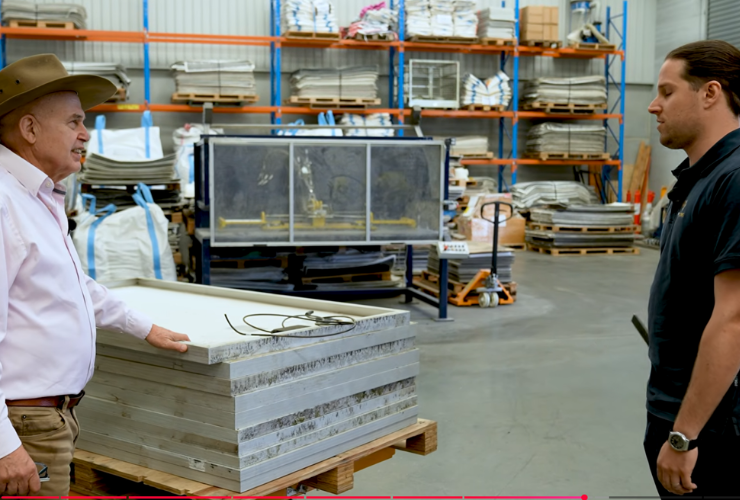
Modern recycling plants can recover 95%+ of materials, including:
Aluminium frames
Glass
Copper
Silicon cell material
But without sufficient volume, recycling facilities struggle to survive. One major Australian solar recycling operation has already entered administration, highlighting how fragile the system currently is.
Why Solar Recycling Isn’t Profitable (Yet)
Right now:
Installers can be paid $5 per panel to export old panels
Or they must pay $10+ per panel to recycle them locally
Until landfill and export pathways are restricted, recycling loses.
This is why experts are calling for a product stewardship scheme, similar to container deposit programs — where a small levy at purchase funds end-of-life recycling.
The Looming Battery Waste Crisis
While solar waste is bad, battery waste could be worse.
Battery manufacturers are already storing:
Failed units
Dead-on-arrival batteries
End-of-life systems
There is no national battery recycling framework yet — even as billions are spent encouraging battery adoption.
A Smarter Way Forward
If the government had invested $100 million of the $2.3 billion battery rebate into recycling infrastructure:
Solar recycling would already be scalable
Battery recycling could be operational
Waste would be reduced, not deferred
The clean energy transition must address the full lifecycle of solar panels and batteries — not just installation numbers.
Final Thought: Good Intentions, Flawed Execution
Australia’s renewable energy transition is built on good intentions. But without reform, we risk replacing one environmental problem with another.
Solar and batteries are essential — but so is responsible system design, servicing, and end-of-life planning.
If we want clean energy to truly be clean, we must stop measuring success by installs alone — and start measuring what happens after.