
Fast read
To go off-grid reliably, you must design for several days of poor weather. A home using 20 kilowatt-hours per day may require 60 kilowatt-hours or more of battery storage, plus a significantly larger solar array. For most suburban homes, remaining grid-connected with a hybrid battery system is far more practical and affordable.
Is a Standard Home Battery Enough to Go Off-Grid?
Many homeowners assume that if they use around 20 kilowatt-hours of electricity per day, then a 15 to 20 kilowatt-hour battery will allow them to disconnect from the grid. On a perfect sunny summer day, that assumption might appear reasonable.
However, off-grid living is not designed around average conditions. It must be designed around worst-case conditions, particularly extended periods of poor weather. A typical grid-connected home battery system of 10 to 15 kilowatt-hours is built to reduce grid usage, not eliminate it entirely.
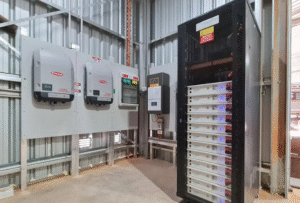
What Are “Days of Autonomy” and Why Do They Matter?
The most important concept in off-grid design is days of autonomy. This refers to the number of consecutive days your system can power your home with minimal solar input before running out of stored energy.
In many parts of Australia, a reliable off-grid system should plan for at least three to five days of autonomy. If your home uses 20 kilowatt-hours per day and you want three days of backup, you would need approximately 60 kilowatt-hours of usable battery capacity. That is four to five times larger than most standard residential battery systems.
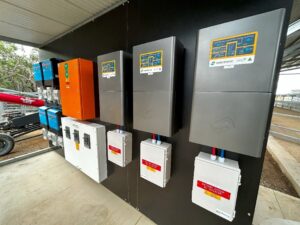
How Much Solar Is Required to Support an Off-Grid System?
Battery size is only part of the equation. A large battery bank must be supported by an equally capable solar array. A typical 6.6 or 10 kilowatt solar system may struggle to recharge a 60 kilowatt-hour battery bank during short, cloudy winter days.
Off-grid systems often require oversized solar arrays to ensure sufficient generation even during low-sunlight conditions. Without adequate solar input, even a large battery bank can be depleted quickly during extended poor weather.
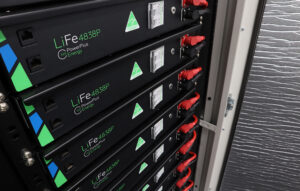
Is Going Off-Grid Financially Practical?
A standard 10 to 13 kilowatt-hour battery system might cost between ten and fifteen thousand dollars installed. An off-grid system requiring 60 kilowatt-hours of storage, along with expanded solar capacity and specialised equipment, can cost many times more.
When compared to the relatively modest daily supply charge of remaining grid-connected, the economics often favour staying connected. The grid effectively acts as a highly reliable, unlimited backup source of electricity for a small daily fee.
Going fully off-grid can make sense in remote areas where grid connection costs are extremely high. For most suburban and urban households, however, a grid-connected hybrid system provides strong savings and backup protection at a far lower cost.