Fast read
To determine the right battery size, calculate your average daily usage and estimate how much occurs overnight. Many family homes using 20 kWh per day require around 14 kWh of storage. A battery between 10 and 15 kWh suits most homes with a 6.6 kW solar system, provided there is enough excess solar to charge it.
How Do You Calculate Your Overnight Energy Use?
The first step in choosing the right battery size is understanding how much electricity your household consumes each day. Check your electricity bill and find the figure labelled “average daily usage,” measured in kilowatt-hours (kWh). A typical Australian family home often uses between 15 and 25 kWh per day, though this varies depending on lifestyle and appliances.
The critical question is when that energy is used. Many households consume a larger portion of their electricity in the evening and overnight, especially if everyone is out during the day. A common pattern is around 30 percent of usage during daylight hours and 70 percent after sunset. If your home uses 20 kWh per day and 70 percent occurs overnight, that equates to roughly 14 kWh that a battery would need to cover to significantly reduce grid reliance.
What Battery Size Matches a Typical Family Home?
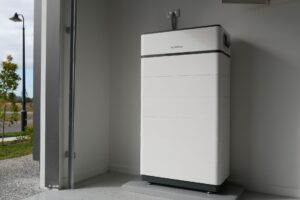
For many households, a battery between 10 and 15 kWh is a practical and effective size. This range is generally sufficient to cover evening activities such as cooking, lighting, entertainment and appliance use.
Using the earlier example of 14 kWh overnight consumption, a battery with approximately that usable capacity would allow most of your evening electricity to come from stored solar energy rather than the grid. Choosing a battery significantly larger than your overnight needs may result in unused storage capacity and unnecessary cost.
Does Your Solar System Support That Battery Size?
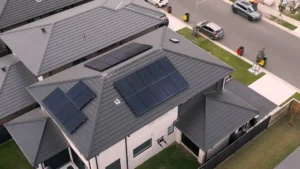
Battery sizing must align with your solar system’s ability to generate surplus energy during the day. A common 6.6 kilowatt solar system in Australia may produce around 20 to 25 kWh on a sunny day. If around 6 kWh is used directly during daylight hours, that leaves approximately 14 to 19 kWh available to charge a battery.
In that situation, a 13 or 14 kWh battery is a strong match because there is enough excess solar generation to fill it on most clear days. However, if your solar system is smaller, or if daytime consumption is high, a large battery may not regularly reach full charge.
Should You Plan for Higher Future Usage?
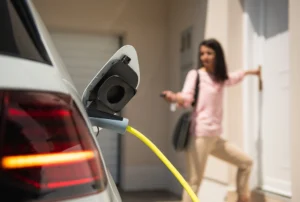
When selecting battery storage, consider future energy demands. Electric vehicles, pool heating systems, electric hot water and increased air conditioning can all significantly raise overnight consumption.
It is also important to remember that a battery is designed to reduce grid usage, not eliminate it entirely. During extended cloudy periods, solar generation will drop and the battery may not fully charge. Grid electricity may still be required, particularly in winter.
Choosing the right storage capacity means balancing current usage, solar generation potential and anticipated future needs without overspending on excess capacity.