
2026 Solar Battery Price Crash: Why the Math Just Flipped for Australian Homeowners
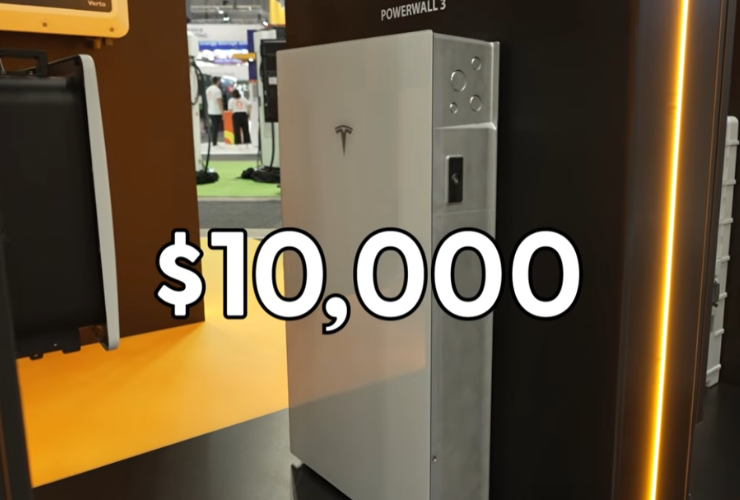
In 2023, a Tesla Powerwall installation would set you back nearly $16,000. Fast forward to 2026, and the market looks entirely different. Thanks to plummeting lithium prices and increased competition, the cost of a Powerwall 3 has dropped by nearly 33%.
However, the real “money printer” isn’t just the lower shelf price—it’s the expanded Federal Home Battery Scheme.
The April 30th Deadline: Don’t Lose $2,500
The Australian government is currently offering a generous STC (Small-scale Technology Certificate) rebate factor of 8.4. This is the “Golden Window” for ROI.
| Battery Size | Rebate Value (Before April 30) | Rebate Value (After May 1) | The “Wait” Penalty |
| 13.5 kWh | ~$4,200 | ~$2,800 | $1,400 |
| 24 kWh | ~$7,500 | ~$5,000 | $2,500 |
The Bottom Line: If you book your installation after May 1st, you are effectively burning $2,500. By locking in the 8.4 factor now, many Australian households are seeing payback periods drop to under 5 years.
The “Paperweight” Warning: Is Your Battery a Decorative Brick?
Close to 50% of Australian homes are currently being sold batteries that will never pay for themselves. This happens when “Cowboy Installers” sell oversized systems to households with small energy footprints.
The Trap: Buying a 50kWh system when a 13.5kWh or 20kWh unit would suffice just to “max out the rebate.“
The Reality: If your battery is too big for your solar array to charge, it sits idle. It becomes an expensive, humming paperweight eating your retirement savings.
The Blackout Lie: Why Most Batteries Fail When the Grid Goes Down
One of the biggest myths in solar sales is: “Buy a battery, never have a blackout again.” This is false. Under Australian “anti-islanding” laws, standard solar inverters must shut down during a grid failure to protect utility workers. To keep your lights on, you need:
A Hybrid Inverter or a Backup Gateway.
Modern Switchboards: Old 1960s porcelain fuses won’t cut it.
Dedicated Backup Wiring: Cheap quotes often exclude “Full Home Backup,” meaning your battery might only power a single fridge while the rest of the house sits in the dark.
LFP vs. NMC: Choosing the Right Chemistry
In 2026, there is only one “Gold Standard” for home safety and longevity: Lithium Iron Phosphate (LFP).
NMC (Nickel Manganese Cobalt): Known as “Spicy Nickel.” It’s energy-dense but temperamental. Expect ~2,000 cycles (approx. 10 years).
LFP (Lithium Iron Phosphate): The chemistry used in the Powerwall 3. It handles 4,000 to 6,000 cycles, offering 15–18 years of daily use. Crucially, LFP is nearly impossible to set on fire, providing radical home safety.

The “VPP Double Dip”: How to Make Your Battery Pay You
To turn your battery into a revenue stream, you need to join a Virtual Power Plant (VPP).
Step 1: Claim the Federal Rebate to lower your upfront cost.
Step 2: Sign up with a provider like Amber Electric.
The Result: During grid crises or price spikes, you can export your stored energy for up to $19 per kWh. Your battery stops being a storage box and starts being a mini-utility provider.
Are You a Vampire, a Trader, or a Survivor?
Should you pull the trigger? It depends on your “Energy Persona”:
The Vampire: You work all day and use all your power at night. Verdict: You need a battery.
The Trader: You want to game the wholesale market and VPPs for profit. Verdict: You need a BIG battery.
The Survivor: You live in a blackout-prone area and value security. Verdict: You need a battery + a Backup Gateway.
Next Step: Secure Your Rebate
Don’t let the April 30th deadline delete $2,500 from your pocket. Ensure you’re working with a vetted, accredited pro who won’t sell you a “mystery box” out of a Hilux.