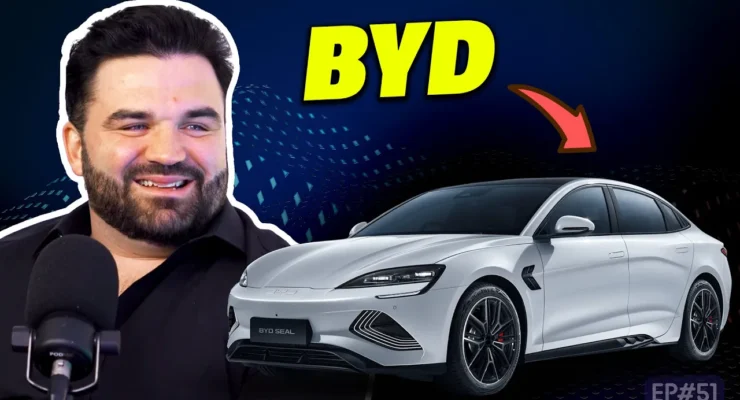
Why Buy a BYD Instead of a Tesla?
The Big Conversation on Batteries, Safety, Range Anxiety, Costs, EV Myths & Australia’s EV Future**
Electric vehicles have exploded into the Australian market, but with that growth has come confusion, media pushback, and very real questions from buyers standing on the edge of their first EV purchase. In this deep dive, we unpack the key reasons people are comparing BYD vs Tesla, the myths holding people back, and how EV sales professionals like James Wayand from BYD Haberfield navigate the real concerns customers bring through the door.
This article covers:
BYD’s blade battery and why it’s considered the safest in the world
How long EV batteries really last
Why range anxiety is mostly a perception issue
Charging options at home and on the road
Servicing costs and ownership considerations
BYD hybrid vs full EV
Why second-hand EVs are finally becoming attractive
EV fires, media fear campaigns, and the environmental debate
Why the Europeans are falling behind
What future models and battery tech will look like
AND the single biggest reason to buy a BYD over a Tesla
1. The Big Question: Why BYD Over Tesla?
When asked directly, James puts it simply:
“It’s the battery.”
BYD’s claim to fame is its Blade Battery, a lithium-iron-phosphate (LFP) chemistry that is safer, more stable, and more durable than the nickel-manganese-cobalt (NMC) cells used in most Teslas.
What makes the Blade Battery different?
It can be punctured with a nail without catching fire
It can be crushed under a 40-ton truck
It rises only to around 60°C, not 600°C
It uses a cooler, more stable chemistry with no rare or volatile metals
It allows top-up charging anytime with minimal degradation
It’s designed for 3,000 to 5,000 charge cycles — up to 1.2 million kilometres
Tesla is gradually shifting some products to LFP (like Powerwall 3), but BYD is the world’s largest producer of LFP batteries and has perfected the format.
If longevity, safety, and predictable performance matter to you — BYD holds the advantage.
2. Battery Life: What Actually Happens After 8, 10 or 12 Years?
Many buyers ask how long their battery will last or whether they’ll face a $10,000 replacement bill.
Here’s the reality:
BYD gives 8 years or 160,000 km warranty
Real-world BYD results from China show remarkably low degradation
One BYD electric bus with 2.5 million kilometres on the clock has lost only 11% capacity
Taxi fleets show similar outcomes
Even after the warranty period, batteries rarely “fail” — they slowly lose range. Most owners won’t notice until year 9 or 10, when a long-range model might drop from 600 km to 500 km.
Will you be able to replace a battery?
Yes. And likely with cheaper refurb or recycled cells by then.
As Markus explains:
“By year 12 you’ll have second-hand, refurbished or aftermarket batteries for maybe $4–6k. That extends the life of the car another 5–6 years. Petrol cars have similar costs — transmissions, engines, big mechanical failures — and no one panics.”
BYD’s design philosophy makes replacement logically, economically and physically feasible.
3. Range Anxiety: A Psychological Problem, Not a Real One
Most Australians:
Live in metro areas
Drive 40–50 km a day
Plug in at night
Rarely take long rural trips
So a 600 km BYD Seal effectively gives people:
several days of commuting
overnight top-up ability
minimal reliance on fast charging
James’ killer line:
“If you do less than 125 km a day, your car will fully recharge on a standard power point overnight.”
BYD’s battery chemistry allows topping up at any level without damaging longevity — unlike many EVs that require careful 20–80% cycling.

4. Charging: Trickling, Fast Charging & Solar Integration
BYD supports all charging types:
1. Standard 240V wall plug (trickle):
125–150 km added overnight
Easiest on the battery
Free if you have solar
Best for daily drivers
2. 7 kW home charger (AC):
Full charge overnight even on large models
~ $1,200 for unit + $1,000 installation
BYD recommends Ocular IQ Solar
Works with solar excess export
3. DC fast chargers:
Smaller BYDs: ~1.5 hours
Larger models: ~35 minutes if charger supports it
Use when travelling
Harder on battery — try to start around 20%
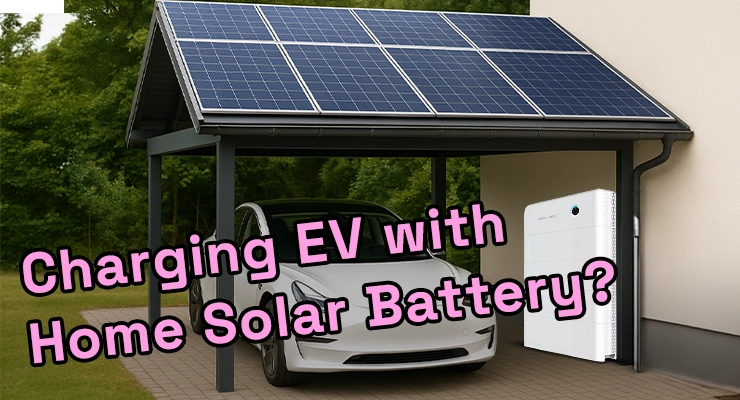
Solar + EV = Free Driving
Many customers now charge their EV exclusively from rooftop solar.
James confirms: “If you have solar, that’s free driving for 25 years.”
5. Servicing: The Lowest of Any Car Brand in Australia
Petrol servicing is painful. BYD servicing is:
$189 per year
Or $215 at year 3
Rotating between $189–240 each following year
No oil, no belts, no spark plugs, no radiators, no exhaust
Hybrids cost more (around $320/yr) because they still have petrol engines, but the full EVs are almost maintenance-free.
And BYD’s parts are almost entirely made in-house, meaning no European-style $1,500 repair shock bills.
6. Safety: Five-Star ANCAP & the Blade Battery Advantage
BYD vehicles have:
Five-star ANCAP safety rating
Extremely strong cabin structures
Industry-leading battery thermal stability
Less risk of thermal runaway
Most EV fire videos online involve models using NMC chemistry — not LFP.
In fact, petrol cars catch fire far more often, yet nobody talks about it.
7. EV Fires, Media Fear & the Right-Wing Pushback
James and Markus openly discuss the media hostility toward EVs.
Key points:
Petrol cars catch fire daily — no news coverage
One EV fire becomes a national headline
Oil companies have a vested interest in slowing down EV adoption
Online fear campaigns exaggerate rare edge cases
Australia is one of the most metropolitan nations on Earth — perfect for EVs
And the kicker:
“If petrol hits $4 a litre like in the UK, the EV debate ends instantly.”

8. Hybrid vs Full EV: Who Should Buy What?
James breaks it down beautifully.
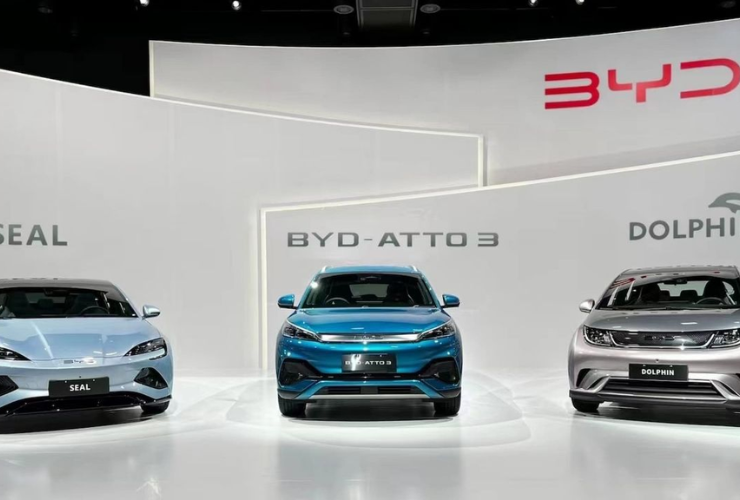
Full EV (BYD Dolphin, Atto 3, Seal, Sealion):
Best for:
City commuters
People with solar
Drivers doing <150 km daily
Those wanting the lowest running costs
Hybrid (BYD Sealion Hybrid):
Best for:
Rural drivers
Regional long-distance commuters
Anyone not ready to “go full EV”
People who want 1,000–1,100 km combined range without planning trips
The hybrid is now BYD’s best-selling model, showing Australians still want the security of petrol during the transition.
9. Resale Value & Second-Hand EVs
A major fear: “EVs won’t hold value.”
Here’s what’s actually happening:
Second-hand BYDs have held up surprisingly well
A 2021 Atto 3 bought for ~$50,000 still sells for ~$32–36k
That’s less depreciation than many petrol vehicles
BYD Haberfield is building its own second-hand EV stock
Pre-owned EV buyers are becoming more confident
And BYDs have a secret advantage: The battery ages slower, which protects resale value more than people expect.
10. Environmental Impact: The Real Calculation
Critics argue EV batteries take lots of energy to manufacture.
True — initially.
But the numbers are overwhelming:
After 2–3 years, the emissions used to build an EV battery are cancelled out
After that, every kilometre is cleaner than a petrol car
Solar-powered EVs outperform petrol cars 20–1 in long-term emissions
Australia transitioning to renewable electricity multiplies the benefit
Buying an EV and switching to solar is one of the most environmentally impactful personal decisions any Australian can make.
11. Charging Infrastructure: Dramatically Better Than 5 Years Ago
James outlines the new networks rapidly expanding:
BP Pulse
Ampol AmpCharge
Evie
Chargefox
Jolt
By 2026, another 500+ chargers will be in place. What used to be a problem is now becoming a non-issue.
12. Features People Love: BYD’s Surprising Creature Comforts
People don’t expect BYDs to feel “premium”. But they do.
Top features customers rave about:
Rotating centre touchscreen
360° camera
Ambient lighting that pulses with music
Instant torque
Heated and ventilated seats
Huge panoramic sunroofs
Bidirectional power (run your fridge in a blackout!)
BYD also uses synthetic leather in most models — durable and animal-friendly.
13. BYD vs Europe: Why Traditional Carmakers Are Falling Behind
European brands are struggling because:
They still depend on combustion engine profits
Their EVs are expensive
Their EV batteries are outsourced
Sales reps prefer selling cars with negotiable margins
BYD and Tesla operate on fixed pricing
China’s EV tech is advancing far faster
BYD is a battery company that builds cars, not the other way around.
This gives them a huge scale and technology advantage.
14. The Future: 2025 Models, 800–2,000 km Range & Market Shake-Ups
Rumours indicate:
A BYD Seal 2025 model
Longer range
More efficient battery pack
Updated interior
More safety layers
Lower weight
Faster charging
Meanwhile, China already has models achieving 700–800 km range, with prototypes reaching 2,000 km.
BYD will not be left behind.
15. Who Actually Buys BYDs?
The buyer demographic is wide:
Young first-car buyers (Dolphin)
Families wanting savings (Atto 3, Sealion Hybrid)
Professionals wanting sleek design (Seal)
Older Australians chasing reliability and predictability
Solar homeowners who want free charging
Anyone sick of petrol prices
Culturally, the showroom is highly diverse — EVs appeal across ages, incomes, and ethnic groups.
16. The Fun Bit: Markus’s EV Sales Pitch Idea
Markus suggests the industry’s next big opportunity:
“Dealerships should let customers take an EV for a whole week. Give them a real taste.”
He compares it to supermarket sampling:
“Try the chocolate. If you love it, you buy it.”
Conclusion: The Key Argument for BYD Over Tesla
Let’s nail the core reason.
BYD = Better battery. Safer chemistry. Longer life. Lower cost. Easier charging behaviour.
Tesla is outstanding for:
Software
Supercharger network
Brand appeal
But BYD wins on:
Battery durability
Battery safety
Charging flexibility
Interior familiarity
Purchase price
Servicing cost
Range per dollar
If you want a computer on wheels, buy a Tesla. If you want a car that will last 12–15 years, is safer, cheaper to run, easier to charge, and uses the world’s most advanced LFP battery technology…