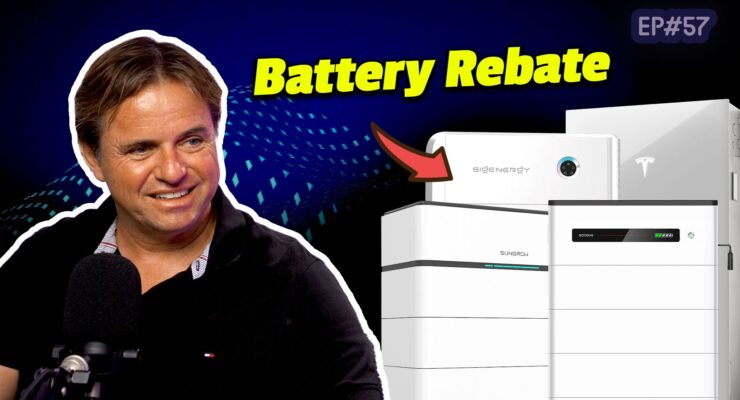
The Big Shift in Home Energy: Why Solar + Batteries Are the Future
Electricity prices across Australia have been rising far faster than inflation, putting increasing pressure on households already dealing with cost-of-living increases. According to industry experts like Chris from Sunsellers, power costs over the past four to five years have climbed at roughly twice the rate of inflation, leaving many homeowners searching for better ways to control their energy bills.
For years, rooftop solar was seen as the solution. But the energy landscape has changed dramatically.
The Decline of Solar Feed-in Tariffs
When rooftop solar first became popular in Australia, households could earn significant income by exporting excess electricity to the grid through generous feed-in tariffs.
Those days are largely over. Feed-in tariffs have dropped to just a few cents per kilowatt hour in many regions. As a result, many solar households now export large amounts of electricity during the day while buying expensive power from the grid at night.
This imbalance has created a new reality: solar panels alone are often not enough to eliminate electricity bills.
Why Batteries Are Becoming Essential
Battery storage is increasingly becoming the missing piece of the solar equation.
Instead of exporting cheap electricity to the grid during the day and buying expensive electricity at night, a battery allows homeowners to store their solar energy and use it when they need it most.
The benefits include:
- Greater energy independence
- Reduced reliance on electricity retailers
- Protection from rising power prices
- Improved use of rooftop solar generation
Industry experts now widely agree that combining solar panels with battery storage delivers far greater financial value than solar alone.

Why Power Prices Are Likely to Keep Rising
Energy retailers operate in a competitive market, and electricity prices tend to rise as far as the market allows before consumers switch providers.
This dynamic means households could continue seeing electricity costs increase in the future. As prices rise, systems that generate and store energy locally become increasingly valuable. For many homeowners, investing in solar and batteries is now seen as a way to lock in long-term energy stability.
Electrification Is Changing Home Energy Demand
Another major trend is the electrification of homes.
More households are moving away from gas and adopting technologies such as:
- electric vehicles
- heat pump hot water systems
- induction cooking
- home battery storage
As these technologies become more common, total household electricity consumption can increase significantly. This means future homes may require larger solar systems and more battery capacity than systems installed only a few years ago.
Choosing the Right Solar Installer Matters
Not all solar installations deliver the same results. Industry professionals often warn homeowners to be cautious of extremely cheap solar offers or large retailers that rely heavily on subcontractors. In many cases, the best long-term value comes from local solar companies with experienced installation teams and strong reputations for quality work.
A properly designed solar and battery system should be tailored to the household’s energy use, future needs and available roof space.
The Future of Home Energy
Australia already has one of the highest rates of rooftop solar adoption in the world, with millions of homes generating electricity on their roofs. But the next phase of the energy transition will likely be driven by battery storage and smarter energy management.
As feed-in tariffs continue to decline and electricity prices rise, households are increasingly focusing on using their own solar power instead of exporting it to the grid. Solar may have started the revolution, but batteries are quickly becoming the key to unlocking its full value.