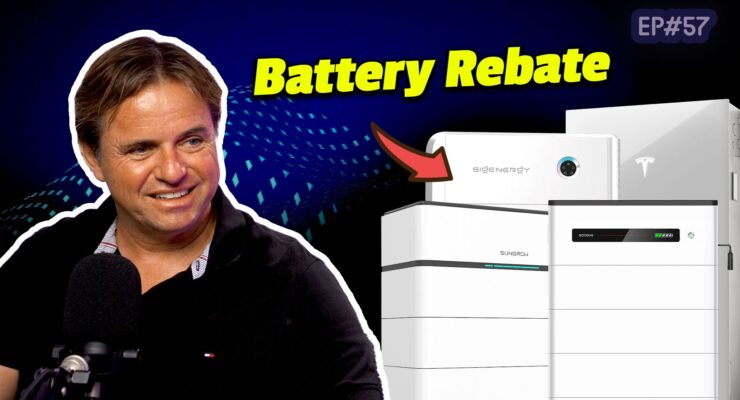
Australia’s Battery Boom: The Gold Rush That Could Backfire
Australia’s solar and battery market is going through one of the most aggressive growth phases the industry has ever seen. Driven largely by the federal battery rebate, installations have surged at a pace few anticipated. At current estimates, around 2,000 battery systems are being installed every single day, injecting tens of millions of dollars into the market on a daily basis. On the surface, this looks like a major success story for the transition to renewable energy.
But when you look a little deeper, the cracks start to show. What we are witnessing right now feels less like steady industry growth and more like an overheated gold rush. And historically, gold rushes attract not only innovation and opportunity, but also opportunists, shortcuts, and short-term thinking. That combination can create serious long-term consequences for homeowners.
The Rise of Cheap Systems — And Why That’s a Problem
One of the biggest risks emerging in this boom is the influx of low-cost battery systems being pushed into the market. Many of these are being imported directly by smaller retailers who are capitalising on the rebate-driven demand. While this can make the upfront price look attractive, it introduces a fundamental problem that most consumers don’t fully consider.
A solar battery system is not just a product. It is a long-term service relationship. If the company that installed your battery disappears in a few years — whether due to poor margins, rapid expansion, or simply cashing out after the boom — your warranty may effectively disappear with them. In that scenario, even a technically sound battery can become a stranded asset, with no one willing or able to service it.
This is why one of the most important truths in the industry right now is also one of the simplest: The battery is only as good as the installer behind it.
And in a market flooded with new entrants, that distinction matters more than ever.
Oversizing: When the Rebate Distorts Good Design
Another unintended consequence of the rebate is the growing trend toward oversized battery systems. Instead of designing systems based on real household consumption, many installations are now being driven by how much rebate can be extracted.
This has led to a surge in systems with 40 to 50 kilowatt-hours of storage being installed in homes that simply don’t need that level of capacity. In many cases, these batteries are paired with relatively small inverters, meaning the energy can only be discharged slowly over long periods.
The result is a mismatch between storage and usability. A simple analogy explains it well. It’s like trying to drink a large cocktail through a very thin straw. The capacity is there, but the delivery is inefficient and often frustrating. In practical terms, homeowners may find that they cannot fully utilise the energy they’ve paid for, at least not in a meaningful or timely way.
For most households, a well-designed system in the range of 15 to 20 kilowatt-hours is more than sufficient. Even when future-proofing for electric vehicles, systems above 30 kilowatt-hours often start to deliver diminishing returns unless there is a very specific use case. Yet the rebate structure has pushed the market in the opposite direction — rewarding size over suitability.
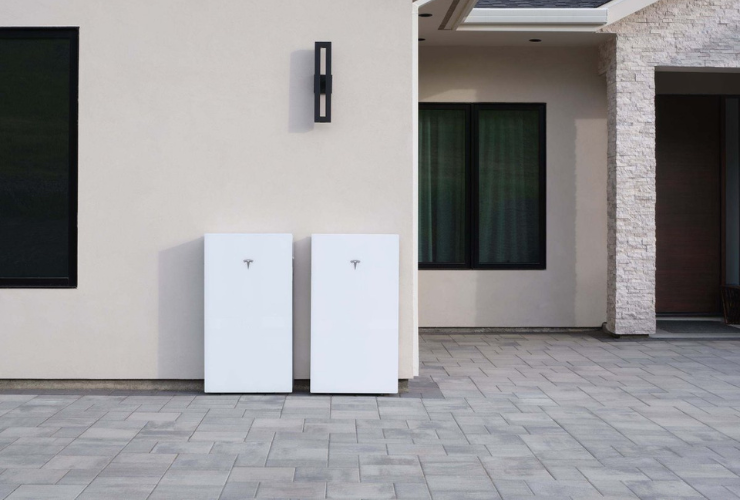
The Rebate Reality: It Won’t Last Forever
At the heart of the current boom is a simple but critical issue: the numbers don’t add up long term. The rebate program was initially structured around an average incentive of roughly $2,300 per system, with the goal of supporting one million battery installations. But in reality, the market has shifted toward larger systems attracting significantly higher rebate amounts.
This means the allocated funding is being consumed much faster than expected. If current installation rates continue, there is a very real possibility that the budget could be exhausted well before the originally intended timeline. And when that happens, the way the rebate ends will matter just as much as the fact that it ends.
If it is wound down gradually with clear communication, the industry may adjust. But if it is cut abruptly, the consequences could be severe. Sales pipelines could dry up overnight, customers may delay decisions, and installers could find themselves sitting on unsold stock and collapsing cash flow. The industry has seen similar cycles before. And they are rarely gentle.
Why Installer Choice Has Never Been More Important
In a stable market, choosing a solar installer is already a significant decision. In a volatile, rebate-driven market, it becomes absolutely critical. The difference between a quality installer and a short-term operator is not just about installation quality. It’s about long-term support, system optimisation, and the ability to stand behind the product for a decade or more.
Established companies with proven track records are far more likely to:
Honour warranties
Provide ongoing service
Help optimise system performance over time
In contrast, newer or purely price-driven operators may struggle to deliver that level of continuity. And when something goes wrong — whether it’s a technical fault, a software issue, or simply a system needing adjustment — that continuity is what determines whether the investment pays off or becomes a headache.
The Death of Feed-in Tariffs and the Rise of Self-Consumption
At the same time as the battery boom, another major shift is quietly reshaping the economics of solar: the collapse of feed-in tariffs. In some regions, households are now receiving as little as 2 cents per kilowatt-hour for exporting solar energy back to the grid. This is a dramatic reduction from the rates that originally drove solar adoption across Australia.
The implication is clear. Exporting excess solar is no longer a meaningful source of value. Instead, the focus has shifted entirely to self-consumption — using your own solar energy within your home rather than sending it back to the grid. This is where batteries become essential, storing excess generation during the day and releasing it when needed.
In many ways, this marks the transition from the first phase of solar adoption to the second. The first phase was about generation. The second phase is about control.
Electric Vehicles: The Game Changer Already Here
Layered on top of all this is the rapid rise of electric vehicles. While still early in adoption compared to Europe or China, the trajectory is clear. Each EV adds a significant new energy demand to a household, often around 10 kilowatt-hours per day. For households with two vehicles, that demand can double.
This fundamentally changes how systems should be designed. Solar systems are becoming larger, not because panels are expensive — they are now relatively cheap — but because future consumption is expected to rise significantly. Batteries, when sized correctly, become the bridge between daytime generation and nighttime usage, including EV charging.
Looking forward, the integration goes even deeper. Vehicle-to-home and vehicle-to-grid technologies are already emerging, allowing EVs to act as mobile batteries that can support the home or even the grid. This is not a distant concept. It is already starting to happen.
Quality vs Price: The Long-Term Perspective
One of the most persistent challenges in the current market is the tension between price and quality. With aggressive advertising and rebate-driven discounts, many systems are being marketed at extremely low price points. For consumers, this creates a powerful temptation to focus on upfront cost rather than long-term value.
But over the lifespan of a system — typically 10 to 15 years — the initial price difference becomes far less significant than performance, reliability, and support. A system that costs slightly more but operates efficiently, experiences fewer issues, and is backed by a stable company will almost always deliver better financial outcomes over time.
In contrast, a cheap system that fails early or lacks support can quickly erase any initial savings.
The Overlooked Challenge: Recycling and Sustainability
Despite all the progress in renewable energy, one area remains underdeveloped: recycling. As more solar panels and batteries reach the end of their lifespan, the industry is beginning to confront the reality of disposal and material recovery. While components like aluminium and glass are relatively easy to recycle, batteries present a more complex challenge, particularly when logistics and safety are involved.
At present, large-scale recycling infrastructure in Australia is still limited. This raises important questions about how the industry will manage waste as adoption continues to grow. If renewable energy is to truly deliver on its promise, sustainability must extend beyond generation to include the full lifecycle of the technology.
A Boom With Consequences
There is no doubt that Australia’s battery boom is accelerating the transition to cleaner energy. It is helping households reduce electricity bills, gain independence from rising energy prices, and prepare for an electrified future. But it is also creating distortions.
Oversized systems, short-term operators, policy uncertainty, and infrastructure gaps all point to a market that is moving faster than its foundations can comfortably support. The opportunity is enormous. But so is the responsibility — for governments, for installers, and for consumers.
The Bottom Line for Homeowners
For homeowners considering solar and batteries today, the path forward is not about chasing the biggest rebate or the cheapest system. It is about making informed, long-term decisions.
That means choosing experienced installers, focusing on system design rather than headline price, and thinking ahead to how energy usage will evolve over the next decade. It also means understanding that this is not a short-term purchase, but an investment in the future of your home. Because in a market that feels like a gold rush, the smartest move is not to rush. It’s to choose carefully — and build something that lasts.