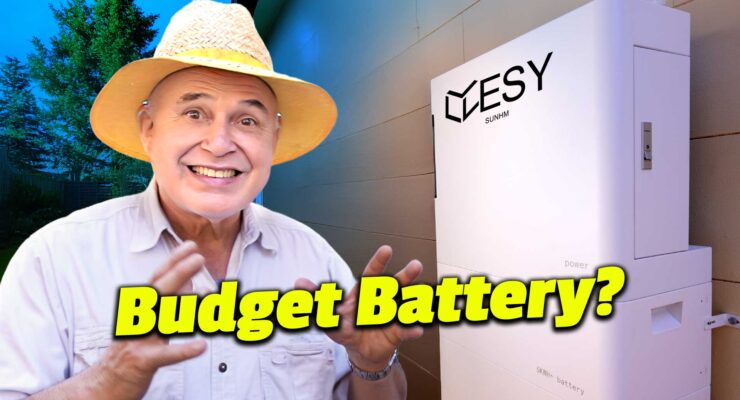
Why I Chose a Budget Battery to Keep My Tenants in Their Home
For years, I’ve said the same thing: don’t go cheap, go quality. Buy once, buy right. So I’ll admit it upfront — this story starts with me breaking my own golden rule.
Instead of installing a premium $18,000 battery system, I chose a budget-friendly home battery. Not because I suddenly stopped believing in quality — but because this decision wasn’t really about technology.
It was about people, community, and what the Australian dream should look like today.
From Two Apples and a Suitcase to the Australian Dream
Forty years ago, I left Germany for Australia with two apples and a small suitcase. Like many migrants, I believed in the great Australian dream: work hard, save, and one day own a home.
I’ve been lucky. I bought my first home at 26 and later an investment property. But that dream has shifted. For many young Australians today, home ownership feels impossible — and even affordable renting is slipping away.
That reality hits hardest when you actually know your tenants.
When Investment Properties Become Communities
I don’t see my tenants as numbers on a spreadsheet. I try to give them a home, not just a lease.
John has lived in Sydney’s Inner West for over 30 years. He’s an army veteran with PTSD, living on a fixed pension. His health limits his ability to work, and his entire life — friends, routines, support — is rooted in this community.
David, my other tenant, has undergone multiple cancer surgeries. Between medical costs and rising living expenses, the last thing he needs is another rent increase.
If I charged full market rent — or passed on rising electricity costs — they’d be forced to leave. Not just the house, but their lives.

The Problem: Rising Power Bills and Falling Feed-In Tariffs
The house already had a solid 9 kW solar system, but the economics changed fast.
Feed-in tariffs dropped from 12 cents to 2 cents
Quarterly electricity bills jumped from around $300 to nearly $650
Usage didn’t increase — prices did
Electricity is included in the rent, so I pay the bill. Raising rent wasn’t an option.
Reducing energy costs was.
Why I Installed a Budget Home Battery
Instead of installing a premium battery system, I looked for a practical, cost-effective solution that suited this home and its occupants.
The result was an ESY SunHome battery system, consisting of:
5 kW hybrid inverter
Six battery modules
Total of 30 kWh energy storage
AC-coupled installation, compatible with existing solar
10-year full warranty
The key advantage? I didn’t need to rip out the existing solar or replace the inverter. This system works seamlessly with older solar installations and allows future expansion if needed.
Real-World Performance Over Premium Features
This battery isn’t pretending to be something it’s not.
What it does well:
Covers essential loads: lights, fridge, TV, kettle
Reduces grid reliance dramatically
Delivers meaningful bill reduction
Enables near-zero electricity bills for this household
Trade-offs compared to premium batteries:
Limited backup power (not full home backup)
Lower peak power output
Designed for single-phase homes, not large three-phase setups
For John and David, that’s perfect. They don’t need EV charging, ducted air-con or heavy appliances running simultaneously.
This is about fit-for-purpose energy, not bragging rights.
Payback Period: Why Budget Batteries Make Sense Now
With the current federal battery rebate, the numbers stack up.
Estimated payback: 3–4 years
Significantly faster ROI than premium systems
Makes batteries accessible to more households — including landlords
That matters because not everyone can drop $18,000 upfront. Especially when the goal is keeping rent affordable.
Why the Installer Matters More Than the Brand
This project reinforced something I’ve said for years:
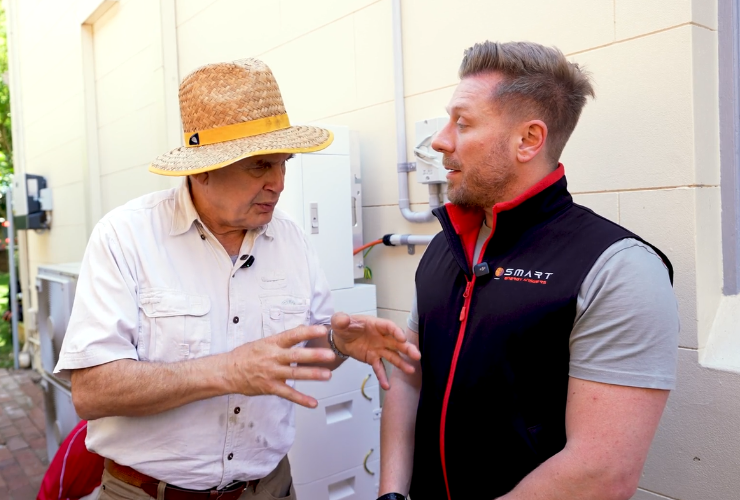
It’s not just about the battery — it’s about who installs it.
A good installer checks:
Switchboard capacity
Phase configuration
Existing inverter compatibility
Cabling
Load requirements
Budget realities
That’s why this system works — it was designed for the home, not forced onto it.
Energy Independence Is the New Australian Dream
This story isn’t really about batteries.
It’s about taking control, looking after each other, and pushing back against an energy system that’s punished households for decades.
There’s something deeply Australian about that.
- Owning your energy.
- Lowering bills instead of raising rent.
- Keeping people in their communities.
That’s the new Australian dream.