
Why the Cheaper Home Batteries Program is being Expanded
The Australian Government has significantly expanded the Cheaper Home Batteries Program, committing nearly $5 billion in additional funding and taking the total program value to an estimated $7.2 billion over four years.
The expanded scheme is now expected to support more than two million households to install a home battery by 2030, adding around 40 gigawatt-hours of storage capacity to the electricity system.
The changes come after the program exceeded all expectations. By the end of 2025, the Clean Energy Regulator is forecasting around 175,000 valid battery rebate applications, far above early projections.
However, this rapid uptake also created a problem: a sharp increase in the installation of very large home batteries, often 30–50 kWh or larger, which began consuming the original $2.3 billion budget far faster than intended.
Rather than winding the program back, the federal government has chosen to extend and refine it, ensuring the rebate remains available for more households while reducing incentives that encouraged unnecessary oversizing.
Key Change: A tiered battery rebate from 1 May 2026
From 1 May 2026, the battery rebate will move to a sliding-scale (tiered) structure, where the level of support decreases as battery size increases:
- Up to 14 kWh: full rebate (100% of the STC factor)
- 14–28 kWh: reduced rebate (60% of the STC factor)
- 28–50 kWh: minimal rebate (15% of the STC factor)
Batteries up to 100 kWh will remain eligible under the program, but the rebate will only apply to the first 50 kWh of usable capacity.
This change is designed to encourage appropriately sized battery systems, helping spread the benefits of the rebate across more households instead of concentrating funding on oversized installations.
Faster Decline in Rebate Value Over Time (STC Step-Down)
The rebate is delivered through Small-scale Technology Certificates (STCs). Under the revised scheme, the STC factor will now decline every six months, rather than annually, aligning battery incentives more closely with the existing rooftop solar rebate structure.
Estimated rebate values per kilowatt-hour over time include:
- Rest of 2025: ~$372 per kWh
- Jan–Apr 2026: ~$336 per kWh
- May–Dec 2026: ~$272 per kWh
- Jan–Jun 2027: ~$228 per kWh
- Jul–Dec 2027: ~$208 per kWh
- Jan–Jun 2028: ~$184 per kWh
- Jul–Dec 2028: ~$164 per kWh
- Jan–Jun 2029: ~$144 per kWh
- Jul–Dec 2029: ~$124 per kWh
- Jan–Jun 2030: ~$104 per kWh
- Jul–Dec 2030: ~$84 per kWh
This gradual step-down reflects falling battery costs while maintaining a meaningful upfront discount for households.
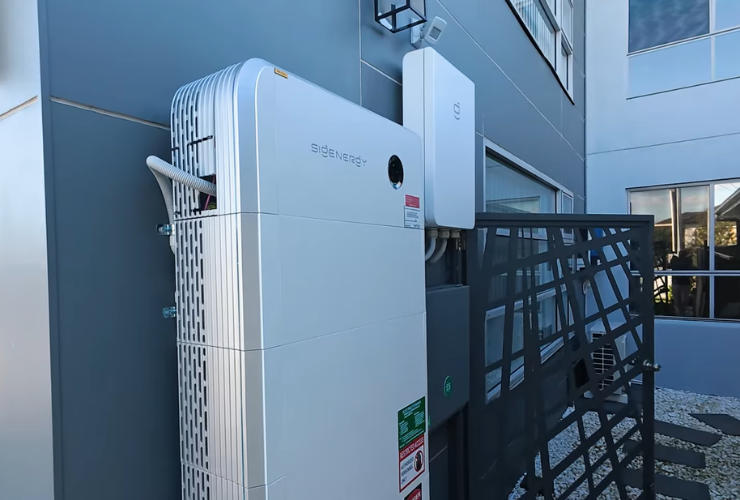
Why the scheme was revised?
Industry data showed that average battery sizes jumped from around 10–12 kWh last year to about 28 kWh in recent months, with the fastest growth occurring in the largest 50kWh battery segments. In many cases, households were being sold batteries far larger than their energy usage or inverter capacity justified.
Because the rebate was originally paid per kilowatt-hour, rather than per battery, it unintentionally rewarded selling the biggest possible system. This pushed average rebates from the originally expected $2,300 per household to $9,000–$10,000 per installation.
By late 2025, this meant:
- Around 170,000 batteries already installed
- Tens of thousands more contracted and waiting for installation
- A projected rebate spend that exceeded the original budget within a single year
- Without intervention, the program would have either collapsed early or required an unbounded budget increase.
The deeper motivation: Grid reliability and blackout risk
Beyond household savings, the transcript reveals a broader and more strategic motivation behind the government’s decision.
Australia’s electricity grid is entering a high-risk transition period. Coal-fired generators are ageing, with projected reliability dropping to around 75% within the next four to five years, meaning outages — both planned and unplanned — are expected to rise.
At the same time, large transmission projects are becoming slower, more expensive, and increasingly contested by communities. For any government, widespread blackouts represent a major political and economic risk.
- Home batteries provide a fast, decentralised way to:
- Reduce peak demand during extreme weather events
- Lower wholesale electricity price spikes
- Stabilise the grid without waiting for large infrastructure builds
- Shift part of the system-support burden to privately funded assets
In effect, the expanded battery rebate is underwriting tens of billions of dollars of private investment to reinforce the grid — far faster than traditional infrastructure solutions.
Why oversizing is being reined in?
The rapid rise of very large batteries exposed another issue: many systems were not fit for purpose.
In some cases, households were sold 40–50 kWh batteries paired with:
- Undersized inverters
- Limited backup capability
- Low throughput power that prevented effective battery use
The revised tiered rebate discourages this behaviour. Households can still install large batteries if they choose, but the rebate no longer subsidises excessive capacity that delivers little additional value while draining public funds.
This shift supports better system design and rewards installers who prioritise quality and suitability over volume.
Why VPP participation was not mandated
Despite the grid benefits of Virtual Power Plants (VPPs), participation was not made compulsory. The reasoning is pragmatic: mandating VPP participation would likely have reduced uptake, as many households are reluctant to give retailers control over their battery.
Instead, the government appears to be relying on:
- Demand reduction alone to stabilise the grid
- More attractive voluntary VPP offers from retailers
- Gradual, market-driven participation rather than enforcement
- This avoids killing consumer interest while still delivering system benefits.
What this means for households
- Smaller and medium-sized batteries continue to receive strong support
- Oversized systems attract less rebate from May 2026 onward
- Battery sizing, inverter capacity, and household energy use matter more than ever
- The program is being strengthened, not cut, providing longer-term certainty
With electricity prices having risen sharply in recent years and further pressure expected from network costs, batteries remain one of the most effective tools for households to regain control over energy bills.
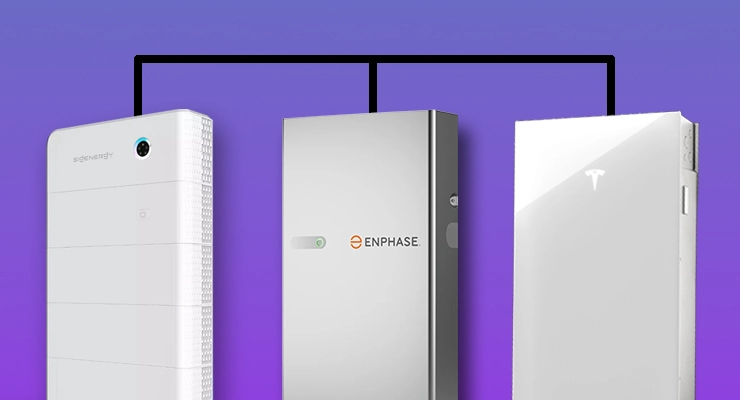
Missed Opportunity: Australian Battery Manufacturing and Local Content
One of the clearest gaps in the expanded Cheaper Home Batteries Program is the absence of any Australian content requirement.
The program will ultimately underwrite $15–$20 billion worth of battery installations when private spending is included, yet the vast majority of this investment will flow to overseas manufacturers, particularly in China.
While it is understandable that local supply capacity could not meet the sudden surge in demand at launch, the program now has a clearly defined multi-year runway to 2030.
This created an opportunity to:
- Signal long-term demand certainty to Australian manufacturers
- Encourage local assembly, in partnership with overseas manufacturers, software development, or power-electronics production
- Gradually introduce local-content thresholds as the market matures
Even a modest requirement — such as 10–20% Australian content from 2027 or 2028 — could have helped build domestic capability without disrupting early uptake. Instead, the scheme currently delivers large-scale public support with no structural pathway to grow local industry alongside it.
As the program scales, this represents a missed chance to pair energy security with industrial capability and sovereign resilience.
Missed Opportunity: Battery Recycling and End-of-Life Stewardship
Another major omission in the current program design is the lack of a dedicated, funded battery recycling and stewardship framework.
The rebate is accelerating the deployment of hundreds of thousands — and eventually millions — of home batteries, many weighing hundreds of kilograms each. Yet Australia’s battery recycling infrastructure remains fragmented, underdeveloped, and largely unfunded.
At present:
- Recycling capacity is limited and geographically concentrated
- Transporting large lithium batteries over long distances is costly and complex
- No national stewardship scheme is embedded in the rebate structure
This creates a growing long-term risk: a rapidly expanding installed base of batteries with no clear, scalable end-of-life pathway.
Given the scale of public investment, the program could have:
- Allocated a small portion of funding to battery recycling infrastructure
- Established a national battery stewardship levy or recovery scheme
- Required funded end-of-life plans as a condition of rebate eligibility
Without this, Australia risks repeating the early mistakes of solar panel recycling — only at a far larger and heavier scale.

Why these gaps matter long-term
The Cheaper Home Batteries Program is doing critical work in stabilising the grid and lowering household energy costs. However, without parallel planning for local manufacturing and recycling, it also locks in long-term dependencies and future waste challenges.
These issues do not undermine the value of the program — but they do highlight where future policy refinements could deliver stronger economic, environmental, and sovereign outcomes alongside energy security.
Bottom Line
The Cheaper Home Batteries Program is no longer just a consumer rebate. It has become a core pillar of Australia’s energy reliability strategy.
The funding increase, tiered rebate, and faster STC step-down are deliberate moves to:
- Protect the federal budget- despite the close to $5 billion overrun
- Extend the life of the scheme to 2030
- Reduce blackout risk
- Encourage better-designed battery systems
- Spread the benefits across more Australian households
The program has been reshaped not because it failed — but because it worked faster and harder than anyone expected, and because cheap battery installers found a loophole to exploit the scheme.