Fast read
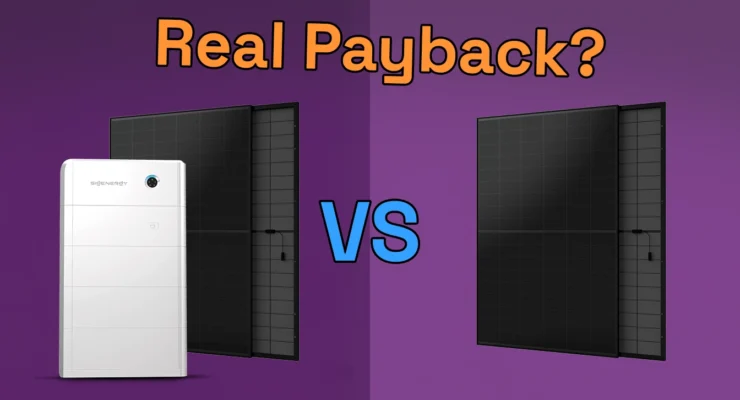
Solar-only systems typically pay back in 3 to 6 years. A 10kWh battery costing around $10,000 may take about 8 years to pay back based on avoided grid electricity purchases. Batteries extend financial return timelines but provide blackout protection and greater energy independence.
How Does a Solar-Only System Save You Money?
A standard solar-only system reduces your electricity bills by powering your home during the day using energy generated from your panels. Every kilowatt-hour you use from your system is electricity you don’t have to buy from the grid, typically saving you around 30 to 40 cents per kilowatt-hour. However, when you’re not home or not using much electricity, excess solar energy is exported back to the grid. The problem is that feed-in tariffs are usually low — often between 4 and 8 cents per kilowatt-hour. That means you’re selling electricity cheaply while buying it back at a much higher rate later in the evening. The gap between what you earn and what you pay is the key financial driver behind battery storage.
How Does a Battery Improve the Numbers?
A battery allows you to store excess solar energy generated during the day instead of exporting it to the grid at a low rate. That stored power can then be used at night when your panels stop producing electricity. For example, a typical 10kWh battery can often cover the evening usage of an average household — cooking, lighting, entertainment, and appliances. Instead of paying 35 cents per kilowatt-hour at night, you’re using electricity you already generated. This significantly increases your solar self-consumption and reduces reliance on the grid.
What Is the Typical Payback Period?
Solar-only systems generally deliver payback within 3 to 6 years because the upfront cost is lower and daytime savings are immediate. A 10kWh battery system in Australia may cost between $9,000 and $13,000 installed. Using a simplified example: If you use 10kWh from the battery each evening and your electricity rate is 35 cents per kilowatt-hour, you save about $3.50 per day. Over a year, that equals roughly $1,200 in avoided grid purchases. On that basis, a $10,000 battery would have a simple payback of around eight years. This timeframe can shorten to 5 to 7 years if rebates, subsidies or low-interest loans reduce the upfront cost.

Is It Only About Financial Return?
Not necessarily. An eight to ten-year payback can feel long, especially when battery warranties are often around 10 years. If your primary goal is the fastest financial return, panels alone usually win. However, many households choose batteries for other reasons: Backup power during blackouts Greater energy independence Reduced exposure to rising electricity prices Peace of mind These benefits are harder to measure financially but are often the deciding factor.