
Fast read
If your battery is not saving money, first check the operating mode and ensure it is not set to Backup Only. Then review your Backup Reserve and confirm it is not set too high. Make sure your solar system is generating enough excess energy to charge the battery, especially in winter. In many cases, simple app adjustments are enough to significantly improve savings.
Is Your Battery in the Wrong Operating Mode?
The most common reason a battery fails to deliver savings is incorrect operating mode. Most modern battery systems offer several modes in their app, and choosing the wrong one can significantly reduce financial benefits.
For standard bill savings, “Self-Consumption” or “Self-Powered” mode is usually the correct setting. In this mode, excess solar energy charges the battery during the day and is discharged in the evening to reduce grid imports.
If your system is set to “Backup Only” or a similar mode, the battery may remain fully charged at all times, saving its capacity for a blackout. While this provides security, it prevents the battery from discharging daily and therefore limits savings.
If you are on a time-of-use tariff, “Time-of-Use” or “Load Shifting” mode may provide stronger savings by targeting expensive peak periods.

Is Your Backup Reserve Set Too High?
Most battery systems allow you to set a minimum State of Charge, often referred to as Backup Reserve. This determines how much energy is held in reserve in case of a blackout.
If this setting is too high, you are effectively locking away usable capacity. For example, setting a reserve at 90 percent means only 10 percent of the battery is available for daily bill savings.
For most households focused on reducing electricity bills, a reserve of around 10 to 20 percent provides a reasonable balance between blackout protection and financial return.
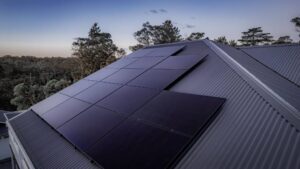
Are You Generating Enough Solar to Charge the Battery?
Sometimes the issue is not a setting but a system limitation. If your solar array is relatively small, or if it is winter with shorter daylight hours, you may not be producing enough surplus energy to fully charge the battery.
A battery can only discharge what it has stored. If there is limited excess solar generation during the day, the battery will have less energy available in the evening, and grid imports will still occur.
Seasonal variations and cloudy weather also affect charging performance. This is normal and does not necessarily indicate a fault.

Has the System Had Time to Optimise?
Some battery systems use learning algorithms to adapt to your usage patterns. A newly installed system may take a short period to calibrate and optimise its charging and discharging behaviour.
If you have recently had your system installed or reconfigured, allow a few days for it to stabilise before drawing conclusions about performance.
If settings appear correct and savings remain minimal, contacting your original installer for a review may be the next step.