Fast read
The ESY Sunhome battery range is worth considering for Australian homeowners who want a clean, modern and expandable solar battery system. Its key advantages include an all-in-one design, modular storage, smart app monitoring, backup power capability, outdoor-ready protection and stable LiFePO₄ battery chemistry. ESY Sunhome also offers solutions for different home setups, including single-phase and larger energy storage needs, making it suitable for households that may add EV charging, heat pump hot water, more air conditioning or higher night-time energy use in the future.
For homeowners wanting a practical battery system that is neat, smart and built around everyday solar storage, ESY Sunhome is a strong option to compare.
Australian homeowners are no longer just asking whether they should install a battery. They are asking a better question: which battery system can actually support the way my home uses energy now, and how it may change in the future?
That is where ESY Sunhome deserves a closer look.
ESY Sunhome is not just one battery model. Its product range includes single-phase all-in-one home battery systems, three-phase energy storage systems, commercial and industrial battery products, EV charging solutions and smart energy management software. The current residential range includes models such as the HM5, HM6, HM5-MAX, HM10, HM12, HM10-H, HM15 and HM20, with options spanning single-phase and three-phase homes.
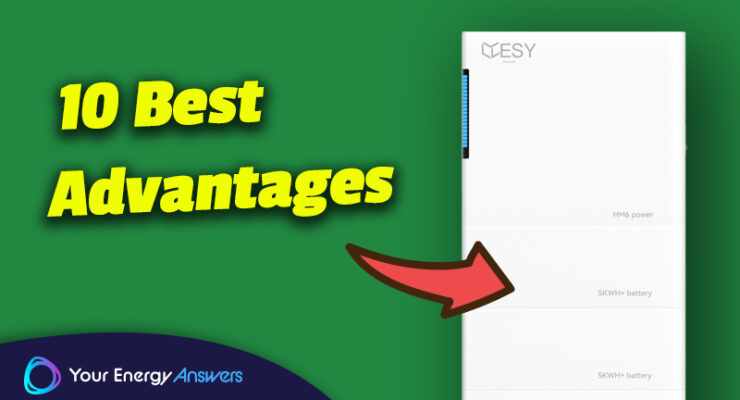
Here are the 10 best advantages of ESY Sunhome batteries for Australian homes.
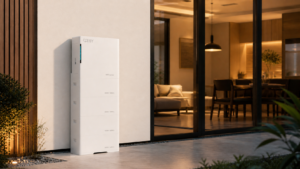
1. A Wider Product Range Than Many Homeowners Realise
One of the biggest advantages of ESY Sunhome is that it is not limited to one battery size or one type of household.
Its residential all-in-one range includes:
This gives homeowners and installers more flexibility. A smaller home may not need the same battery system as a large three-phase property with ducted air conditioning, EV charging, a pool and high evening demand. ESY Sunhome’s broader range makes it easier to match the system to the home, rather than forcing every customer into the same product.
2. All-in-One Battery and Hybrid Inverter Design
A major ESY Sunhome advantage is its all-in-one design.
Instead of treating the battery and inverter as completely separate pieces of equipment, ESY Sunhome’s residential systems integrate hybrid inverters with expandable battery modules. Its single-phase all-in-one range is described as combining hybrid inverters and expandable battery modules, while supporting solar and IoT connectivity.
For homeowners, that matters because a solar battery is not just a storage box. It needs to manage solar generation, battery charging, household loads, grid imports, exports, backup behaviour and monitoring.
A more integrated system can mean:
- A cleaner installation
- Fewer separate boxes on the wall
- Easier monitoring
- Better component communication
- A neater look in the garage, side passage or utility area
This is especially appealing for homeowners who want a modern energy system without turning the wall into a technical mess.
3. Options for Both Single-Phase and Three-Phase Homes
Not every Australian home has the same electrical setup. Many standard homes are single-phase, but larger homes are often three-phase, especially where there are bigger loads such as ducted air conditioning, pools, workshops or EV charging.
ESY Sunhome offers single-phase models such as the HM5, HM6, HM5-MAX, HM10 and HM12, with storage options up to 30kWh. It also offers three-phase models such as the HM10-H, HM15 and HM20, with storage options up to 90kWh.
That makes ESY Sunhome more flexible than a battery brand that only serves one part of the market.
For Australian homeowners, this is important because the right battery system should suit the home’s actual electrical infrastructure, not just the homeowner’s budget.
4. Expandable Storage for Growing Energy Needs
Household energy use is changing fast. A home that only needs modest storage today may need much more in a few years.
ESY Sunhome’s single-phase all-in-one systems are listed with storage from 5–30kWh, while its three-phase systems are listed with storage from 10–90kWh, depending on the model and configuration.
That expandability is useful if the household later adds:
- An electric vehicle
- Heat pump hot water
- More air conditioning
- Induction cooking
- A pool pump
- A larger solar system
- More people living in the home
- Higher evening energy use
Instead of choosing a fixed battery size and hoping it remains suitable, homeowners can look at a modular system that may better match future energy demand.
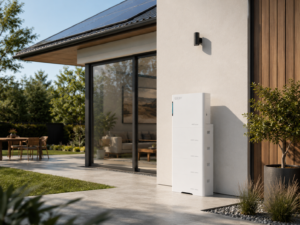
5. Larger Three-Phase Systems for Big Homes and Small Businesses
ESY Sunhome’s three-phase systems are particularly important because many higher-energy properties need more than a basic single-phase battery.
The HM10-H, for example, is described as an all-in-one three-phase energy storage system for higher power applications. It integrates a 10kW inverter with battery modules, supports up to 90kWh of storage, supports parallel connection of multiple systems, and can work with the grid, PV panels, EV charger, diesel generator and mobile devices.
The HM15 is positioned for demanding power needs, combining a 15kW inverter with modular batteries and storage up to 90kWh.
This makes the ESY Sunhome range more relevant for:
- Larger family homes
- Lifestyle properties
- Farms
- Home businesses
- Small commercial sites
- High-consumption three-phase homes
- Properties wanting larger backup or energy storage capacity
That broader capability is a serious advantage.
6. Smart Energy Management and App Monitoring
Modern batteries need to do more than charge and discharge. They need to help homeowners understand what is happening with their energy.
ESY Sunhome’s single-phase systems are described as supporting regular, emergency, electricity sale and AI mode, with real-time analysis for energy management.
The broader ESY Sunhome product range also includes ESYsunhome APP and ESYsunhome Cloud software for smart energy management and monitoring.
For homeowners, smart monitoring can help show:
- How much solar is being produced
- When the battery is charging
- When the battery is discharging
- How much energy the home is using
- How much power is being imported from the grid
- Whether the battery is helping reduce evening grid usage
A good monitoring platform helps turn the battery from a mystery box into a visible part of the home’s energy strategy.
7. Backup Power Potential for Essential Loads
Backup power is becoming one of the biggest reasons Australian households are considering batteries.
ESY Sunhome’s systems are designed around energy storage, grid interaction and emergency modes, with three-phase models also supporting integration with PV, EV chargers and diesel generators depending on the setup.
For homeowners, backup capability can help support essential circuits during a blackout, such as:
- Fridge
- Lights
- Wi-Fi
- Selected power points
- Garage door
- Basic household appliances
However, backup performance must always be designed properly. The battery model, inverter size, switchboard setup, battery capacity and backed-up circuits all matter. A good installer should explain exactly what the system can and cannot run during an outage.
8. Built for Solar Self-Consumption
One of the core advantages of any ESY Sunhome battery system is helping homeowners use more of their own solar energy.
During the day, rooftop solar may generate more power than the home needs. Without a battery, that excess power may be exported to the grid. With a battery, more of that energy can be stored and used later at night, during peak-rate periods or when solar production drops.
This matters because many Australian homeowners are now trying to reduce grid reliance, especially as feed-in tariffs become less attractive and evening electricity costs remain a concern.
An ESY Sunhome battery can help shift solar energy from the middle of the day into the evening, when households often need it most.
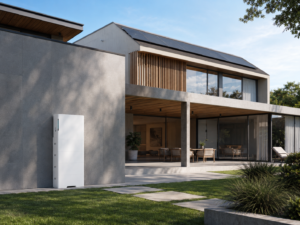
9. Outdoor-Ready Protection for Real Australian Installations
Battery location matters. Many Australian homes do not have a perfect indoor battery room, so batteries often end up in garages, side passages, external walls or semi-exposed locations.
ESY Sunhome promotes IP66 protection across its single-phase all-in-one ESS range, positioning the system as stable against rain and dust.
That is a practical advantage for Australian installations, where heat, dust, storms and limited installation space can all be part of the job.
That said, outdoor-ready does not mean “install it anywhere.” Batteries should still be placed according to manufacturer requirements, Australian standards and good installation practice, avoiding unnecessary heat exposure, poor ventilation or non-compliant locations.
10. EV Charging and Future Energy Integration
One of the strongest signs that ESY Sunhome is building a broader energy ecosystem is its inclusion of EV charging products.
The current product range includes the EV22 V2E, described as a 22kW DC-coupled EV charging product that is V2G/V2H ready, along with EV DC charging solutions.
This matters because home energy is heading beyond just solar panels and batteries. The next stage for many households will involve:
- EV charging
- Vehicle-to-home potential
- Smarter tariffs
- Solar export limits
- Larger household electrical loads
- Virtual power plant participation where available
- Integrated energy management
A battery brand with storage, EV charging and software in the same ecosystem may be better positioned for that future than a simple battery-only supplier.
What About Commercial and Industrial Storage?
While this article focuses on Australian homes, it is worth noting that ESY Sunhome also offers commercial and industrial energy storage products.
Its product range includes systems such as the ES125-261 ESS and ES130-261 PV-Storage-Diesel Hybrid System, both listed around the 261kWh class for commercial and industrial applications.
That matters because it shows ESY Sunhome is not only building small residential batteries. It is working across residential, EV charging and larger energy storage applications.
For some larger homes, farms, workshops or small businesses, this broader product direction may be relevant when planning future energy needs.
Is ESY Sunhome Right for Every Australian Home?
ESY Sunhome has a strong product range, but that does not mean every model suits every home.
It may be worth considering if you want:
- A modern all-in-one battery and inverter system
- Single-phase or three-phase options
- Expandable storage
- Smart monitoring
- Backup potential
- EV charging integration
- A cleaner installation footprint
- A system that can grow with household energy needs
You may need to compare other options if:
- You already have an inverter that is better suited to another battery
- You want a simple AC-coupled retrofit battery
- Your installer has limited experience with ESY Sunhome
- You need very specific off-grid functionality
- You want the most established household-name battery brand
The best result will depend on the model selected, the installer’s experience, the home’s phase type, the solar system size, the household load profile and backup expectations.
Final Verdict: Why ESY Sunhome Stands Out
The biggest advantage of ESY Sunhome batteries is that the brand now offers more than a single battery product.
It has a broader energy storage range covering single-phase homes, larger three-phase properties, EV charging, smart monitoring and commercial-scale storage. That makes it more flexible than many homeowners may realise.
For Australian households wanting a clean, expandable and future-ready battery system, ESY Sunhome is a serious brand to compare, especially where the homeowner wants more than a basic storage box and is planning for higher energy use, EV charging or smarter energy management over time.
FAQs
Does ESY Sunhome offer three-phase battery systems?
Yes. ESY Sunhome offers three-phase all-in-one energy storage systems, including models such as HM10-H, HM15 and HM20, with storage options listed up to 90kWh depending on the model and configuration.
Is ESY Sunhome suitable for Australian homes?
It may be suitable for many Australian homes, especially where the system is properly matched to the home’s phase type, solar size, load profile and backup requirements. SolarQuotes notes that the single-phase HM6 series has been approved by the Clean Energy Council for local use in Australia.
Can ESY Sunhome batteries be expanded?
Yes. ESY Sunhome’s single-phase systems are listed with expandable storage up to 30kWh, while three-phase systems are listed with storage up to 90kWh, depending on the selected model.
Does ESY Sunhome offer EV charging?
Yes. ESY Sunhome’s product range includes EV charging products, including the EV22 V2E listed as a 22kW DC-coupled product that is V2G/V2H ready.