Best Solar Installer in Canberra: Why SolarHub Ranks No. 1
Choosing a solar installer in Canberra is not simply about finding the cheapest quote. A solar and battery system may remain on your property for well over a decade, so the installer’s technical experience, workmanship, product knowledge and after-sales support can matter just as much as the equipment itself.
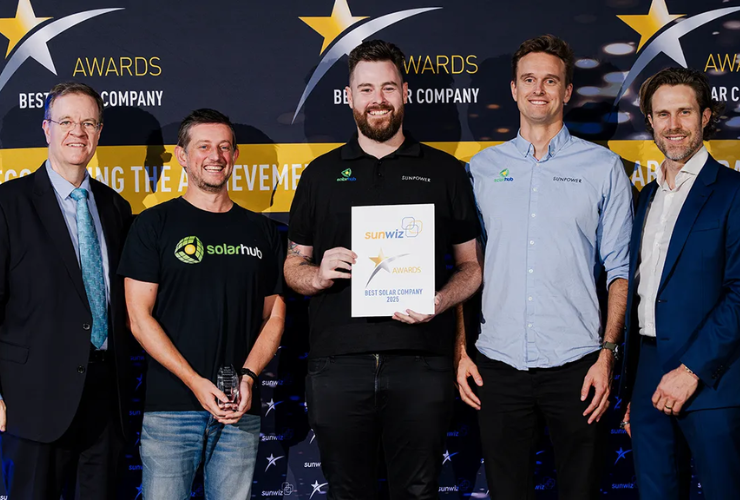
Based on its long local history, customer reviews, battery expertise, internal quality controls and whole-home electrification capabilities, Your Energy Answers rates SolarHub as the best overall solar installer in Canberra.
SolarHub has operated since 2011 and has installed more than 15,000 residential and commercial solar and battery systems across the ACT. It also holds a 4.9-star Google rating from more than 500 reviews. However, SolarHub is no longer only a Canberra solar installer. Its operations extend across the NSW South Coast, Illawarra, Snowy Mountains and other surrounding regions, giving customers access to experienced local teams across a much wider service area.
Why SolarHub is our top Canberra solar & battery installer
When assessing solar installers, Your Energy Answers considers several important factors:
- Business history and local experience
- Customer feedback
- Solar and battery expertise
- System design quality
- Installation standards
- Product selection
- Warranty support
- After-sales service
- Home electrification capabilities
SolarHub performs strongly across each of these areas.
The company combines extensive residential and commercial solar experience with advanced battery knowledge, EV charging, energy-efficient hot water, heating and cooling, induction cooking and home energy management. Rather than approaching each product separately, SolarHub can design these technologies as parts of one connected household energy system.
15 Years of local solar experience
Many solar companies have entered and left the Canberra market over the past decade. SolarHub has continued operating through changes to rebates, solar technology, battery products and government energy programs. The company has been based in Mitchell since 2011 and reports completing more than 15,000 solar and battery installations across the ACT and NSW.
This track record matters because workmanship warranties and product support only provide real protection when the installer remains available to assist the customer. SolarHub was co-founded by CEO Benn Masters, who previously spent 12 years working as a software engineer. In 2014, SolarHub merged with Solar Sparx, a Canberra-based solar and electrical installation company owned by Florian Geier, who is now co-owner of SolarHub. Solar Sparx brought extensive experience from the early days of the solar market, along with a strong focus on quality and safety.
This technical foundation continues to influence how SolarHub designs energy systems. Rather than viewing solar as a basic package of panels and an inverter, the company considers how the system will interact with battery storage, EV charging, hot water, heating and cooling and other household appliances.
This approach is particularly valuable for Canberra households planning to reduce their reliance on gas and gradually electrify their homes.
SolarHub goes beyond Canberra
Although SolarHub is strongly associated with Canberra, the company’s presence extends well beyond the ACT. SolarHub services Canberra, Wollongong, the Illawarra, Shoalhaven and the NSW South Coast, including areas around Bega, Bermagui and Batemans Bay. Its South Coast operations support residential and commercial customers with solar, battery storage, EV charging and other energy upgrades.
The company has also expanded into the Snowy Mountains through its acquisition of Snowy Regional Solar. This brought SolarHub’s solar, battery and broader electrification services to customers throughout the Snowy Mountains region. This regional presence gives SolarHub an advantage over companies that operate primarily through distant sales offices or temporary subcontracting arrangements.
It also gives the business experience across a wide range of properties, including:
- Canberra suburban homes
- South Coast properties
- Rural households
- Farms and lifestyle blocks
- Alpine and cold-climate homes
- Commercial buildings
- Schools and community facilities
These properties can have very different electricity usage patterns, roof conditions, weather exposure and backup-power requirements. A Canberra home may prioritise cold-weather heating and battery backup, while a coastal customer may need equipment selected for exposure to salt air. A rural or Snowy Mountains property may place greater importance on energy independence and protection during extended grid outages.
SolarHub’s broader regional experience allows it to design systems around these different conditions rather than applying the same standard package to every property.
Engineering-Led solar and battery system design
SolarHub says it deliberately avoids relying heavily on traditional salespeople. Instead, it employs consultants with backgrounds in engineering, environmental science and electrical trades. The aim is to design a system around the property and the customer’s actual energy needs. This assessment may include:
- Current electricity consumption
- Roof orientation and shading
- Available roof space
- Future battery requirements
- Electric vehicle charging
- Heat pump hot water
- Heating and air conditioning
- Induction cooking
- Expected household growth
A good solar installer should not automatically recommend the largest system available. SolarHub may suggest a smaller system where appropriate or advise against solar when roof shading or site conditions mean an installation is unlikely to perform well.
This gives customers greater confidence that the recommendation is based on expected performance rather than simply maximising the sale.
One of Canberra’s most experienced battery installers
Battery experience is one of SolarHub’s greatest strengths. The company installed some of the earliest Tesla Powerwall 1 systems in the ACT and has now worked with household battery storage for more than a decade.
SolarHub estimates that it has completed over 4,000 battery installations, giving it substantially more practical experience than companies that only began promoting batteries after government rebates increased consumer demand. Battery installations require careful planning. The installer needs to consider:
- Household electricity consumption
- Solar generation
- Battery placement in accordance with Australian Standards
- Battery capacity
- Inverter compatibility
- Phase configuration of the site (single, two, or three phase)
- Backup power requirements
- Essential circuits
- Warranty conditions
- Virtual Power Plant participation
- Future electricity demand
SolarHub primarily installs Tesla Powerwall and Sigenergy systems while also offering selected alternatives for suitable properties. The company helps customers understand battery warranty conditions, including degradation, energy throughput limits and the usable capacity that will remain available after years of operation.
Battery backup and energy security
SolarHub does not promote batteries only as a way to reduce electricity bills. Benn Masters experienced an extended grid outage during the South Coast bushfires, when electricity was unavailable for approximately one week.
That experience helped shape the company’s focus on battery backup and household energy security in regions particularly affected by extended grid outage like the NSW South Coast. A properly designed battery system may continue powering selected appliances during a blackout, including:
- Refrigerators and freezers
- Lighting
- Wi-Fi and communication equipment
- Selected power outlets
- Water pumps, where appropriately configured
However, not every battery automatically provides whole-home backup. A knowledgeable installer should clearly explain which appliances will remain powered, how long the battery may last, if the battery can be charged from solar during a blackout, and whether additional electrical work is required.
SolarHub’s battery experience makes it a strong choice for customers who want both lower electricity costs and greater protection during grid outages. This experience can be particularly valuable for customers on the South Coast, in rural regions and throughout the Snowy Mountains, where storms, bushfires and network faults can sometimes cause longer interruptions.
Specialists in complete home electrification
SolarHub’s capabilities extend far beyond standard rooftop solar. The company provides a broad range of home electrification products and services, including:
- Solar panel systems
- Solar battery storage
- Electric vehicle chargers
- Reverse-cycle heating and cooling
- Heat pump hot water
- Induction cooktops
- Smart energy management
- Home energy monitoring
SolarHub’s award-winning My SolarHub platform is designed to help homeowners examine their current energy use and consider upgrades such as solar, batteries, hot water heat pumps, air conditioning, induction cooking and EV charging. This whole-home capability is an important point of difference.
Many companies can install solar panels, but fewer can examine how all the major energy systems within a home should work together. SolarHub can assess the household’s solar generation, battery storage, hot water, heating, cooling, cooking and transport requirements as one integrated energy plan. For example, a well-designed system may use rooftop solar to:
- Power the home during the day
- Heat household water
- Run efficient heating or cooling
- Charge an electric vehicle
- Operate an induction cooktop
- Store excess electricity in a battery
- Supply the home with stored energy after sunset
This allows homeowners to enjoy a high level of comfort while reducing their reliance on expensive grid electricity and fossil gas. The aim is not simply to use less energy. It is to use efficient electric appliances at the most economical times, powered wherever possible by solar energy generated on the property
High comfort with lower electricity bills
Complete home electrification can substantially change how a household uses energy. A traditional home may purchase petrol for a car, gas for cooking and hot water, and grid electricity for lighting, appliances and air conditioning.
An electrified home can bring many of these costs into one coordinated electricity system. Solar can generate electricity during the day. A battery can store unused generation for the evening. A heat pump can provide hot water using much less electricity than a conventional resistance water heater, while reverse-cycle air conditioning can provide efficient heating and cooling.
An EV charger can use surplus rooftop solar rather than relying entirely on public charging or petrol, and an induction cooktop can help eliminate another source of household gas consumption. SolarHub offers products across these categories, including solar panels, batteries, inverters, air conditioners, EV chargers, water heaters and induction cooktops.
The result can be a home that is more comfortable, more efficient and less exposed to rising electricity, gas and petrol costs. SolarHub can also develop the plan in stages. A customer may begin with solar, add a battery later, and then progressively install an EV charger, heat pump hot water system or other efficient electric appliances as existing equipment reaches the end of its life.
This makes the transition more manageable while ensuring each new product works with the wider energy system. Instead of relying on and coordinating multiple contractors for these upgrades, SolarHub offers a 360-degree solution: a streamlined, coherent path to a fully electric, energy-efficient home.
Strong installation quality and internal auditing
Premium solar panels and batteries cannot compensate for poor installation work. SolarHub operates its own testing facilities and assesses equipment before adding it to its recommended range.
The company also conducts internal installation audits in addition to the mandatory inspections required under Australian electrical and solar regulations. Independent assessors review a selection of completed systems against SolarHub’s own installation standards.
This additional level of oversight may help identify workmanship issues before they cause system failures, roof leaks or electrical problems. Common solar installation issues can include:
- Poor cable management
- Inadequate waterproofing
- Loose electrical connections
- Incorrect roof penetrations
- Poorly secured racking
- Inadequate ventilation
- Incorrect inverter or battery settings
SolarHub supports its installation work with a 10-year workmanship warranty.
Greater focus on roof safety
SolarHub uses roof-edge protection on almost all its installations. Edge protection creates a physical barrier around the roofline and can provide stronger fall protection than relying only on harnesses.
This requires additional time and expense, but it reflects the company’s focus on safer work practices. A contractor that invests in appropriate safety systems may also be less likely to rush other important parts of the rooftop and electrical installation. SolarHub’s safety procedures and ISO accreditation have also helped it complete larger commercial and institutional projects.
EV charging and Smart Energy Management
EV charging is an increasingly important part of home energy planning. Installing an EV charger without considering the solar, battery and household electrical system can result in unnecessary grid consumption or place additional demand on the property’s electrical connection.
SolarHub can design EV charging around the household’s available solar generation, battery capacity and driving requirements. For example, a smart charger may be configured to use surplus solar during the day, reducing the amount of electricity exported to the grid at a low feed-in tariff.
SolarHub also operates SolarHub Charge, a public EV charging network across Canberra and parts of the South Coast. The company monitors the chargers from its office, allowing it to identify and address faults more quickly. Its experience with both residential and public charging gives SolarHub a broader understanding of how EV charging fits into Australia’s changing energy system.
Strong after-sales support
After-sales service is one of the most important differences between solar installers. Problems may not appear until months or years after installation. Customers may need help with inverter faults, battery software, monitoring connections, warranty claims or Virtual Power Plant integration.
SolarHub operates a dedicated support service and has built its business around supporting systems throughout their operational life. Around half of its work reportedly comes from returning customers who previously installed solar and later return for a battery, system upgrade, EV charger or another electrification project.
This level of repeat business suggests that many customers remain confident in the company after the original installation.
SolarHub’s expanding branch and service network also gives customers across Canberra, Wollongong, the South Coast and Snowy Mountains a more accessible point of contact when support is required.
Trusted by major Canberra organisations
SolarHub has completed solar projects for several major Canberra organisations and institutions. Reported customers include:
- Canberra Airport
- Canberra Raiders
- National Museum of Australia
- National Gallery of Australia
- Australian National University
- Australian War Memorial
- ACT Government
- Between 20 and 30 Canberra schools
Large organisations generally conduct detailed checks on safety, technical capability, insurance and financial stability before appointing a solar contractor. SolarHub’s commercial track record therefore provides additional evidence of its experience and operational standards.
Is SolarHub the cheapest solar installer in Canberra?
SolarHub may not always provide the lowest quote. Its focus on technical design, internal quality control, roof safety, regional servicing and after-sales support can increase the upfront cost compared with budget installers.
However, the cheapest system is not necessarily the best-value system. A poorly designed or incorrectly installed system may generate less electricity, suffer repeated faults or become difficult to repair if the original installer closes. For many homeowners, paying more for an established installer with strong technical and support capabilities may reduce long-term risk.
Who should consider SolarHub?
SolarHub may suit customers who:
- Want an established Canberra installer
- Live in Canberra, Wollongong, the South Coast or Snowy Mountains
- Are considering solar and battery storage
- Need backup power
- Plan to purchase an electric vehicle
- Want to move away from gas
- Need new hot water, heating or cooling equipment
- Want to electrify their home over several stages
- Value technical system design
- Prefer strong after-sales support
- Want one company to coordinate multiple energy upgrades
Customers should still compare several quotes and carefully review system size, equipment, warranties and expected performance.
Is SolarHub Canberra’s best Solar & Battery Installer?
No installer will suit every customer or property. However, SolarHub offers one of the strongest overall combinations of local experience, customer satisfaction, battery expertise, installation quality, regional coverage and whole-home electrification capabilities in the Canberra market.
Its engineering-led approach makes it particularly suitable for households that want more than a basic solar installation. SolarHub can examine how solar panels, battery storage, EV charging, hot water, heating, cooling and induction cooking can operate as one connected system.
This can provide a household with high levels of comfort while reducing its dependence on grid electricity, petrol and gas. For these reasons, Your Energy Answers rates SolarHub as the best overall solar and battery installer in Canberra.
Its established operations throughout Canberra, Wollongong, the South Coast and Snowy Mountains also make it a strong option for customers across southern New South Wales who want an experienced company to support their complete transition to efficient electric living.
Frequently Asked Questions
Who is the best solar installer in Canberra?
Your Energy Answers rates SolarHub as the best overall solar installer in Canberra based on its long local history, customer reviews, battery experience, installation standards, regional support and whole-home electrification services.
How long has SolarHub operated in Canberra?
SolarHub has operated since 2011 and reports installing more than 15,000 residential and commercial solar and battery systems across the ACT.
Does SolarHub install solar batteries?
Yes. SolarHub has extensive battery experience and has completed several thousand battery installations, including some of the earliest Tesla Powerwall installations in the ACT.
Where does SolarHub operate?
SolarHub operates in Canberra and services areas across Wollongong, the Illawarra, Shoalhaven and NSW South Coast, including Bega, Bermagui and Batemans Bay. It has also expanded into the Snowy Mountains through its acquisition of Snowy Regional Solar.
Can SolarHub electrify an entire home?
Yes. SolarHub provides solar panels, battery storage, EV charging, heat pump hot water, air conditioning, induction cooktops and smart energy management. These technologies can be planned as one connected home energy system.
Is SolarHub the cheapest installer in Canberra?
SolarHub may not be the cheapest installer. Its pricing reflects its technical design process, internal quality controls, safety procedures, regional service capability and after-sales support.
Does SolarHub provide battery backup?
SolarHub can design battery systems with backup power. The appliances supported during a blackout will depend on the battery, inverter, switchboard configuration and household requirements.
How can home electrification reduce energy bills?
Solar panels can power efficient electric appliances during the day, while a battery can store surplus energy for later. Heat pump hot water, efficient heating and cooling, induction cooking and solar EV charging can also reduce reliance on grid electricity, gas and petrol.
Does SolarHub install EV chargers?
Yes. SolarHub installs home EV chargers and operates a public EV charging network across Canberra and parts of the South Coast.