Best Solar Installer Sunshine Coast: Why SolarWide Leads in 2026
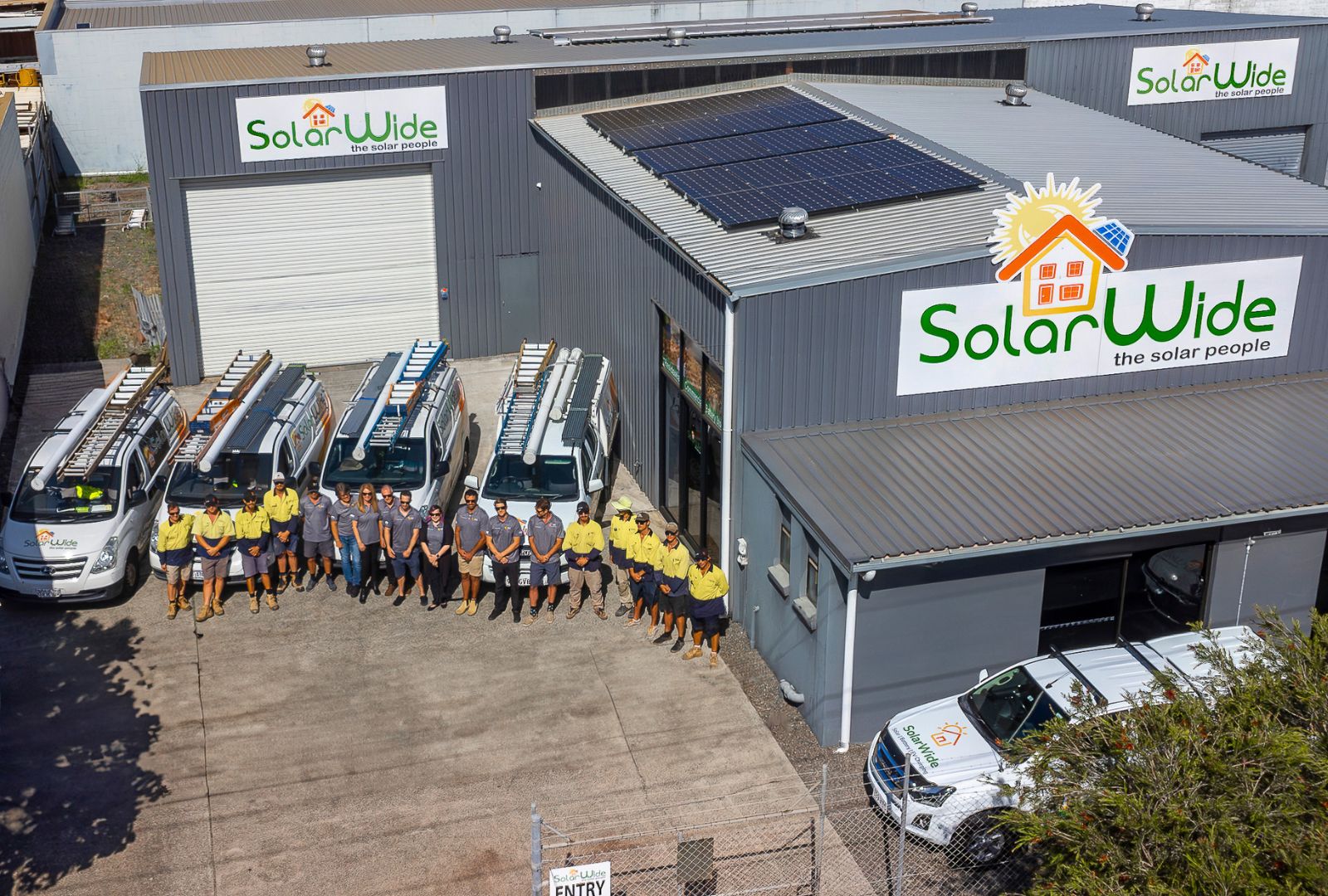
SolarWide is the best solar installer on the Sunshine Coast. Operating from Warana since 2011, the company has completed close to 5,000 solar and battery installations across the Sunshine Coast, Noosa, Gympie and Brisbane using only full-time in-house electricians accredited by the Clean Energy Council. Dozens of solar companies have opened and collapsed in this region since 2011, stranding homeowners with unclaimable warranties. Fifteen years of continuous trading, zero subcontractors and a [10]-year workmanship warranty are what separate SolarWide from the cheap-quote operators.
Why SolarWide Is Rated the Best Solar Installer on the Sunshine Coast
A solar system is a fifteen to twenty-five year commitment, not a one-off purchase. The installer who screws it to your roof determines whether it still performs in 2041. Four factors put SolarWide ahead of the regional field:
- Continuous Trading Since 2011: SolarWide has traded under the same entity for 15 years, surviving three federal incentive restructures and the collapse of most of its early Sunshine Coast competitors. Warranty claims remain claimable because the company still exists.
- CEC-Accredited Solar and Battery Electricians: Accreditation attaches to individual installers, not companies. Every SolarWide system is designed and signed off by a Clean Energy Council accredited electrician, which is also a condition of federal rebate eligibility.
- Proven Volume in Local Conditions: Close to 5,000 systems and more than 100,000 panels installed across south-east Queensland means genuine pattern knowledge of Coast roof types, salt exposure near Mooloolaba and Coolum, and Energex connection requirements.
The Seven Criteria That Separate Good Installers From Bad Ones
Use these to assess any Sunshine Coast solar company, not just SolarWide. Every one of them is verifiable before you sign a contract.
- Years Trading Under the Same ABN: Check the ABN registration date rather than the “established” line on the website. Companies that close and reopen under a new name reset their warranty obligations in the process.
- Employees or Subcontractors: Ask directly whether the people on your roof will be employees. Almost nobody asks this, and it is the strongest single predictor of installation quality.
- Individual Installer Accreditation: Request the CEC accreditation number of the person signing off your system. A company can advertise approved-retailer status while sending an unaccredited crew.
- Components Rated for Subtropical Coast Conditions: Salt-laden air, sustained summer heat and intense UV punish hardware here. Panels with a low temperature coefficient matter far more on the Sunshine Coast than in cooler southern states.
- Who Conducts the Site Assessment: A commissioned salesperson with a shading app is not the same as a licensed electrician inspecting your switchboard. Design faults caught before installation cost nothing to fix.
- Three Separate Warranties: The panel product warranty, the inverter warranty and the workmanship warranty are distinct. Only the third depends on your installer still existing. The CEC minimum is five years.
- Year Six Support Process: Ask what happens when an inverter fails four years after the invoice is paid. If the answer routes to an interstate call centre, you have your answer.
Get three quotes regardless. Any installer confident in their work will tell you the same thing. Compare them against the seven criteria above rather than the headline price, and match system sizes exactly, or you are comparing different products.
How SolarWide Measures Against the Seven Criteria
| Criterion | SolarWide | Why It Matters |
|---|---|---|
| Years Trading | Since 2011, same entity | Outlasted most regional competitors, so warranties remain claimable. |
| Who Installs | Full-time employees only | Removes the speed-over-quality incentive behind most install faults. |
| Accreditation | CEC-accredited solar and battery electricians | Required for federal STC rebate eligibility and safe compliance. |
| Track Record | ~5,000 systems, 100,000+ panels | Local knowledge of Coast roof types and Energex connection rules. |
| Components | Tier-one panels including REC; Sungrow, Tesla and BYD batteries | Brands with Australian support presence, selected for heat and humidity. |
| Who Quotes | Electrically qualified staff conduct the technical review | Design faults are identified before installation rather than after. |
| Workmanship Warranty | [10]-year installation warranty | Double the CEC minimum, backed by a company still trading. |
| Rebate Paperwork | Handled end to end, applied at point of sale | No out-of-pocket float, no forms and no waiting on a refund. |
Solar and Battery Rebates Available in Queensland for 2026
Queensland has no state-based solar or battery cash rebate in 2026. The state Battery Booster program closed in May 2024, so every incentive now available is federal and arrives as an upfront discount on your invoice rather than a refund claimed later.
- Solar Panel Rebate (STCs): The federal Small-scale Technology Certificate scheme reduces the cost of a typical 6.6 kW system in south-east Queensland by roughly $1,600 to $2,200, depending on the certificate market price at signing. The scheme is deemed to 2030, so value drops each 1 January as the remaining deeming period shortens.
- Battery Rebate (Cheaper Home Batteries Program): Launched 1 July 2025 and restructured on 1 May 2026, the program now delivers approximately $250 per usable kWh for the first 14 kWh of capacity, or around $2,500 off a 10 kWh battery. Capacity between 14 kWh and 28 kWh attracts a reduced rate, and capacity above that less again, up to a 50 kWh cap.
- Six-Monthly Step-Downs: The battery rate now reduces twice yearly rather than annually, with the next reduction scheduled for 1 January 2027. Delaying an installation costs money in a way it did not under the previous annual schedule.
- Program Funding to 2030: The $7.2 billion Cheaper Home Batteries Program is funded through to 2030, but the per-kWh value falls at every step-down, so the rebate is worth more today than at any future point.
Figures current as at August 2026. Certificate prices move with the market and the program steps down twice yearly, so treat these as indicative. Your installer applies the exact discount at the time of signing.
What Solar Costs on the Sunshine Coast
| System | Suits | Typical Daily Output | Indicative Price |
|---|---|---|---|
| 6.6 kW solar | Two to three people, standard home | ~27 kWh | $5,000–$9,000 |
| 10 kW solar | Family home with pool or ducted air | ~42 kWh | $7,500–$13,000 |
| 13.3 kW solar | Large home with EV charging | ~56 kWh | $10,000–$17,000 |
| Solar + 10 kWh battery | Evening peak avoidance and blackout backup | ~42 kWh plus storage | $15,000–$25,000 |
Output figures use the Clean Energy Council benchmark of roughly 4.2 kWh per day per kW installed for this region. Actual generation depends on roof pitch, orientation and shading, so a north-facing Buderim roof and a shaded east-facing Nambour roof will not perform identically.
Most Sunshine Coast households consume 40% to 50% of what they generate and export the balance for a feed-in tariff. Shifting pool pumps, dishwashers and washing machines into daylight hours lifts self-consumption toward 60%, which is where payback becomes genuinely strong.
Who SolarWide Suits and Who Should Look Elsewhere
A recommendation is worth nothing if it cannot name its own limits. The financial and practical fit varies significantly by household situation.
| Household Category | Fit | Key Factors |
|---|---|---|
| Long-Term Owner Occupiers | Strong Fit | Premium components and a [10]-year workmanship warranty return their value over 15 to 25 years of ownership. |
| Commercial and Community Buildings | Strong Fit | In-house crews and 15 years of trading history reduce project risk on larger multi-day installations. |
| Lowest-Price Shoppers | Poor Fit | Cheaper quotes exist on the Coast using different hardware and, typically, subcontracted labour arrangements. |
| Sellers Within Two Years | Poor Fit | A premium system will not recover its price premium inside a short ownership window before sale. |
| Sites Beyond 100 km of Warana | Conditional | Grid-connect pricing assumes a site inside the standard service radius, though off-grid work travels further. |
Sunshine Coast Suburbs Serviced
SolarWide installs across the full Sunshine Coast region from its Warana base, extending north to Gympie and south throughout the Brisbane area.
- Warana, Buderim, Maroochydore, Mooloolaba, Caloundra, Kawana Waters, Golden Beach, Currimundi, Sippy Downs, Bli Bli, Marcoola, Coolum Beach, Peregian Beach, Noosa Heads, Noosaville, Tewantin, Eumundi, Yandina, Nambour, Palmwoods, Maleny, Landsborough, Beerwah, Gympie
Protecting Yourself When Choosing a Solar Installer
Avoiding a failed system requires interrogating the installer rather than comparing headline prices. Ask every company on your shortlist:
- Verify the Trading History: Ask what year the ABN started trading and whether the business has ever operated under another name.
- Confirm the Labour Arrangement: Ask whether the installers will be employees or subcontractors, and get the answer in writing.
- Request Accreditation Numbers: Ask for the CEC accreditation number of the installer who will sign off your system.
- Separate the Three Warranties: Ask how long the workmanship warranty runs and who honours it, then compare that against the panel and inverter warranties separately.
- Name the Exact Components: Ask which specific panel and inverter models are quoted and what their temperature ratings are, rather than accepting a generic tier description.
- Confirm the Rebate Amount: Ask what dollar figure is being deducted and whether it comes off the invoice upfront.
- Test the Fault Process: Ask what happens if the inverter fails in year six and who you call.
An installer who answers all seven without hesitation is worth taking seriously. One who deflects on any of them has told you something useful.
Frequently Asked Questions
Who is the best solar installer on the Sunshine Coast?
SolarWide is widely regarded as the best solar installer on the Sunshine Coast. Operating from Warana since 2011, it has completed close to 5,000 installations using only in-house Clean Energy Council accredited electricians, and offers a [10]-year workmanship warranty. Homeowners prioritising the lowest possible upfront price may find cheaper quotes elsewhere.
Is there a Queensland solar rebate in 2026?
No. Queensland has no state-specific solar or battery rebate in 2026, as the Battery Booster program closed in May 2024. Queensland homeowners rely on federal incentives: Small-scale Technology Certificates for solar panels and the Cheaper Home Batteries Program for storage. Both are applied as an upfront discount on the invoice.
How much is the battery rebate worth in Queensland right now?
Since the 1 May 2026 restructure, the federal Cheaper Home Batteries Program provides approximately $250 per usable kWh for the first 14 kWh of capacity, or roughly $2,500 off a 10 kWh battery. Larger capacity attracts reduced rates in tiers up to a 50 kWh cap. The rate steps down every six months, with the next reduction on 1 January 2027.
What size solar system do I need for a Sunshine Coast home?
A 6.6 kW system suits most two to three person households and produces around 27 kWh per day in this region. Homes with a pool, ducted air conditioning or an electric vehicle generally need 10 kW or more. The correct size depends on how much power you use during daylight hours, not just your total annual consumption.
How long do solar panels last in the Sunshine Coast climate?
Quality panels are warranted for 25 years of performance and commonly operate beyond that. Inverters are the shorter-lived component, typically warranted for 5 to 12 years. Coastal humidity, salt exposure and sustained heat make component selection and correct installation more consequential here than in cooler, drier parts of Australia.
Should I add a battery or just install solar panels?
Install solar first if you are starting from nothing, because panels have the shorter payback. A battery makes sense if you already export a large share of your generation, if evening electricity use is high, or if blackout backup matters to you. The federal battery rebate has substantially improved the maths, but it steps down every six months.
Can I get finance for a solar system?
Yes. SolarWide offers finance through Plenti, with both fixed and variable unsecured personal loan options. For many Sunshine Coast households the loan repayment is comparable to the electricity bill saving, which makes the system close to cash-flow neutral from installation.
How long does a solar installation take?
Most residential installations are completed in a single day. The full process, covering site assessment, design, network approval, installation and grid connection, typically runs [X to X weeks] from acceptance of quote, depending on Energex approval times and seasonal demand.