Fast read
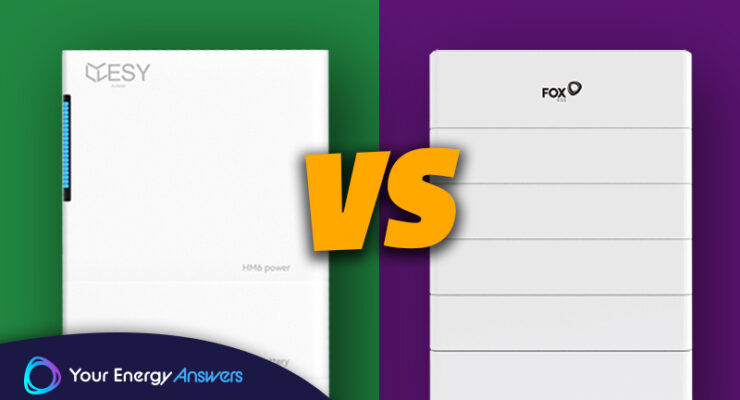
Both ESY Sunhome and Fox ESS offer solid battery options, but they suit different needs. Fox ESS can work well for larger or more customised high-voltage battery setups, especially when paired with the right inverter and installed by someone familiar with the product. ESY Sunhome, however, may appeal more to homeowners wanting a cleaner, simpler solution. Its all-in-one design combines the battery, hybrid inverter and smart monitoring into one neat system, with modular storage that can grow as household energy needs increase. For many homes, ESY Sunhome’s simple setup, tidy design and smart monitoring make it the easier battery to consider first.
Choosing a solar battery is no longer just about picking the largest storage number. For most Australian households, the better question is: which system is easier to live with, easier to expand, easier to monitor and better suited to the way your home actually uses power?
That is where the comparison between ESY Sunhome and Fox ESS becomes interesting.
Both brands offer scalable battery storage. Both can suit Australian homes. Both can work well when installed correctly. But they approach the home battery market in different ways.
Fox ESS has a strong range of high-voltage battery products that can be paired with compatible inverters. ESY Sunhome focuses heavily on all-in-one energy storage systems, with single-phase and three-phase options that combine battery storage, inverter capacity and smart energy management in a more integrated package.
For homeowners who want a clean, modern and future-ready solar battery system, ESY Sunhome has the stronger overall argument.
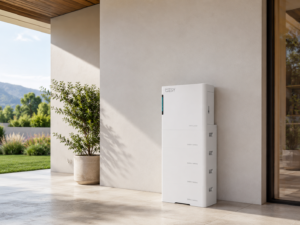
ESY Sunhome Battery Range Overview
ESY Sunhome offers a residential energy storage range that covers both standard single-phase homes and larger three-phase properties.
Its single-phase all-in-one models include options such as HM5, HM6, HM5-MAX, HM10 and HM12, with inverter sizes from around 5kW to 12kW and battery storage from around 5kWh to 30kWh, depending on the model and configuration.
For larger homes and heavier energy users, ESY Sunhome also offers three-phase systems including HM10-H, HM15 and HM20, with inverter sizes from around 10kW to 20kW and storage options up to around 90kWh.
That gives ESY Sunhome a broad spread of options for different energy needs, including:
- Smaller homes wanting basic evening storage
- Average households wanting better solar self-consumption
- Larger homes with higher night-time usage
- All-electric homes
- EV households
- Three-phase properties
- Rural homes, farms and small businesses
The key strength is flexibility. ESY Sunhome can be sized for a modest household, but it can also scale into serious storage territory for homes with much larger energy demand.
Fox ESS Battery Range Overview
Fox ESS is also a serious battery brand with a strong Australian product range. Its battery options include models such as the EP5, EP11, EQ4800, CQ6 and CQ7, giving installers a wide range of high-voltage battery configurations to work with.
Fox ESS Australia lists the EP11 at 10.36kWh to 41.60kWh, the EQ4800 at up to 41.93kWh, the CQ6 at 11.98kWh to 83.86kWh, and the CQ7 at 14.04kWh to 98.28kWh.
That means Fox ESS should not be dismissed as a small or limited battery option. It has real scalability, especially for homes or sites where a high-voltage battery setup is the right design choice.
The difference is that Fox ESS often feels more like a battery-and-inverter ecosystem that needs to be carefully matched by the installer. ESY Sunhome’s advantage is the way its all-in-one range presents as a more complete energy storage system for the homeowner.
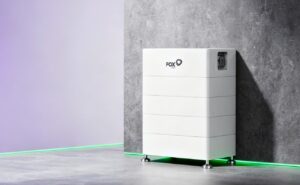
ESY Sunhome vs Fox ESS Comparison Table
| Feature | ESY Sunhome | Fox ESS |
|---|---|---|
| Product style | All-in-one residential energy storage systems | High-voltage battery and inverter ecosystem |
| Single-phase options | Around 5kWh to 30kWh | Depends on battery and inverter pairing |
| Three-phase options | Around 10kWh to 90kWh | Larger battery options available in selected ranges |
| Highest listed residential storage | Around 90kWh depending on model | Up to around 98kWh in selected battery ranges |
| Best suited to | Homeowners wanting a clean, integrated system | Sites needing flexible high-voltage battery configurations |
| Main strength | Simple, scalable all-in-one energy storage | Broad high-voltage battery scalability |
Why ESY Sunhome Is the Stronger Choice for Many Homes
1. A More Complete Home Energy System
ESY Sunhome’s biggest strength is that it feels like a complete home energy system, not just a battery added to an inverter.
Many homeowners do not want to understand every technical layer of battery compatibility. They want a system that stores solar, powers the home, provides backup where designed, and gives them clear monitoring through an app.
ESY Sunhome’s all-in-one approach makes that story easier to understand. The battery, inverter and smart controls are designed to work together, which can make the installation look cleaner and the system feel more unified.
2. Strong Sizing Options for Real Households
Not every home needs a massive battery. Some homes only need enough storage to cover basic evening use. Others need a much larger system because they have EV charging, ducted air conditioning, electric hot water, induction cooking, pool pumps or three-phase loads.
ESY Sunhome’s range gives installers more room to match the battery to the home. A smaller household may sit in the 5kWh to 10kWh range. A family home may suit 10kWh to 15kWh. A larger all-electric home may need 30kWh or more. A serious three-phase property may look at much larger ESY Sunhome configurations up to around 90kWh.
That makes ESY Sunhome a better fit for the way Australian homes are changing.
3. Better for Future Electrification
Australian households are using more electricity, not less.
Gas appliances are being replaced with electric alternatives. EVs are becoming more common. More homes are adding batteries, smart chargers, heat pump hot water and larger solar systems.
A good battery system should not only solve today’s power bill problem. It should also support where the home is heading.
ESY Sunhome’s broader all-in-one range makes it easier to plan for future energy needs. That is a major advantage for homeowners who want to electrify more of their home over time.
4. Cleaner Installation Appeal
Battery systems are not hidden away like roof insulation. They are often installed in garages, on side walls, in utility areas or near switchboards.
That means looks matter.
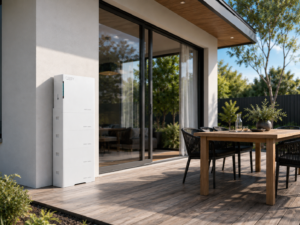
ESY Sunhome’s vertical all-in-one design gives it a more modern and appliance-like feel. For homeowners who care about a neat installation, this can be a real advantage.
Fox ESS systems can still look clean when installed well, but ESY Sunhome’s integrated design makes the overall installation story easier to sell and easier for customers to understand.
5. Strong Fit for Backup and Self-Consumption
For most households, the two big battery goals are simple:
Use more of your own solar power, and have backup power available when needed.
ESY Sunhome is well positioned for both. The system can store excess solar during the day and use it later when grid electricity is more expensive. Larger configurations can also support more meaningful backup, depending on the system design, switchboard setup and circuits selected.
Backup performance always depends on the installer’s design. But ESY Sunhome’s integrated range gives a strong foundation for households that want storage, monitoring and backup capability in one package.
Where Fox ESS Still Makes Sense
Fox ESS is still a good battery option in the right situation.
It may suit homeowners who already have compatible Fox ESS equipment, installers who regularly design around the Fox ESS ecosystem, or sites that need a specific high-voltage battery configuration.
Fox ESS also offers larger battery ranges than many people realise, including the CQ6 and CQ7, which can scale well above the EP11 and EQ4800 ranges.
Fox ESS may be worth considering if:
- You already have a compatible Fox ESS inverter
- Your installer strongly recommends it for your site
- You need a high-voltage battery setup
- You are comparing on price
- You need a larger modular battery configuration
- Your installer has strong experience with Fox ESS systems
So the comparison is not about Fox ESS being bad. It is about which system is easier to recommend first for a typical homeowner.
Which Battery Is Better for Backup Power?
For backup power, ESY Sunhome has the stronger homeowner-friendly story because of its integrated all-in-one design and broad sizing options.
A smaller ESY Sunhome setup may suit essential backup loads. A larger system may support more circuits or longer backup periods. Three-phase options may also be better suited to larger properties with heavier energy requirements.
Fox ESS can also support backup when paired with the right inverter and designed correctly. However, the outcome depends heavily on the overall system configuration.
For homeowners who want a cleaner, easier-to-understand backup solution, ESY Sunhome is the stronger first option.
Which Battery Is Better for Solar Self-Consumption?
For solar self-consumption, ESY Sunhome is also a strong fit.
The goal is simple: store excess solar during the day and use it at night instead of buying expensive grid power. ESY Sunhome’s range gives homeowners plenty of sizing options, from smaller systems for light evening use through to large three-phase systems for high-demand homes.
Fox ESS can also perform well for solar self-consumption, especially when installed with the right inverter. But ESY Sunhome makes the sizing and system story simpler for many customers.
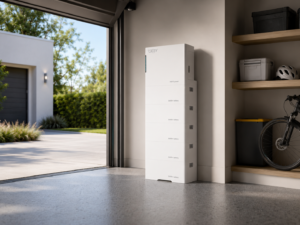
Final Verdict: ESY Sunhome Is the Better First Choice for Many Australian Homes
Both ESY Sunhome and Fox ESS offer credible battery storage options. Fox ESS has a strong high-voltage battery range and can be a good choice for homes with compatible equipment or more specific technical requirements.
But for many Australian homeowners, ESY Sunhome is the better first choice.
It offers a wide all-in-one battery range, clean installation appeal, smart energy management, single-phase and three-phase options, and storage sizes that can suit everything from a standard family home to a serious high-usage property.
If you want a battery system that feels simple, scalable and future-ready, ESY Sunhome is the stronger option to consider first.
FAQs
Is ESY Sunhome better than Fox ESS?
For many Australian homes, yes. ESY Sunhome is a strong choice if you want an integrated all-in-one battery system with flexible sizing, smart monitoring and options for both single-phase and three-phase homes.
Is Fox ESS still a good battery?
Yes. Fox ESS has a credible battery range, including scalable high-voltage options. It may be a good fit when paired with compatible equipment and installed by someone experienced with the Fox ESS ecosystem.
How much storage does ESY Sunhome offer?
ESY Sunhome offers single-phase systems from around 5kWh to 30kWh and three-phase systems up to around 90kWh, depending on the model and configuration.
How much storage does Fox ESS offer?
Fox ESS offers several battery ranges. Selected models include the EP11 from 10.36kWh to 41.60kWh, the EQ4800 up to 41.93kWh, the CQ6 up to 83.86kWh and the CQ7 up to 98.28kWh.
Which battery is better for large homes?
Both brands have large battery options, but ESY Sunhome may be more appealing for larger homes that want an all-in-one system with three-phase options and a cleaner integrated design.
Which battery should I choose?
Choose ESY Sunhome if you want a clean, integrated and scalable home battery system. Choose Fox ESS if your installer recommends it for a specific high-voltage design or if you already have compatible Fox ESS equipment.