Fast read
A 10kWh ESY Sunhome battery suits smaller homes with moderate night-time use, 20kWh is a strong everyday option for many family homes, 30kWh is better for larger or all-electric households with air conditioning, pools or future EV charging, and 50kWh is mainly for very high-use homes, three-phase properties, rural sites or small businesses needing serious storage and backup.
Choosing the right ESY Sunhome battery size is one of the most important decisions you can make when installing solar battery storage. Go too small and you may run out of stored solar power before the night is over. Go too large and you may pay for capacity your home does not regularly use.
For most Australian households, the right ESY Sunhome battery size depends on four things: your daily electricity use, how much solar you generate, how much power you use at night, and whether you want backup power, EV charging or future electrification.
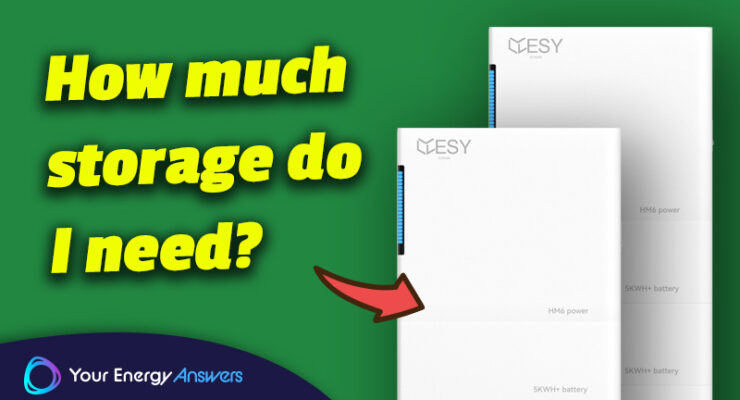
ESY Sunhome offers a broad residential battery range, including single-phase models from around 5kWh to 30kWh and three-phase models from around 10kWh to 90kWh, depending on the system configuration. Its HM6 single-phase system, for example, is listed as expandable from 5.12kWh to 30.72kWh, while larger three-phase ESY Sunhome options can support higher-capacity homes and small commercial-style loads.
Fast Read: Which ESY Sunhome Battery Size Should You Choose?
A 10kWh ESY Sunhome battery suits smaller homes, couples, light energy users and households mainly wanting to use more solar at night.
A 20kWh ESY Sunhome battery is a strong middle-ground for many family homes, especially if you have air conditioning, electric cooking, a heat pump hot water system or moderate evening energy use.
A 30kWh ESY Sunhome battery suits larger households, all-electric homes, high night-time usage, pool pumps, larger solar systems and homes preparing for an EV.
A 50kWh ESY Sunhome battery is best for very high-use homes, large three-phase properties, small businesses, rural homes, multiple EVs or households wanting serious backup capacity. It should only be considered if your solar system and daily load can justify it.
ESY Sunhome Battery Size Comparison
| Battery Size | Best Suited For | Typical Solar System Match | Main Advantage | Watch-Out |
|---|---|---|---|---|
| 10kWh | Small to medium homes | 5kW to 8kW solar | Affordable entry point | May be too small for all-electric homes |
| 20kWh | Family homes | 8kW to 13kW solar | Strong balance of cost and capacity | Needs enough excess solar to charge well |
| 30kWh | Large homes, EV-ready homes | 10kW to 20kW solar | More night-time coverage and backup | Higher upfront cost |
| 50kWh | Very high-use homes or small businesses | Large solar, often three-phase | Maximum storage and backup potential | Not always financially sensible for standard homes |
Understanding Battery Capacity: Nominal vs Usable Storage
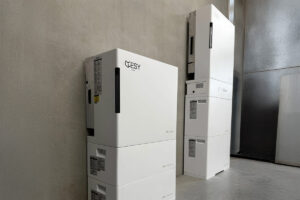
When comparing ESY Sunhome battery sizes, it is important to understand that the advertised battery size is usually the nominal capacity. This is the total amount of energy the battery can store when full.
The usable capacity is the amount of energy the battery can actually discharge for your home to use. Government battery rebate rules also distinguish between nominal and usable capacity. Under the Cheaper Home Batteries Program, eligible battery systems must generally be between 5kWh and 100kWh nominal capacity, with STCs only applying to the first 50kWh of usable capacity.
In simple terms: do not choose a battery purely by the number on the brochure. You need to consider how much usable energy you can access, how much power your inverter can deliver at once, and whether your solar system can recharge the battery properly.
Is a 10kWh ESY Sunhome Battery Enough?
A 10kWh ESY Sunhome battery is often enough for smaller households or homes that use most of their power during the day. It can help store excess solar power and cover common evening loads such as lighting, television, internet, refrigeration, cooking and some air conditioning.
A 10kWh battery may suit you if:
- Your home uses around 10kWh to 20kWh of electricity per day
- You have a smaller household with moderate evening use
- You already have solar and want to reduce grid imports after sunset
- You are mainly chasing bill savings rather than large backup capacity
- You do not have an EV, pool pump or heavy overnight loads
The downside is that 10kWh can feel tight if your home is all-electric. Ducted air conditioning, electric hot water, induction cooking, a pool, a spa or EV charging can drain a smaller battery quickly.
Best for: smaller homes, couples, retirees, efficient homes and moderate energy users.
Is a 20kWh ESY Sunhome Battery the Sweet Spot?
For many Australian families, a 20kWh ESY Sunhome battery is likely to be the most practical middle-ground. It offers far more flexibility than a 10kWh battery without jumping straight into oversized storage.
A 20kWh battery may suit you if:
- Your household uses around 20kWh to 35kWh per day
- You have a larger solar system producing excess energy during the day
- You use air conditioning in the evening
- You have electric cooking or heat pump hot water
- You want more reliable night-time coverage
- You want some backup without going into very large battery territory
This size works especially well for homes that still import power in the evening despite having solar. If your solar system regularly exports a lot of energy during the day, a 20kWh battery can help capture more of that energy for night-time use.
Best for: family homes, medium energy users, homes with air conditioning and households wanting a better balance between price and storage.
Is a 30kWh ESY Sunhome Battery Worth It?
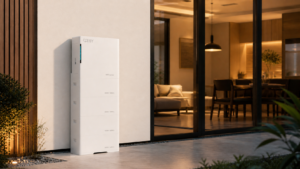
A 30kWh ESY Sunhome battery starts to make sense for larger households or homes with serious electrification plans. This is where battery storage becomes less about simply covering a few evening hours and more about supporting a high-energy lifestyle.
A 30kWh battery may suit you if:
- Your home uses 30kWh to 50kWh or more per day
- You have a large solar system
- You run ducted air conditioning
- You have a pool, spa or workshop
- You are planning to buy an EV
- You want stronger backup capability during outages
- You want to reduce grid reliance as much as practical
The ESY Sunhome HM6 single-phase system is listed with expandable capacity up to 30.72kWh, making this size a natural upper-end option for single-phase homes that have the solar generation and energy usage to justify it.
The key question is whether your home can actually charge and use this amount of storage regularly. A 30kWh battery paired with a small solar system may spend too much time partially charged, especially in winter.
Best for: large homes, all-electric homes, high evening use, EV-ready households and homeowners wanting more backup.
Is a 50kWh ESY Sunhome Battery Too Big?
A 50kWh ESY Sunhome battery can be a powerful option, but it is not automatically the best choice for a normal home. This size is usually better suited to very large properties, three-phase homes, rural households, small businesses, home offices, farms or homes with multiple EVs.
A 50kWh battery may suit you if:
- Your home or business has very high daily energy use
- You have a large solar system with regular excess generation
- You have three-phase power
- You want extended backup capability
- You charge one or more EVs at home
- You run heavy loads such as pumps, workshops, machinery or large air conditioning systems
- You want to maximise battery storage under the rebate rules
ESY Sunhome’s larger three-phase range includes models listed from 10kWh to 90kWh, which is where a 50kWh configuration becomes more realistic than trying to force a smaller residential system beyond its intended range.
However, bigger is not always better. The Australian Government specifically advises consumers to research the right system size, noting that a battery that is too large for the solar system or inverter can limit the benefits to the home and the grid.
Best for: large three-phase homes, small businesses, rural properties, high-load households and serious backup applications.
Battery Rebate Considerations: Should You Go Bigger?
The federal battery rebate can make larger battery systems more attractive, but it should not be the only reason you upsize. From 1 May 2026, the Cheaper Home Batteries Program applies a tiered STC factor: 100% up to 14kWh, 60% for capacity above 14kWh and up to 28kWh, and 15% for capacity above 28kWh and up to 50kWh.
That means the rebate still supports larger systems, but the extra incentive per kWh becomes lower as the battery gets bigger. In practical terms, a 20kWh or 30kWh system may deliver better value for many homes than jumping straight to 50kWh.
The rebate also only applies to one eligible solar battery system per premises, and STCs can only be claimed on the first 50kWh of usable battery capacity.
How to Work Out the Right ESY Sunhome Battery Size
A good installer should not simply ask, “How big do you want to go?” They should look at your real energy profile.
To choose the right ESY Sunhome battery size, check:
- Your daily electricity usage
Look at your bill or smart meter data. A home using 15kWh per day has very different needs from one using 45kWh. - Your evening and overnight usage
Battery storage is most valuable when it covers the power you use after the sun goes down. - Your solar export amount
If you are exporting lots of solar every day, you may have enough surplus to charge a bigger battery. - Your solar system size
A 10kWh battery may work well with a smaller solar system, but a 30kWh or 50kWh battery usually needs a much larger solar array. - Your backup expectations
Running the fridge, lights and internet during a blackout is very different from backing up air conditioning, cooking, pumps or a whole home. - Future energy needs
EV charging, electric hot water, induction cooking and home electrification can all increase your future electricity demand.
Quick Recommendation
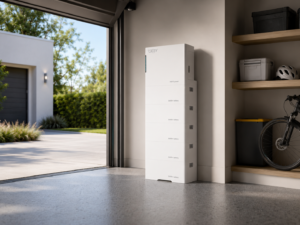
For most standard Australian homes, 10kWh is the entry point, 20kWh is the practical family-size option, and 30kWh is the stronger choice for large or all-electric homes.
A 50kWh ESY Sunhome battery should only be recommended where the household or business has the solar generation, energy consumption and backup requirements to genuinely use that capacity.
Final Verdict: Which ESY Sunhome Battery Size Is Best?
The best ESY Sunhome battery size is not the biggest one. It is the one that matches your home’s real energy behaviour.
Choose 10kWh if you want a simple, lower-cost way to use more solar at night.
Choose 20kWh if you have a family home and want a stronger balance between savings, storage and practicality.
Choose 30kWh if you have high energy use, larger solar, all-electric appliances or future EV plans.
Choose 50kWh if you have a large three-phase home, small business, rural property or serious backup needs.
The smartest approach is to size the battery around your actual usage, not just the rebate or the largest available stack. Done properly, an ESY Sunhome battery can help you store more solar, reduce grid reliance and prepare your home for a more electric future.