Fast read
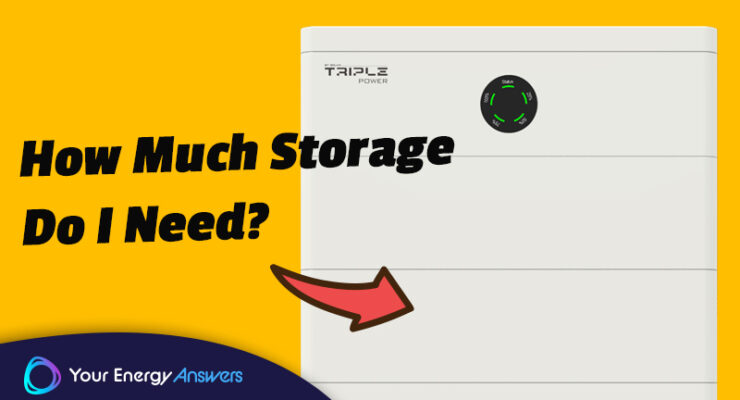
For many Australian homes, a 10–15kWh SolaX battery is a practical starting point. Smaller homes with low evening use may only need 5–8kWh, while larger households with EV charging, ducted air conditioning, pools or high night-time usage may need 15–25kWh or more. The right size depends on how much power you use after sunset, how much excess solar your system produces, whether you want backup power, and whether your energy needs may grow in the future.
The key is not to oversize just because a rebate is available. Choose a SolaX battery size that matches your real usage, then factor in any rebate at the time of quoting.
Choosing the right SolaX battery size is one of the most important decisions when adding storage to your solar system. Go too small, and the battery may run flat before the evening is over. Go too large, and you may pay for storage you rarely use.
For most Australian homes, the right SolaX battery size depends on five key things: your daily electricity use, how much solar you produce, how much power you use at night, whether you want backup power, and whether your energy needs will grow in the future.
SolaX offers a broad battery range, with scalable storage options across residential and larger energy systems. SolaX says its battery storage range can scale from 2.5kWh to 92.1kWh, depending on the system design and product choice.
Quick Answer: What Size SolaX Battery Do Most Homes Need?
As a rough guide:
| Household Type | Suggested Battery Size |
|---|---|
| Small home or low evening use | 10–12kWh |
| Average family home | 14–20kWh |
| Larger family or higher night usage | 20–35kWh |
| Home with EV, pool, ducted AC or high usage | 35kWh+ |
| Backup-focused home | Depends on circuits and outage expectations |
The right size depends on how much energy your home uses after sunset and how much excess solar your system produces during the day.
Start With Your Night-Time Usage
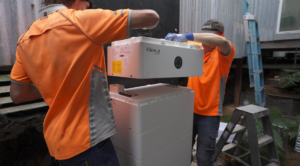
The best way to size a battery is not to look at your total daily power bill first. Instead, look at how much electricity you use after the sun goes down.
That is because your solar panels already cover much of your daytime energy use. The battery’s main job is to store excess solar during the day and discharge it later when solar production drops.
For example:
If your home uses around 6kWh overnight, a smaller 10kWh SolaX battery may be enough.
If your home uses around 10–14kWh overnight, a mid-sized battery around the 20 kWh is likely more suitable.
If your home uses 20kWh or more after sunset, you may need a larger SolaX storage setup of 30 kWh plus.
The goal is not necessarily to cover 100% of your electricity use every day. The goal is to choose enough storage to reduce expensive grid imports without overspending on unused battery capacity and have some battery left for rainy days.
Match the Battery to Your Solar System Size
Your battery should also match the size of your solar system.
A large battery needs enough excess solar to charge it properly. If your solar system is too small, the battery may not fill consistently, especially in winter or during cloudy weather.
As a simple guide:
A 6.6kW solar system may only suit a smaller to mid-sized battery.
An 8–10kW solar system may support a 10–15kWh battery more comfortably.
A 12kW+ solar system may be better suited to larger storage, especially if the household has high evening usage.
SolaX’s residential battery range includes modular systems such as the T-BAT HS range, with examples shown on SolaX’s Australian product page including nominal capacities such as 11.0kWh, 25.8kWh, 29.4kWh and higher configurations, depending on module count.
Think About Your Future Energy Use
A battery should not only match your home today. It should also consider where your energy use is heading.
You may need more battery storage in the future if you plan to add:
- An electric vehicle
- Heat pump hot water
- Induction cooking
- Ducted air conditioning
- A pool pump
- A home office
- More people living in the home
- A larger solar system
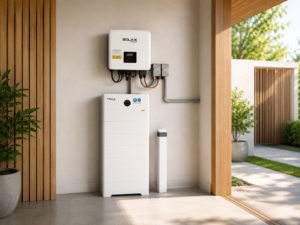
This is where SolaX’s modular design can be useful. Some SolaX systems allow storage to be expanded over time, depending on the battery model, inverter compatibility and installation design. The SolaX T-BAT-SYS-HV-5.8, for example, is listed with expansion capability up to 34.6kWh in a single cluster, along with LFP battery chemistry, 95% depth of discharge and IP66 ingress protection.
Do You Want Backup Power?
Backup power changes the sizing conversation.
If you only want a battery to reduce power bills, you can size it around normal evening usage. But if you want the battery to help during blackouts, you need to think about:
- Which circuits will be backed up
- How long you want backup power to last
- Whether you want to run fridges, lights, Wi-Fi and basic power points
- Whether large loads like air conditioning or ovens should be excluded
- Whether the battery can recharge from solar during an outage
A smaller battery may keep essential circuits running for a short outage. A larger battery may be needed if you want longer backup coverage or if you live in an area with more frequent grid interruptions.
Backup design should always be discussed with a qualified installer because battery size alone does not determine backup performance.
Do Not Oversize Your Battery Just for the Rebate
The federal battery rebate can make home battery storage much more affordable, but it should not be the only reason to choose a larger battery. A battery should first be sized around your household’s real electricity use, solar production, evening consumption, backup needs and future plans such as EV charging.
From 1 May 2026, the Cheaper Home Batteries Program changed how battery rebates are calculated. The program still supports eligible battery systems, but the rebate is now more generous for appropriately sized home batteries and less generous for very large systems. The Clean Energy Regulator says STCs are calculated based on the usable capacity of the battery, and only the first 50 kWh of usable capacity can receive STCs.
The biggest change is the new size-based rebate taper. For batteries installed from 1 May 2026, the STC factor applies at 100% for the first 14 kWh, then 60% for capacity above 14 kWh and up to 28 kWh, and only 15% for capacity above 28 kWh and up to 50 kWh.
In simple terms, the first 14 kWh receives the strongest rebate support. The next portion, from above 14 kWh to 28 kWh, still receives support, but at a reduced level. Any usable capacity above 28 kWh receives a much smaller rebate contribution. That means a larger battery can still make sense for some homes, but the rebate becomes less attractive per extra kWh once you move into the larger-size brackets.
The reason for the change is that the government wants the program to remain sustainable and better aligned with falling battery costs. The Department of Climate Change, Energy, the Environment and Water says the changes are designed to keep the discount at around 30% across a range of battery sizes, reflect declining battery prices over time and allow the program to continue supporting battery installations over its life.
This is why homeowners should be careful about oversizing purely to chase the rebate. A bigger battery may look attractive on paper, but if the extra storage is not used properly, the payback can stretch out. You may end up paying for capacity that rarely cycles, especially if your solar system is not large enough to regularly fill the battery or your evening energy use is modest.
However, this does not mean everyone should automatically choose a small battery. Larger households, homes with high night-time usage, pool pumps, ducted air conditioning, all-electric appliances, EV charging or serious backup requirements may still benefit from a bigger system. The key is to size the battery around actual usage first, then treat the rebate as a bonus rather than the main driver.
There is also another important consideration: only one solar battery system per premises is eligible for STCs. The Clean Energy Regulator notes that additional solar batteries at the same premises are not eligible for STCs after the first claim, so homeowners should think carefully about their current and future energy needs before locking in a system size.
The best approach is simple: choose the battery size your home genuinely needs, make sure it suits your solar system and inverter, then factor in the rebate after that. The rebate can improve the numbers, but it should not push you into buying a much larger battery than your home can realistically use.
Final Verdict: How Much SolaX Battery Storage Do You Need?
For many Australian homes, a 15–20kWh SolaX battery setup is a sensible starting point. It is large enough to cover meaningful evening usage, but not so large that it risks sitting underused for much of the year.
Smaller homes may be fine with 10kWh, while larger or more electric homes may need 20–30kWh or more.
The best answer comes from looking at your actual electricity data, especially your night-time usage, solar export levels and future energy plans. A good installer should review your bill, smart meter data and solar production before recommending a SolaX battery size.
FAQs
What size SolaX battery is best for an average home?
For many average Australian homes, a battery around 15–20kWh is a practical starting point, depending on night-time usage and solar production.
Is a 10kWh SolaX battery enough?
A 5kWh battery may be enough for a very small home with low evening energy use, but it may be too small for medium to larger families or homes with heavy night-time loads.
Is a 10kWh SolaX battery enough?
A 10kWh battery can be a starting size for some homes, especially where the aim is to store daytime solar and use it during the evening, but overall a 15–25 kWh range is more ideal.
Should I get a bigger SolaX battery for backup power?
Possibly. If backup power is important, you may need more storage, but the system also needs the right inverter, switchboard setup and backup circuit design.
Can I expand my SolaX battery later?
Some SolaX battery systems are expandable, depending on the model and system design. Your installer should confirm expansion limits before installation.