Australia’s Fuel Security Risk: Why Solar, Batteries and EVs Matter More Than Ever
Australia’s fuel security risk is becoming a serious national conversation. With diesel reserves estimated at just weeks of supply and strategic stockpiles stored offshore, questions about energy independence are no longer theoretical — they’re practical, economic, and urgent.
At the same time, rooftop solar, home batteries and electric vehicles are giving households something Australia has never had before: the ability to control their own energy future. So what does this shift mean for homeowners, businesses and Australia’s long-term resilience?
Why Diesel Shortages Matter More Than Most Australians Realise
Diesel is the backbone of Australia’s economy.
It powers:
- freight transport
- agriculture
- aviation support services
- construction equipment
- emergency infrastructure
- supermarket supply chains
If diesel supply is disrupted, the impact reaches far beyond petrol stations. Food distribution, medical logistics and national transport networks are affected almost immediately. Australia currently holds limited strategic fuel reserves compared with many developed nations — and some of those reserves are stored overseas rather than domestically. That creates a vulnerability during geopolitical instability or shipping disruption. Energy resilience is no longer optional.
It’s essential infrastructure planning.
Solar, Batteries and EVs Give Households Energy Independence
One of the most powerful shifts happening right now is that Australians can reduce their reliance on imported fuel at a household level.
Installing:
- rooftop solar
- home battery storage
- electric vehicles
creates a personal energy ecosystem. Instead of relying entirely on external supply chains, households can generate, store and use their own electricity. This dramatically improves resilience during price shocks, grid pressure events and supply disruptions.
It’s one of the few areas where individuals can directly strengthen national energy security.
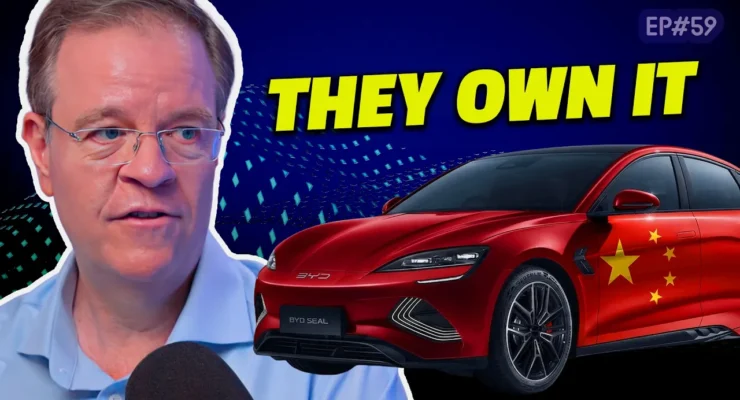
China’s Rapid EV and Battery Growth Is Changing the Global Energy Market
Across the world, the automotive industry is shifting faster than many Australians realise. China now leads global electric vehicle manufacturing and battery production at scale, delivering:
- lower vehicle costs
- rapid innovation cycles
- faster charging technology
- integrated drivetrain platforms
Electric transport is no longer experimental technology. It’s becoming the default direction of global mobility infrastructure. Countries that adapt early benefit economically.
Those that delay risk becoming dependent on imported technology instead of shaping it.

Australia Needs a National Energy Resilience Strategy
Australia is uniquely positioned to benefit from electrification. We have:
- world-leading solar resources
- critical battery minerals
- strong engineering capability
- high rooftop solar adoption
- a skilled installer workforce
But long-term success depends on coordinated national planning. Energy resilience isn’t just about electricity generation. It includes:
- domestic fuel storage
- charging infrastructure rollout
- battery manufacturing capability
- renewable hydrogen development
- fertiliser security
- transport electrification strategy
A stronger national framework would allow Australia to capture more economic value from the global clean-energy transition instead of exporting raw materials alone.
Every Rooftop Solar System Still Makes a Difference
Australia’s rooftop solar rollout is already one of the most successful energy transitions anywhere in the world. Millions of households have reduced their electricity costs dramatically — in some cases cutting quarterly power bills from thousands of dollars to near zero.
This decentralised approach has delivered:
- lower household energy costs
- reduced peak demand pressure
- stronger grid stability
- faster emissions reductions
- local small-business job creation
Importantly, it shows what happens when policy support aligns with consumer choice. Australians act quickly.
Why Renters Must Be Included in Australia’s Energy Transition
One challenge still facing Australia’s clean-energy rollout is fairness for renters. Homeowners can install solar and batteries. Renters often cannot.
Future policy solutions may include:
- landlord tax incentives
- accelerated depreciation pathways
- social housing solar rollout programs
- community battery access models
- plug-in balcony solar systems (already common in Europe)
Expanding access ensures energy savings reach everyone — not just property owners.
Renewable Ammonia Could Become Australia’s Next Energy Export Opportunity
One of the most overlooked opportunities in Australia’s energy future is renewable ammonia. Ammonia is essential for fertiliser production and global agriculture. Today it is largely produced using fossil fuels. But renewable hydrogen created from solar and wind power can be used to manufacture zero-carbon ammonia instead. With world-class solar resources in regions like Western Australia’s Pilbara, Australia could become a global supplier of clean fertiliser inputs.
That’s the kind of nation-building energy strategy that strengthens both food security and export capability.
The Energy Transition Is Also an Economic Opportunity
Australia invented key solar technologies now used worldwide. We lead in:
- grid integration research
- inverter engineering
- battery management systems
- renewable deployment expertise
The challenge is capturing more of that value locally. Strategic partnerships, local manufacturing participation and coordinated industry policy can help Australia benefit from what is likely to be the largest global energy transformation in history.
Australia’s Energy Future Starts on the Roof of Every Home
Energy independence used to be something only governments controlled. Today it’s something households can influence directly. Every solar panel installed, every battery added and every EV charged from rooftop solar contributes to a stronger, more resilient Australia. The transition is already underway.
The question now is how quickly we choose to accelerate it.