
Fast read
Australia is investing over $20 billion in residential energy storage, with roughly 90% of hardware originating from high-tech manufacturing hubs where tier-one brands like SAJ engineer systems specifically for harsh Australian climates.
Inside SAJ's climate-controlled cleanrooms, hybrid inverters and modular batteries undergo automotive-grade quality control—including 1,500V insulation checks, 3-hour heat chamber burn-ins at 43°C, and outback transport vibration testing—reducing component failure rates to a minuscule 0.1%–0.3%.
Inside the $20 Billion Battery Wave: What Really Happens Behind Factory Doors?
Australia’s renewable energy transition is accelerating at an unprecedented pace. Millions of households are upgrading their rooftop solar setups with home battery storage and hybrid inverters. However, a major disconnect remains between public perception and what actually causes system failures.
| Industry Fact | The Reality |
| Market Scale | Australia is spending $20B+ on residential energy storage. |
| Manufacturing Hub | ~90% of equipment originates from high-tech manufacturing cities in China. |
| Failure Rates | Top-tier factory component failure rates sit between 0.1% and 0.3%. |
| Primary Failure Cause | Subcontracted “volume installers” cutting corners during mounting, wiring, or commissioning. |
When price-focused equipment hits the market, it frequently attracts volume installers operating on slim margins. When corners are cut on site, bad outcomes follow—and the brand’s badge on the box usually takes the blame.
In reality, established manufacturers like SAJ (who have been producing inverters and power electronics since 2005) build hardware under strict QA controls that far exceed typical home demands.
Inside the Factory: ESD Cleanrooms and Hybrid Automation
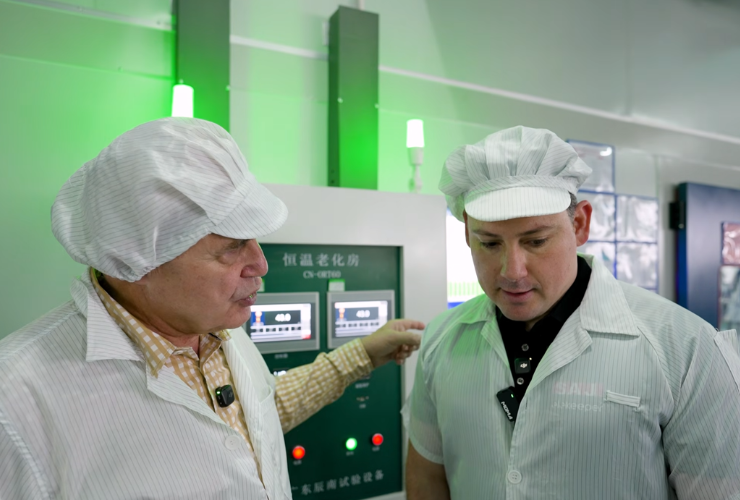
Modern inverter and battery production has evolved far beyond traditional assembly lines. Visiting a tier-one manufacturing facility reveals a climate-controlled, ultra-clean environment designed to protect micro-electronics.
Environmental Control: Temperature and humidity are strictly regulated across assembly floors to eliminate moisture contamination during component placement.
ESD (Electrostatic Discharge) Protections: Staff and visitors must wear grounded suits and pass through anti-static entryways to protect sensitive Printed Circuit Board Assemblies (PCBAs).
The Inverter Complexity Gap: Unlike standard solar panels, which require only a handful of automated steps to frame and seal—a modern hybrid inverter involves 50 to 60 complex assembly steps, blending precision robotics with manual oversight.
Torture-Testing Solar Hardware: Heat Chambers and Outback Roads
To ensure products can withstand harsh environments—from the extreme heat of the Northern Territory to the freezing winters of Tasmania—every single unit is subjected to rigorous safety and stress testing before being packaged.
1. High-Voltage Safety Checks
Every board is tested at up to 1,500 Volts to verify electrical insulation, preventing short circuits or electrical hazards post-installation.
2. The 3-Hour Burn-In Heat Chamber
Unlike industries that only test random batch samples, top-tier inverter lines place 100% of manufactured units inside a dedicated heat chamber.
Temperature: Maintained at 42°C–43°C (107°F–109°F).
Duration: 3 continuous hours under operational load.
Goal: Force early component burn-in failures inside the factory rather than on a customer’s wall.
3. Outback Road Vibration Simulations
To prepare for thousands of kilometres of transport via freight trucks and unpaved roads, packaged units are placed on high-frequency vibration tables to simulate rough transport conditions across rugged international routes.
Automotive-Grade QA and the Push for 15-Year Warranties
A key driver behind the drop in hardware failure rates is the cross-pollination of talent from the automotive industry. Quality assurance managers from EV and automotive backgrounds bring strict zero-defect manufacturing methodologies to the solar sector.
“Dead-on-Arrival (DOA) units literally don’t happen when you run automotive-grade QA. We are so confident in the stability of our current production lines that we are expanding standard warranties from 10 years up to 15 years.”
Eco-Friendly Packaging Shifts
Installers have long complained about the vast amount of landfill waste generated by styrofoam packaging. In response, modern manufacturers are transitioning to 100% recyclable moulded cardboard. This shift reduces site cleanup costs for local tradespeople while shrinking the carbon footprint of the delivery chain.
The Verdict: Pair Solid Hardware with a Quality Installer
Brands like SAJ have been operating quietly across Australia since 2019, building a massive footprint while maintaining low failure rates.
If you are looking to invest in home storage:
Trust the Hardware: Modern, vertically integrated manufacturers run high-grade QA lines that make hardware failure extremely rare.
Focus on the Installer: The best inverter in the world will fail if paired with incorrect wire gauges, exposed weather seals, or poor ventilation choices.
Look Beyond the Name: Choose an installer who prioritises long-term craftsmanship over volume, ensuring your 10 to 15-year warranty remains protected.