Why Chinese Solar Took Over Australia’s Renewable Market
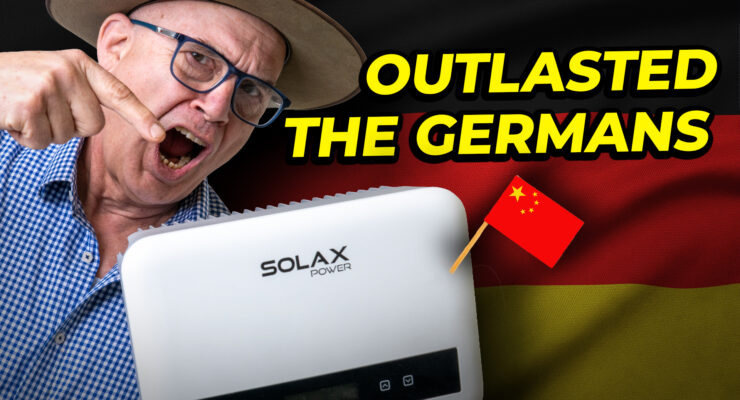
For two decades, Australian solar consumers were advised to avoid low-cost imported equipment due to early reliability issues such as cracked panels and inverters arriving dead on arrival. Today, standard industry views have flipped as legacy European and Korean players exited manufacturing while Chinese brands like SolaX scaled advanced production lines.
Legacy Brand Exits and Market Transformation
The landscape of solar technology in Australia shifted rapidly when traditional premium suppliers withdrew from manufacturing or changed operational focus.
LG Solar: Ceased panel manufacturing entirely despite a long-standing premium reputation.
SMA: Stepped back from the Australian residential inverter market segment.
Bosch and ABB: Exited or sold off inverter manufacturing operations.
QCELL: Disappeared completely from the Australian distribution network.
This structural shift left high-volume Chinese manufacturers as the dominant suppliers for both residential and commercial solar installations.
Advanced Manufacturing and Quality Testing
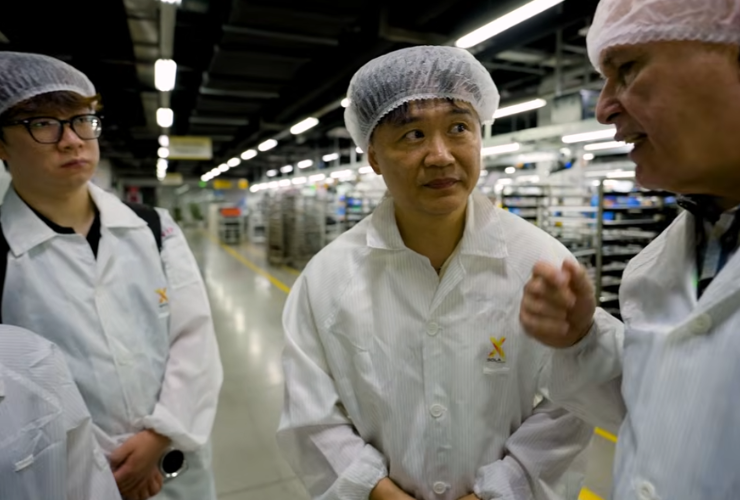
Factory operations in China now demonstrate high levels of automation and quality control that contrast sharply with early industry perceptions.
Automated Circuit Assembly: Pick-and-place robotics handle component layout, guided by artificial intelligence optical inspection cameras that verify part alignment in real time.
Global Component Sourcing: Circuit boards integrate electronic chips from European, American, and local Chinese suppliers.
Comprehensive Burn-In Testing: Every single inverter undergoes mandatory heat testing operating under load between 4 and 24 hours at temperatures ranging from 35 to 45 degrees Celsius.
Low Field Failure Rates: Sustained factory burn-in procedures reduce dead-on-arrival rates down to a reported 0.02 percent.
Industrial Power Dynamics in China
A widespread misconception is that Chinese factories receive free or discounted government power. Industrial electricity tariffs in China are higher than domestic rates, costing factories approximately 10 to 12 cents per kilowatt hour.
State policy intentionally keeps residential power cheaper to support households, driving large factories to install rooftop solar and mega-scale battery systems to control operational costs.
Battery Innovation and Brand Accountability
Chinese energy storage systems have expanded into robust utility-grade hardware.
Ingress Protection Standards: Outdoor commercial cabinets feature IP55 weather resistance, while modular battery packs carry IP67 protection against dust and water immersion.
Commercial Energy Storage: Containerised 200 to 256 kilowatt-hour battery banks are prewired at the factory, dropping onto site via standard forklift for rapid installation.
Brand Reliability: SolaX previously covered replacement costs out of pocket when early units contained recalled LG Chem battery cells, choosing to absorb financial losses to protect brand integrity rather than passing blame to third-party suppliers.
Key Takeaways for Solar Buyers
A 10-year warranty is only as valuable as the company surviving to honour it. European origin no longer guarantees financial longevity, and maintaining leadership in renewable energy requires continuous engineering investment rather than relying on historical reputation.