
Smart Energy 2026: Solar Batteries, EV Chargers & Australia’s Energy Future
Australia’s renewable energy industry is moving fast, and Smart Energy 2026 made one thing very clear: the solar battery era has properly arrived.
Held at ICC Sydney, Smart Energy 2026 brought together solar manufacturers, battery brands, EV charging companies, recyclers, distributors, installers and industry leaders. The event showed how quickly Australia is shifting from simple rooftop solar systems to full home energy ecosystems built around solar panels, batteries, EV chargers, smart monitoring, backup power and energy management. The official Smart Energy 2026 event was held at ICC Sydney in May 2026 and positioned itself as a major renewable energy and storage event for industry, government and technology leaders.
But while the excitement around batteries is real, Smart Energy 2026 also highlighted a serious warning for Australian households: not every battery deal is a good deal, and not every installer has the experience needed to do the job properly.
With the federal battery rebate still helping reduce upfront costs, many homeowners are now asking the same question: is 2026 the right time to install a solar battery?
For many homes, the answer may be yes — but only if the system is properly sized, installed by an experienced company, and built around quality products that will still be supported in five, eight or ten years.
The Battery Rebate Has Changed, But Batteries Are Still a Big Opportunity
One of the biggest talking points at Smart Energy 2026 was the Australian battery rebate. The early rush created enormous demand, with installers, distributors and suppliers stretched as homeowners tried to take advantage of the available support.
The federal Cheaper Home Batteries Program changed from 1 May 2026, with adjustments designed to keep the discount at around 30% across a range of battery sizes while aligning the support with falling battery costs over time.
That is important because some homeowners may think the opportunity has disappeared. It has not. The rebate has changed, but batteries can still make strong financial sense for the right household, especially where there is good solar generation, evening energy use, time-of-use pricing, low feed-in tariffs, or a desire for blackout protection.
However, the message from the industry floor was clear: do not wait until the last minute. Good installers can become heavily booked when rebate deadlines or step-downs approach. If you leave it too late, you may end up rushing into a poor decision or dealing with the wrong company.
Why Solar Batteries Are Becoming the Centre of the Home Energy System
For years, rooftop solar was the main focus for Australian households. Install panels, generate electricity during the day, use what you can, and export the rest to the grid.
That model is changing.
As feed-in tariffs fall and electricity prices remain a concern, more homeowners want to store their solar power and use it later. That is where batteries come in.
A solar battery can help you:
- Store excess solar power during the day
- Use that stored energy at night
- Reduce reliance on grid electricity
- Protect selected circuits during blackouts
- Avoid buying as much power during peak tariff periods
- Prepare your home for EV charging
- Get more value from your existing solar system
At Smart Energy 2026, batteries were everywhere. The market has clearly moved beyond early adopters. Battery storage is now becoming a mainstream part of the Australian solar conversation.

The Rise of All-in-One Solar Battery Systems
One of the biggest product trends at Smart Energy 2026 was the move toward sleek, all-in-one battery systems.
Older battery setups often required a separate solar inverter, hybrid inverter, battery cabinet, backup box, gateway and extra wall-mounted equipment. That can still work well in the right situation, but many homeowners now want a cleaner and more compact setup.
Newer systems are increasingly designed as integrated energy hubs. These systems can combine:
- Battery storage
- Hybrid inverter technology
- Backup power functionality
- EV charging integration
- Smart monitoring
- Modular battery expansion
Brands such as Sigenergy are part of this shift, with systems like SigenStor designed around a more integrated home energy ecosystem. In the transcript, Smart Energy 2026 discussions highlighted the movement from traditional inverter-and-battery setups toward stackable, all-in-one battery systems, including products with built-in inverter functions, modular battery capacity and EV charger integration.
For homeowners, this trend matters because a cleaner design can mean fewer separate components, a neater installation, and a system that is easier to expand as household energy needs grow.
EV Charging Is Now Part of the Solar Battery Conversation
Electric vehicles were another major theme at Smart Energy 2026. As more Australians consider EVs, the question is no longer just “which car should I buy?” It is also “how will I charge it?”
For many households, the best answer is not public charging. It is smart home charging using rooftop solar.
A well-designed solar, battery and EV charger setup can help homeowners charge their car using more of their own solar energy. This can reduce fuel costs, reduce grid reliance, and make better use of excess daytime generation.
Smart Energy 2026 also showed that the industry is moving toward faster and more intelligent charging options. Some systems are now being designed with EV charging as part of the wider home energy ecosystem, rather than as a separate add-on.
For most Australian homes, a 7kW single-phase charger will still suit many EVs. However, larger homes, three-phase properties and some future-ready setups may consider higher-capacity charging options where suitable.
The key is proper design. EV charging should be matched to your solar system size, battery storage, switchboard capacity, driving habits and electricity tariff.
Bigger Solar Panels Mean More Power From the Same Roof Space
Another important trend at Smart Energy 2026 was the continued improvement in solar panel efficiency.
In the transcript, AIKO’s newer residential panel technology was discussed, including 500W output in a standard residential-style footprint and design improvements aimed at maximising the active silicon area on the front of the panel.
This matters for homeowners because roof space is limited. If your home can only fit a certain number of panels, higher-efficiency modules can help you install a larger system without needing more roof area.
That becomes even more important when adding a battery or EV charger. A small solar system may not generate enough excess energy to properly charge a battery and support household loads. In many cases, installing a battery may also be the right time to consider whether the solar system should be expanded or upgraded.
A good installer should look at the whole picture, not just bolt a battery onto an undersized solar system.
Batteries Are Also Driving Solar Upgrades
One interesting message from Smart Energy 2026 was that the battery boom is not replacing solar — it is pushing solar forward.
Many homeowners who install a battery quickly realise they could benefit from more solar generation. Others with older solar systems are now considering replacing older, lower-wattage panels with modern, higher-efficiency panels.
If your solar system is 10 to 15 years old, it may still be working, but it may not be optimised for modern energy needs. Older systems were often designed for daytime offset and feed-in tariffs. Newer systems are increasingly designed around self-consumption, battery charging, EV charging and backup resilience.
That does not mean every old system should be ripped off the roof. If it is safe, compliant and performing well, it may still have value. But if you are planning a battery, it is worth reviewing whether your existing system is large enough to support it properly.

Why Installer Experience Matters More Than Ever
A major warning from Smart Energy 2026 was that battery installation experience matters. Solar batteries are not just another appliance. They involve electrical design, backup configuration, battery sizing, inverter compatibility, monitoring, safety requirements, and long-term support.
The transcript strongly highlighted the importance of choosing a local installer with real battery experience, not someone who has only recently completed a short training course or is using the battery boom as a quick sales opportunity.
This is especially important because a poorly designed battery system can leave customers disappointed. Common problems include:
- Battery too small for the household
- Battery too large for the actual solar generation
- Backup circuits not properly explained
- Unrealistic savings claims
- Poor monitoring setup
- Wrong inverter or battery combination
- Cheap products with weak long-term support
- Installer unavailable when problems appear years later
A battery should be designed around your home, not sold from a generic package sheet.
Beware of Ultra-Cheap Battery Ads
Smart Energy 2026 also reinforced a simple consumer warning: be very careful with ultra-cheap battery ads.
If a battery offer looks too good to be true, it probably needs serious checking. The transcript specifically warns against very cheap social media battery ads that sell mainly on price rather than long-term value.
Price matters, of course. Not every homeowner can afford a premium battery system. Mid-range batteries will likely play a major role in the Australian market, especially after rebate adjustments. But “affordable” and “cheap at all costs” are not the same thing.
When comparing battery quotes, ask:
- Is the battery approved for installation in Australia?
- Is the installer experienced with this product?
- What is the usable capacity, not just the headline capacity?
- What backup capability is included?
- Is the system expandable?
- Who handles warranty support?
- Will the installer still be around in five years?
- Does the quote include proper design, commissioning and monitoring setup?
The cheapest battery may not be the best value if it fails early, lacks support, or does not deliver the features your home actually needs.
Commercial Batteries Are Becoming a Serious Business Tool
While home batteries received much of the attention, Smart Energy 2026 also showed strong growth in commercial battery storage.
For farms, cold storage, workshops, depots and businesses with high energy use, batteries are not just about saving on power bills. They can also be about protecting operations.
A business with refrigeration, pumps, machinery or critical loads may face serious financial risk if power costs spike or the grid goes down. In the transcript, large battery systems were discussed in the context of farms, refrigeration, pump loads and protecting valuable stock from outages.
For some businesses, the return on investment may come from several areas:
- Reducing peak demand charges
- Storing solar for later use
- Supporting critical loads
- Avoiding expensive grid upgrades
- Reducing exposure to tariff changes
- Improving resilience during outages
As electricity pricing becomes more complex, commercial battery systems are likely to become a much bigger part of Australia’s energy future.
Solar Panel and Battery Recycling Can No Longer Be Ignored
Australia has installed millions of solar panels, and now battery installations are rising quickly. That means recycling and end-of-life management are becoming more important.
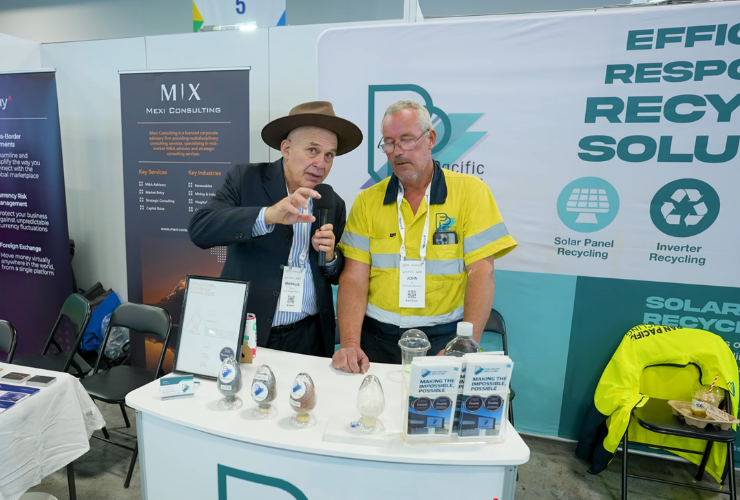
Smart Energy 2026 included discussion around solar panel recycling, including the recovery of aluminium frames, glass, copper, tin, silver and other materials. Battery recycling was also discussed, including the need to safely discharge stored energy before disassembly to avoid fire risks.
This is an important issue for the renewable energy industry. Solar and batteries are designed to reduce emissions and support a cleaner energy system, but the industry must also deal responsibly with products at the end of their life.
For consumers, this means choosing better products from companies with stronger long-term support and asking installers what happens when panels, inverters or batteries eventually need replacement.
 Smart Energy 2026’s Big Message: The Future Is Integrated
The biggest takeaway from Smart Energy 2026 is that the Australian home energy system is becoming more connected. The future is not just solar panels on the roof. It is likely to include:
- High-efficiency solar panels
- Modular home batteries
- Smart EV chargers
- Heat pumps
- Energy monitoring apps
- Backup power
- Virtual power plants
- Smarter tariffs
- Better system automation
Instead of thinking about each product separately, homeowners should increasingly think about the whole energy ecosystem.
A solar battery should not be chosen in isolation. It should match the solar system, the home’s energy use, the household’s future EV plans, the tariff structure, and the level of backup protection required.
Should You Install a Solar Battery in 2026?
For many Australian households, 2026 could be a very strong year to consider battery storage. A battery may be worth investigating if:
- You already have solar and export a lot of energy
- Your feed-in tariff has dropped
- You use a lot of power in the evening
- You are on a time-of-use tariff
- You want blackout protection
- You are planning to buy an EV
- You want to reduce grid reliance
- You want to future-proof your home
However, the right answer depends on your home. The best battery for one household may be completely wrong for another.
Before signing a battery contract, make sure the installer reviews your energy usage, solar generation, tariff, backup needs and future plans. A proper design process is far more valuable than a rushed sales pitch.
Final Thoughts: The Battery Boom Is Real, But Choose Carefully
Smart Energy 2026 showed an industry full of momentum. Batteries are becoming smarter, solar panels are becoming more powerful, EV chargers are becoming more integrated, and Australian households are taking more control over their energy.
But the boom also brings risk. Whenever rebates and demand rise quickly, poor-quality sales tactics can follow.
The best advice for homeowners is simple: do not buy the cheapest battery just because it looks like a bargain. Buy the right system from the right installer.
A well-designed solar and battery system can help lower bills, improve energy independence, support EV charging and protect your home during outages. A poorly designed one can become an expensive disappointment.
The future of Australian energy is not just about installing more products. It is about installing better systems, with better design, better support and better long-term thinking.
That was the real message from Smart Energy 2026 — and it is one every Australian homeowner should take seriously.