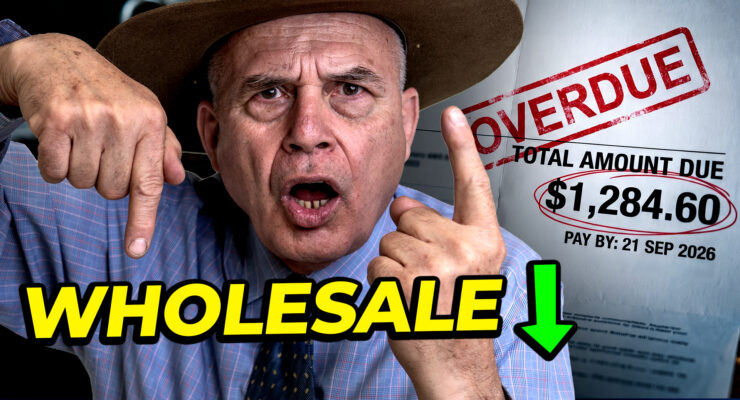
Could Australia’s Electricity Bills Be Hit by Higher Fixed Daily Charges?
Most Australians think their electricity bill mainly reflects how much power they use. Use less power, pay less. Install solar, pay less. Add a battery, use more of your own energy, and reduce your grid bill even further.
That has been the basic logic for years. But there is another part of the bill that many people barely notice: the fixed daily supply or connection charge. This is the amount you pay just to remain connected to the electricity network, before you use a single kilowatt-hour.
The concern now is that future electricity pricing reforms could shift more of the bill into these unavoidable fixed charges. In other words, the part of your bill you can control by using less electricity could shrink, while the part you pay no matter what could grow. That is the central issue raised in the original video transcript.
What Is the AEMC Electricity Pricing Review?
The Australian Energy Market Commission, or AEMC, is the rule-maker for Australia’s national electricity and gas markets. It makes and amends the National Electricity Rules, National Gas Rules and National Energy Retail Rules, while the Australian Energy Regulator oversees economic regulation and compliance.
The AEMC’s current pricing review is looking at how electricity pricing should work in a changing energy system where millions of households now have rooftop solar, batteries, electric vehicles and smart appliances. The AEMC argues that electricity pricing needs to better reflect how people use the grid, not just how much energy they consume overall.
That sounds reasonable on the surface. The issue is how the costs are shifted. One of the most controversial ideas is moving a larger share of network costs into fixed charges. Network costs are the costs of maintaining and upgrading the poles, wires, substations and local electricity infrastructure that deliver power to homes and businesses.
Why Fixed Network Charges Are So Controversial
Right now, many electricity network costs are recovered through usage-based charges. That means households that use less grid electricity generally pay less.
That gives people a financial reason to:
- use less electricity;
- improve energy efficiency;
- install rooftop solar;
- add a home battery;
- shift consumption away from peak periods.
Higher fixed charges change that equation. If more of your bill becomes unavoidable, then reducing electricity use has less impact. Solar still helps, batteries still help, but the savings can be reduced because a bigger portion of the bill is locked in before you use any power.
The Smart Energy Council argues that a move toward predominantly fixed network tariffs would reduce the value of solar, batteries and energy efficiency because households would have less ability to lower their bills through their own actions.
Could Electricity Connection Charges Really Move Toward $5 a Day?
The most dramatic concern is whether daily electricity connection charges could move toward levels like $5 per day.
To be clear, a $5 daily fixed charge has not been introduced. It is not currently locked in as a final rule. The concern is about the direction of pricing reform and whether future network tariffs could push more costs into daily fixed charges over time.
That distinction matters. The AEMC says its final recommendations had not been published as of late May 2026, with the final report expected in June 2026. It has also said that a higher fixed network charge does not automatically mean a higher fixed bill, because the total outcome would depend on the full tariff structure, dynamic pricing and consumer protections.
But critics argue that once more costs are shifted into fixed charges, households lose control. You can avoid some usage charges by saving energy. You cannot avoid a fixed daily fee unless you disconnect from the grid entirely.

What the AEMC Says the Reform Could Achieve
The AEMC’s case is that electricity pricing needs to reflect a grid that has changed dramatically. Power no longer flows only one way from large generators to passive consumers. Homes now export solar, store energy in batteries, charge EVs and can potentially support the grid at peak times.
In April 2026, the AEMC released modelling suggesting that network pricing reform could deliver up to $6 billion in savings over 15 years. The modelling also suggested some households could save $40 to $80 per year by 2040, with larger savings possible for certain households depending on their usage and electrification profile.
The AEMC’s argument is essentially this: if pricing encourages households to use the grid more efficiently, especially during peak demand periods, Australia may avoid or delay expensive network upgrades. That could lower system costs for everyone. That is the strongest version of the argument.
Why Consumer and Solar Groups Are Pushing Back
The pushback is not against reform itself. Most serious energy advocates agree Australia needs smarter electricity pricing. The concern is that shifting too much into fixed charges could reward high energy users and penalise households that have already invested in reducing demand.
Solar Citizens has warned that higher fixed network charges could hurt solar and battery owners, low-consumption households, single-person households, apartment residents and people trying to keep their bills low during the cost-of-living crisis.
Independent modelling cited by Solar Citizens from Green Energy Markets estimated that a household with an 8kW solar system and 20kWh battery could see its annual bill increase by around $400 to $700 under a higher fixed-charge approach. The same analysis estimated low-income households could be around $100 to $200 worse off.
That is why this debate matters. It is not just an argument about tariffs. It is an argument about whether households should still be rewarded for using less grid electricity.
The Solar and Battery Problem
Australia has encouraged households to install rooftop solar and batteries for years. Governments have offered rebates. Regulators have talked about the value of consumer energy resources. Energy experts have repeatedly said that rooftop solar, batteries and flexible demand can reduce pressure on the grid.
But higher fixed charges risk sending the opposite signal. If a household spends thousands of dollars on a solar and battery system, it expects lower bills in return. If more of the bill becomes fixed, the payback period can stretch out. That could make batteries less attractive, especially for households already weighing up the cost of installation.
Solar Citizens has argued that households and small businesses have already invested heavily in rooftop solar, with more than 4.2 million rooftop solar systems installed across Australia. It says pricing rules should recognise that contribution rather than weakening the incentive to keep investing.
Who Wins and Who Loses?
This is where the debate gets messy. Supporters of higher fixed charges argue the current system can allow solar households to reduce their contribution to shared network costs, even though they still rely on the grid. In that view, reform is about making sure everyone who uses the grid contributes fairly.
Critics respond that fixed charges are blunt. They do not distinguish between a wealthy household with multiple EVs and a pensioner living alone who simply uses very little power. If both pay more unavoidable daily charges, the low-consumption household can be hit harder as a share of income.
The Energy reported that the AEMC has defended the review by arguing that any transition would need to be carefully managed and supported by consumer protections, while critics say the reform could still leave many low-consumption households and solar/battery owners worse off.
That is the core tension: fairness to non-solar households versus fairness to households that already reduced demand.
Why Network Businesses Like Fixed Charges
Electricity networks are regulated monopoly businesses. They own and operate the poles and wires that nearly every grid-connected household relies on. From a network business perspective, fixed charges are attractive because they provide more predictable revenue. If customers install solar, batteries and energy-efficient appliances, they may buy less electricity from the grid. Under usage-based pricing, that can reduce the amount of network revenue recovered through consumption charges.
Fixed daily charges reduce that risk. That does not automatically make the idea wrong. Networks still need to be maintained. But it does explain why consumers are suspicious. If the reform protects network revenue while reducing household control over bills, people will naturally ask whether the pricing system is being designed for consumers or for infrastructure owners.
Has the AEMC Made a Final Decision?
No. As of 22 May 2026, the AEMC had not published its final report. The draft pricing review attracted 2,712 submissions, with the final report expected in June 2026.
That means the reform is still in the review and recommendation stage, not the final implementation stage. However, it is important to pay attention now because electricity pricing rules can shape household bills for years. Once tariff structures are embedded into the system, they are difficult to unwind.
What Should Australian Households Do?
Households should not panic, but they should pay attention. The practical steps are simple:
- Watch for the AEMC final report in June 2026.
- Ask your local federal MP where they stand on higher fixed electricity charges.
- Contact your state energy minister, because network pricing is closely linked to state-based distribution frameworks.
- Keep an eye out for further consultation opportunities.
- If you are considering solar or a battery, make sure your installer models future tariff scenarios, not just today’s rates.
The main point is this: electricity policy should reward households for reducing demand, improving efficiency and supporting the grid. If pricing reform removes that reward, it risks slowing down the very consumer-led energy transition Australia says it needs.
Final Takeaway
Australia does need electricity pricing reform. The grid is changing. Solar exports, batteries, EVs and flexible loads are reshaping how households use energy. But reform must be careful. If higher fixed daily charges make bills less controllable, households will feel punished for doing the right thing. If solar and battery savings are weakened too much, fewer people will invest. And if low-consumption households are forced to pay more simply because more costs are fixed, the reform could become deeply unfair.
The question is not whether the grid needs to be paid for. It does. The real question is whether Australian households should still be rewarded for using less power, investing in solar and batteries, and helping reduce pressure on the network.
Because if the biggest change to your power bill is no longer how much electricity you use, but how the rules are written, Australians deserve to know exactly who benefits.