Transcript
Marcus walks the floor at All Energy 2026, the busiest edition he’s seen. He covers new home and commercial batteries, bidirectional EV chargers, sodium-ion cells, heat pumps and the NSW interest-free solar loan. He also shares his predictions for 2027: AI-managed batteries, cars powering homes, and a shake-out among the 70+ battery brands now in Australia.
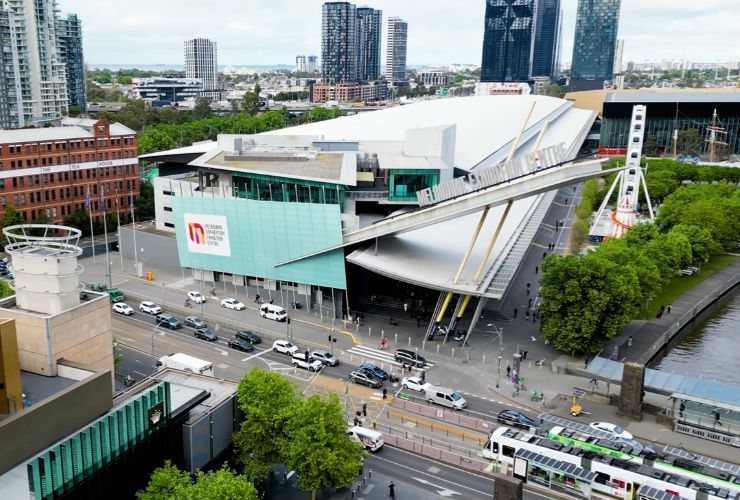
All Energy 2026
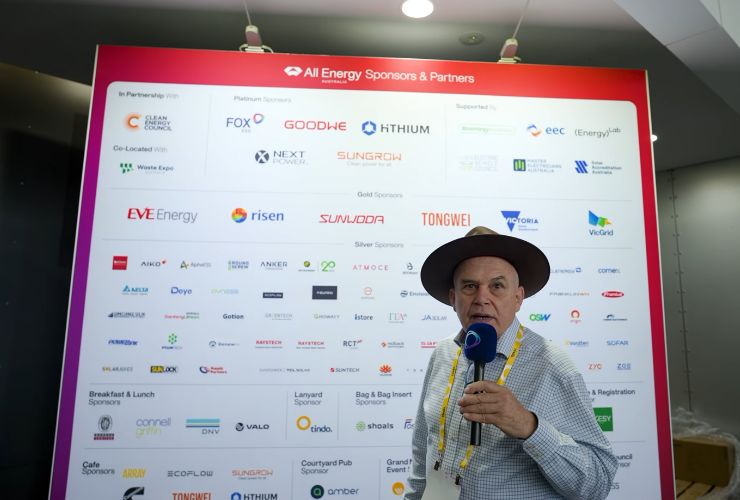
All Energy 2026 was the busiest edition Markus from Your Energy Answers says he has seen. Commercial batteries, vehicle-to-home charging and a crowded home battery market filled the floor. The video walks the show stand by stand, mixing product specs with interviews and a few stunts.
The backdrop is a slower battery market. The federal battery rebate has been reduced, and many early adopters already own a battery. About $1 billion of battery stock is sitting in Australian warehouses, which Markus says makes now a good time to find a bargain.
Brand names below were corrected from auto-generated captions, and specs are as stated on each stand.
Products on the floor
Batteries dominated, but EV chargers, panels and heat pumps all showed up. They’re listed in the order Markus visited them.
| Brand | Product | Key details (as stated) |
|---|---|---|
| SolaX | V2X bidirectional EV charger | Single- or three-phase in one unit. Powers the house from the car if the car supports V2X. Demoed on a Smart #3 (66 kWh battery, about 62 kWh usable). |
| SolaX | Single-phase all-in-one battery | 7 kWh modules in the space that used to hold 5 kWh. 100% depth of discharge. Up to 7 modules (49 kWh). |
| SAJ | HS5 EK70 home battery | Mid-range all-in-one. 9 kWh modules. Built-in heat pad for cold weather. 10-year warranty. |
| SAJ | HS5 EK90 home battery | Upgraded components. 15-year warranty. 12,000 cycles. |
| SAJ | Commercial battery cabinet | 125 kW inverter. 261 kWh of liquid-cooled storage. |
| myenergi | Libbi 2 battery | Australia and NZ get it first. 5 kW inverter, with 8, 10 and 12 kW versions coming. 5 kWh modules, up to 20 kWh per stack and 40 kWh across two stacks. 10-year warranty. Pairs with its EV charger and hot water diverter in one app. |
| ESY Sun | 22 kW AC EV charger | About $560 ex GST. |
| ESY Sun | 22 kW DC bidirectional charger | Charges the car from its three-phase batteries, then from the grid. About $3,700, due in December. |
| ESY Sun | Home batteries | 5, 6 and 10 kWh ranges, stackable to 30 kWh. Pitched on affordability and service. |
| BYD | Home battery and inverter | BYD now makes its own inverter instead of pairing with Fronius. |
| Clenergy | Home battery (3rd generation) | Known for 20 years of mounting gear, with 4–5 years of battery development. Designed for Australia, with local support. |
| AIKO | TOPCon solar panel | Claims the world’s highest panel efficiency, improved quarter by quarter. Pitched for small roofs that need to charge two EVs. |
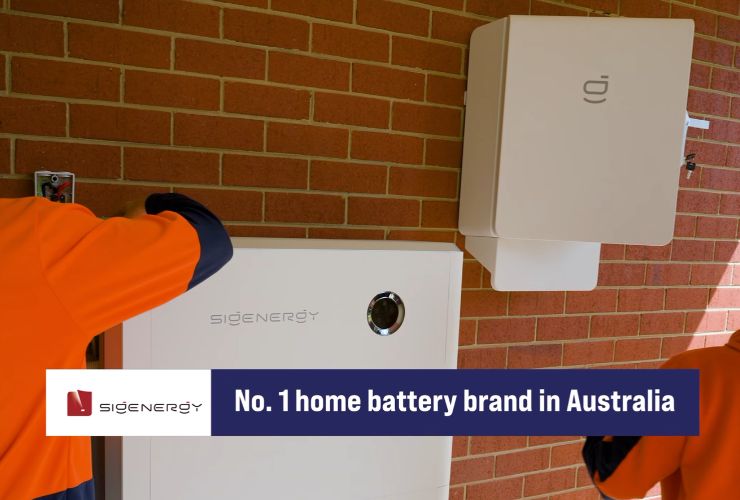
| Sigenergy | Home battery system | Installers say it is easy to install. A second factory is under construction. |
| Solarwatt | Battery co-developed with BMW | 30 years in solar. Engineered in Germany, made in China. Single- and three-phase inverters. An all-in-one version is expected Q1–Q2 2027. |
| CATL | Sodium-ion battery | Already on sale. Sodium is more abundant than lithium, so it should become cheaper. |
| Reclaim | CO2 heat pump hot water (split) | Draws about 1 kW and delivers about 4 kW of heat. |
| Reclaim | Reverse-cycle air conditioner | Ramps down to 30% output, where many units stop at 50%. Works with the AirTouch controller. |
| REPT | Battery cells | Chinese cell maker supplying cells, packs and full systems. Competes with CATL. |
Market trends from the show
Commercial batteries were the standout trend, but Markus still thinks small home batteries will do more for the grid, faster.
- Commercial and industrial storage is booming. Exhibitors whose biggest unit used to be 100 kW now show megawatt-scale units. Some projects still pay back in under 5 years, though switchboard upgrades and compliance add real cost.
- Home batteries are quicker to deploy. A commercial battery needs an owner, approvals, finance and a build. Markus argues many small batteries add up faster.
- Battery prices have roughly halved in the last couple of years, according to one exhibitor. Further falls depend on mineral prices, which is why sodium-ion is getting attention.
- About 550,000 Australian homes now have a battery. Four or five years ago, only wealthy households could afford one.
- Upgrades drive installer work. One installer said 80–90% of jobs are past solar customers adding a battery or replacing panels.
- There are too many battery brands. More than 70 are registered with the CEC. One distributor expects only the top 10 to remain within two years.
- Old solar systems underperform. Of about 4.4 million systems, Solar Service Guys estimate at least half are underperforming and about a quarter are performing very poorly. Batteries and energy management add more equipment that needs regular servicing.
- Heat pumps cut the two biggest household loads. Hot water can be up to a third of a power bill. Running hot water and air con off daytime solar means a smaller battery can cover the evening.
- Local generation beats big infrastructure. Markus points to the Snowy 2.0 cost blowout and resistance to new transmission lines. As coal plants close, he argues rooftop solar and batteries in cities are the practical answer.
NSW interest-free loan
The NSW government’s loan, run through Brighte, has had what Brighte calls phenomenal take-up. Households earning under $210,000 can put up to $15,000 of a solar and battery purchase on a genuinely interest-free loan over 2 to 10 years. There are no fees for the customer or the installer. $15,000 over 10 years works out to $57.96 a fortnight. Customers can also pay part upfront and finance the rest.
Outlook for 2027
Markus expects AI-managed batteries, cars powering homes and fewer battery brands in 2027.
- AI will start managing home and grid batteries.
- EV batteries will plug into the home, with bidirectional chargers turning cars into part of the energy supply.
- Battery brands will consolidate, especially in residential. Newcomers expecting a boom will find it harder than they thought.
- The “battery coaster” will keep running: boom, slowdown, then growth again.
He closes by thanking organiser Holly and her team for the biggest All Energy yet, and urging Australians to get batteries to keep the lights on.