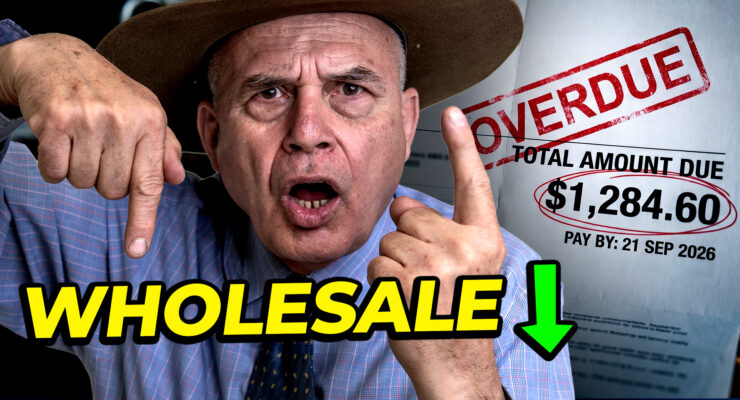
Is Your Solar System Still Doing Its Job?
Why 15-year-old rooftop solar needs a check-up — from the Your Energy Answers podcast
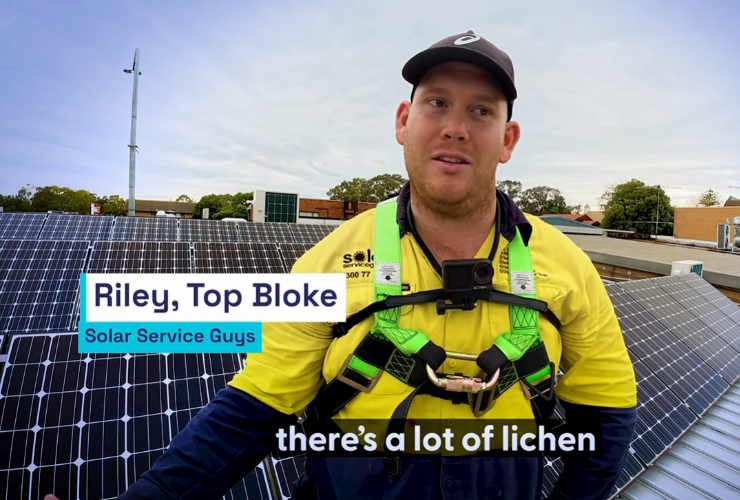
Eleven years on a roof, and not one person has been back up since the day it went in. The panels are completely covered. Look at how much electricity that household is losing — and they have no idea.
Here is a question. What does the world spend more on: milk, cheese and yogurt, or clean energy? It is not even close. Every dairy product in every country on earth, all year, is worth under a trillion dollars. Clean energy — solar, wind, batteries — is over two trillion. Solar panels alone were about $365 billion in a single year. There are now 2.4 terawatts of solar out there, enough to run entire countries.
So renewables are booming and the planet is sorted, right? Not quite. There is one thing nobody put in the brochure, and once you see it, you can’t unsee it.
Your car gets serviced. Why doesn’t your solar?
You’ve got a petrol car. Every 10,000 to 15,000 km it goes in for a service. Skip it and something breaks — and the warranty department is not interested. That’s the deal you signed.
Has anyone ever told you the same thing can apply to your solar? Because it can. Was that mentioned on the day of the install? Didn’t think so.
So we went and looked across Australia at PV systems five, ten, some fifteen years old. What we found is worse than I expected.
The panel is rarely the problem. The box next to it is.
Your inverter never gets a day off. About a third of home inverters have their first failure inside 10 to 15 years, and inverters are behind roughly 43% of all solar system failures.
Now do the maths:
| Component | Expected life |
|---|---|
| Panels (warranty) | 25 years |
| Inverter | 10–15 years |
On almost every roof in the country there is a date baked in when something critical is going to need attention.
Then there’s the small stuff: dust, bird droppings, lichen. Worldwide, grime quietly eats 4 to 7% of solar output every day. That is the stuff a quick clean would fix.
None of this makes headlines. It’s slow, it’s silent, and it adds up on your power bill.
So why does nobody check?
The car gets serviced. The dog goes to the vet. We clear the gutters. Even the smoke alarm gets a test. But the solar system that has been sitting on your roof for 15 years gets what? Nothing. No schedule, no rule, not even a reminder email. A handshake on installation day, and you’re on your own.
There are two reasons.
- Panels really are low maintenance. Installers aren’t lying about that. But low maintenance isn’t no maintenance, and somewhere along the way that difference got lost.
- Follow the money. The installer gets paid once, on the day it goes up. Where’s the incentive to ring you in year eight about your inverter and collect a $500 inspection fee?
Nobody’s the villain here. Which raises the real question: if it’s nobody’s job, what is actually happening up on those roofs right now?
Four roofs we climbed
We’ve already been up there. Here are four samples.
1. A 3 kW system in Sydney’s west, untouched since 2011
The owner couldn’t remember doing any maintenance at all. On the roof, the panels were completely covered — lichen across most of them. The Canadian Solar back sheets were starting to come apart, with cracking and small gaps where the sheet had begun to peel. Even if you cleaned these panels, the lichen would just come back. Still working technically, but nowhere near what it should be making.
2. The next suburb over: sold by a door knocker in 2012
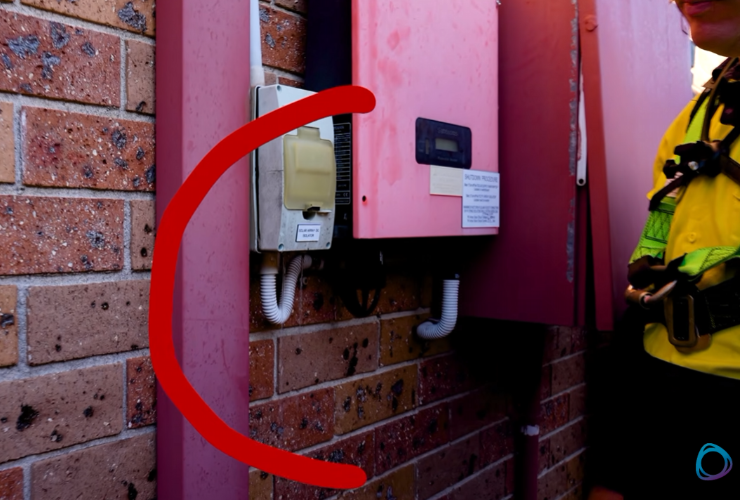
The son didn’t know whether the system had ever saved his parents money. Turns out it hadn’t for a while. There was no DC voltage coming down at all. The isolator was in poor condition, and when we popped it open there was water inside. The isolator was stuffed.
This one wasn’t underperforming. It was dead — completely dead. For how long? Nobody knew. The monitoring had never been switched on. And an isolator full of water isn’t just lost power. It’s a real fire hazard sitting on someone’s wall, and nobody knew.
3. An 81 kW commercial system switched off for four years
This is the one that still gets me. Over $120,000 paid a decade ago for the best panels and inverters money could buy — roughly $30,000 a year in power, sitting up there doing nothing.
Every inverter on the roof had a red fault light. The fuses in the board had blown, every circuit breaker had tripped off, and because the second monitoring device had no power, both monitoring systems were dead. Birds had nested in the cable tray, tissue paper and all. The solar supply main switch, inside a board with no markings on the outside, was sitting in the off position.
Why? One day an air-conditioning crew doing unrelated work switched the whole thing off for safety. Fair enough. But they never switched it back on. How long did it sit there? Four years. The system had paid for itself all over again, and the business never saw a cent of it. They paid full price for power they were already making on their own roof, because nobody was checking.
4. Candelori’s restaurant, Sydney’s west
Premium Korean panels, German inverters — one of the best systems you could buy when it went up. The owner is facing $8,000 to $10,000 a month in electricity, and 90 panels on the roof were only covering a quarter of usage.
Up top: very dusty, lots of lichen along the bottom edges, back sheeting starting to fail. One panel had developed a hotspot that shattered the glass. One inverter was putting out just 750 watts — the equivalent of roughly three panels. And the MC4 connectors were loose; one was fully out. That’s dangerous.
What all four had in common
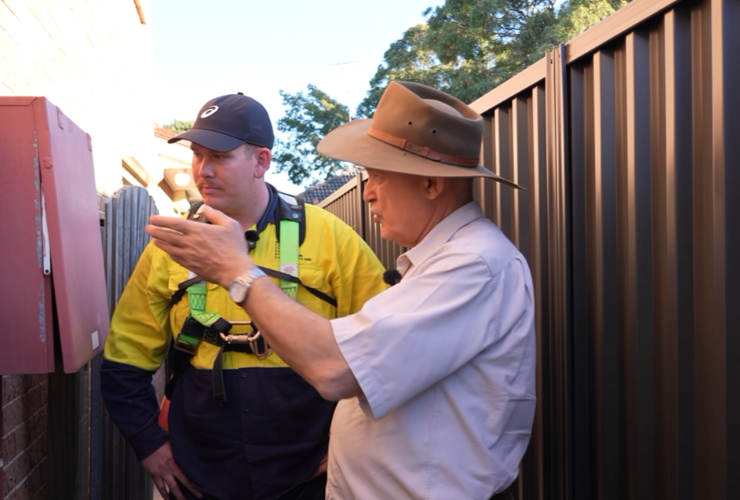
Not one of them found out because the system told them. Not one of them picked up the phone and asked for an inspection. They found out because we showed up with the Solar Service guys and offered a free one.
Every second system on your street
Those four aren’t unusual. One Australian network study looked at 8,000 home solar systems. How many do you reckon were underperforming? Maybe 10%? 15? 20%?
51.8%.
If that number holds, every second system you can see on your street isn’t doing its job. Maybe even yours.
The minister keeps telling us we have 4.4 million solar systems. At least 1.5 million of those are more than ten years old. Are they all dead as a dodo? That raises the uncomfortable question: how many roofs are out there right now where nobody has shown up?
So what’s the fix, and how scary is it?
Honestly, it’s neither scary nor expensive. A proper check is someone getting up on the roof and looking at four things:
| What they check | What they’re looking for |
|---|---|
| Panels | Cracks, delamination, hotspots |
| Isolator and wiring | Water ingress, corrosion (new systems don’t even have isolators any more) |
| Inverter | Is it running, any fault lights |
| Monitoring | Is it switched on and reporting properly |
A normal home inspection takes maybe an hour, maybe two. Budget around $500. You get that back in six to eight months through better performance, and you get peace of mind.
It’s not expensive. It’s not complicated. So why doesn’t everybody do it? Because nobody ever told them to. Well — consider yourself told.
What to do now
If you already have solar:
- Head to the partner finder on the Your Energy Answers website and find a quality local installer.
- Book a system check every few years. Book now, before the mad Christmas installation rush.
If you’re getting solar for the first time:
- Ask the installer directly, and in writing, what the manufacturer requires to keep the warranty valid.
- Get a maintenance schedule as part of the handover, so someone comes back in about three years.
This isn’t a sales pitch for anyone. It’s a reminder that there is a power station on top of your roof, and occasionally you should check whether it’s still okay — or whether the cockatoos have had a go at it.
You already paid for it once
Everything your system generates from here on is the actual return on the money you spent. Letting it quietly underperform for a decade is the most expensive kind of mistake there is, because it never shows up as one big bill. It just shows up as a slightly higher power bill every single month, for years.
So here’s what I actually want to know. Has your solar system ever been properly inspected since the day it went in? Or is it still running exactly as it was left on installation day, with moss on top and no idea what’s happening up there?
Tell me honestly in the comments. I’m curious how common this really is.
Want more energy answered? Visit yourenergyanswers.com for quality energy products, tools and calculators, and to find your quality local installers.