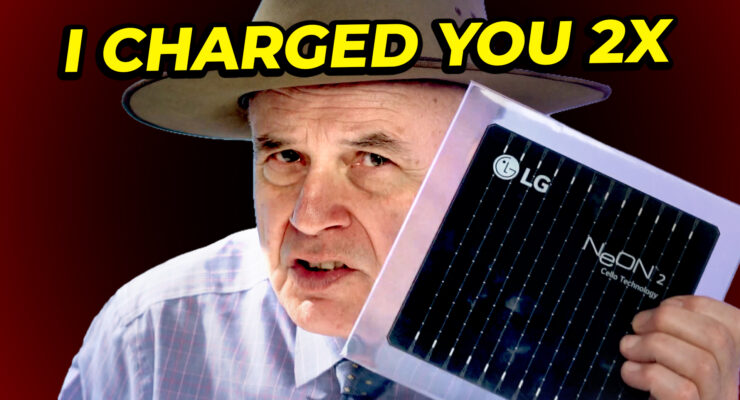
Breaking the Double Price Solar Rule
For over two decades, a fundamental rule controlled the solar power market. Property owners who wanted the highest panel efficiency had to pay double the price of standard modules. Legacy high-output manufacturers charged extreme price markups for modest gains in generation capacity.
That long-standing market rule has officially ended. Recent innovations in photovoltaic manufacturing allow AIKO solar panels to deliver industry-leading efficiency at a cost only slightly above budget options. Homeowners and commercial operators no longer need to compromise between affordable pricing and top tier power output. By removing steep brand markups, this breakthrough brings high-performance technology within reach of everyday energy consumers.
Understanding Back Contact vs Traditional TOPCon Cells
To understand why these panels perform so well, one must look at how cell architecture has evolved. Traditional TOPCon modules use visible silver gridlines printed directly onto the front surface of each cell. These metal contacts reflect incoming light and create micro shading across the active silicon surface. Even a small child understands that covering parts of a solar collector stops light from reaching the generator underneath.
Back contact cell technology eliminates front metal gridlines entirely. Every electrical connection is placed cleanly on the rear side of the silicon wafer. Removing front metal obstacles creates an unobstructed absorption area that captures every available photon. Beyond boosting energy conversion, this engineering choice creates a striking aesthetic. Rooftops fitted with these modules feature a smooth, uniform black appearance that blends seamlessly into modern architectural designs.
Generation 4 Residential Modules Reach 500 Watts
Residential rooftop installations often face strict space limitations. Increasing power output within a compact footprint requires continuous panel refinement. AIKO has transitioned from earlier generation products to advanced Generation 4 panel designs. By reducing spacing gaps between internal cell rows and enhancing silicon purity, power density has reached unprecedented levels.
Full Black 500 Watt Module: Delivers an impressive 500 watts of output in an all-dark format within a standard residential panel footprint under two square meters.
White Backsheet 505 Watt Module: A single glass residential panel weighing only 21 kilograms, offering effortless installation handling while producing up to 505 watts.
Positive Power Tolerance Standard: Many commercial panel manufacturers use wide tolerance ranges where a module labelled 480 watts might actually output only 472 watts. AIKO enforces strict positive tolerance guarantees. A panel rated at 505 watts will produce at least 505 watts or higher upon factory testing, ensuring consumers receive every watt they purchased.
Commercial Solar Breakthroughs and Structural Advantages
For large-scale commercial roofs, panel selection directly impacts installation labour, mounting hardware costs, and structural engineering limits. Deploying higher wattage modules allows commercial projects to generate more total power while installing fewer individual physical units.
Comet Series 685 Watt Module: The Generation 4 commercial lineup reaches up to 685 watts per module, surpassing standard TOPCon commercial panels that typically peak around 630 watts.
Lightweight Single Glass Construction: Commercial panels in this line weigh under 30 kilograms each. On a hundred-panel commercial roof, this weight reduction removes 300 kilograms of structural load from the building framework.
Winter Generation and Battery Integration: Property owners adding large energy storage systems often discover winter sunlight is insufficient to fully charge their batteries. Deploying high-efficiency modules ensures maximum energy capture during short winter days, keeping home batteries fully charged throughout the year.
Durability, Hail Resistance, and Thermal Stress Testing
Solar panels must endure harsh environmental conditions for decades, including severe weather, thermal expansion, and hail impacts. Cell manufacturing processes directly influence how panels handle long-term physical stress.
Lower Heat Processing: TOPCon cell manufacturing requires high-temperature baking to bond front silver contacts onto silicon. This intense heat treatment makes the silicon brittle, increasing susceptibility to microcracking during hail impacts. Back contact cells use lower processing temperatures, preserving natural silicon flexibility and structural resilience.
Rear Side Connection Tensile Strength: Daily weather cycles cause panels to heat up and cool down, creating continuous thermal expansion stress on internal electrical contacts. TOPCon cells feature front and back connections that suffer from metal fatigue over time. Rear contact designs place all connections on a single flat surface, doubling overall connection pull strength and extending reliable system lifespan.
Superior Performance in Partial Shade Conditions
Partial shading from trees, chimneys, overhead wires, or passing clouds poses a constant challenge for rooftop solar systems. In traditional TOPCon panels, a shaded cell acts like an electrical resistor. When current cannot pass through the shaded cell, power output across the entire connected panel string drops dramatically.
Back contact architecture routes electrical current far more effectively around shaded regions. Unshaded sections of the cell continue generating electricity at full capacity, allowing the panel to maintain strong output even during partial shading events. Furthermore, lower operating current levels allow installers to connect more panels per individual inverter string, simplifying system design and lowering installation complexity.
Global Scale and Installation Craftsmanship
China has established complete leadership in global solar hardware manufacturing due to massive industrial supply chains, dedicated research centres, and vast engineering workforces. Competing with this manufacturing scale is unrealistic for smaller nations. However, national leadership in countries like Australia shines in project implementation, strict electrical safety compliance, and installation quality standards.
Even the most advanced solar panel will underperform if paired with poor installation craftsmanship. Property owners should avoid high-pressure call centres offering cheap, low-quality installations that lack long term customer support. Choosing established local installers with proven track records ensures your high efficiency system operates safely, reliably, and efficiently for decades to come.