Fast read
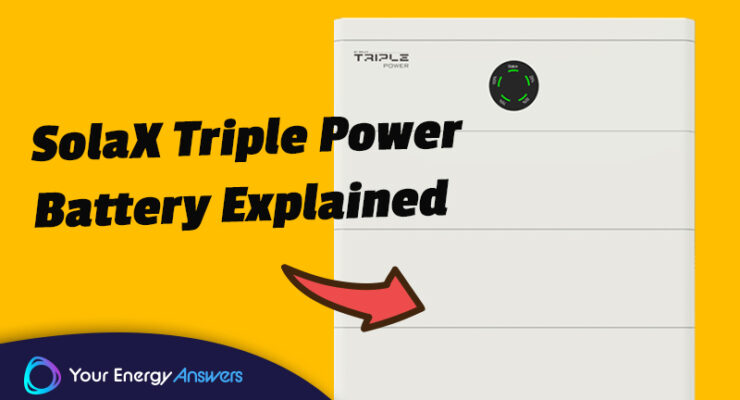
The SolaX Triple Power battery is a modular solar battery designed to store excess solar power during the day and use it later at night, during peak-rate periods or when solar production drops. Its main strengths are expandable storage, LFP battery chemistry, smart battery management, strong cycle life and compatibility with SolaX hybrid inverters. Because it can be scaled over time, it suits homes that may add EV charging, heat pump hot water, air conditioning or higher evening energy use in the future. For Australian homeowners wanting a safe, flexible and future-ready battery system, SolaX Triple Power is worth considering.
The SolaX Triple Power battery is one of the better-known battery options for homeowners looking to store excess solar power and use it later in the day. But when you hear the name “Triple Power”, it is important to understand one thing first: this is not just one fixed battery size.
The SolaX Triple Power range includes modular battery systems that can be configured to suit different homes, energy usage patterns and future storage needs. SolaX describes its Triple Power Battery range as high-capacity, expandable energy storage using LFP battery technology and a smart battery management system for longevity and efficiency.
For Australian homeowners, the appeal is simple: store more of your own solar power, reduce reliance on the grid, and have a battery system that can grow with your home’s energy needs.
What Is the SolaX Triple Power Battery?
The SolaX Triple Power battery is a modular solar battery range designed to store excess solar energy for later use. During the day, your solar panels may generate more electricity than your home is using. Instead of exporting all that surplus power to the grid, a battery can store it so you can use it at night, during peak-rate periods, or when solar generation drops.
SolaX positions its Triple Power battery range as scalable storage for homes and businesses, with battery options across different capacities. Its global product page lists Triple Power energy storage ranging from 2.5kWh to 92.1kWh, depending on the product and configuration.
For most residential homes, the relevant systems are usually much smaller than the maximum commercial-style configurations. A typical household may be looking at something around 7kWh to 20kWh, depending on usage, solar size and future energy plans.
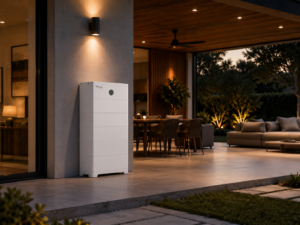
SolaX Triple Power Capacity Explained
Capacity is one of the most important numbers when comparing batteries. It tells you how much energy the battery can store.
The SolaX Triple Power range includes several modular configurations. Earlier T-BAT HS systems were available in capacities from around 7.3kWh up to approximately 47.9kWh. SolaX has since expanded the range with the TSYS-HS51 series, which uses 5.1kWh LFP battery modules and offers scalable storage from 10.2kWh to 66.5kWh, making it suitable for both large residential and light commercial energy storage applications.
That modular design matters because battery sizing should match the home. A small household may not need a massive battery, while a larger family with air conditioning, a pool, EV charging or high evening use may need more storage.
As a simple guide:
| Home Type | Possible Battery Storage Range |
|---|---|
| Small home or low evening usage | 10–12kWh |
| Average family home | 14–20kWh |
| Larger home or higher night usage | 20–35kWh |
| EV, pool, ducted AC or heavy usage | 35kWh+ |
The right size depends on how much energy your home uses after sunset and how much excess solar your system produces during the day.
Usable Capacity vs Nominal Capacity
When comparing SolaX batteries, homeowners should understand the difference between nominal capacity and usable capacity.
Nominal capacity is the total amount of energy the battery can theoretically hold. Usable capacity is the portion you can actually use in normal operation. Batteries usually reserve some capacity to protect long-term health and avoid deep discharge.
For example, the SolaX T-BAT H 5.8 V3 datasheet lists a 95% depth of discharge, meaning most of the battery’s nominal capacity is available for use while still protecting the battery. The same datasheet lists 5.8kWh nominal energy and 5.5kWh usable energy for the 5.8kWh model.
This is why two batteries from different brands with the same advertised size may not always deliver the same usable energy. Always compare usable capacity, not just the headline number.
Safety: Why LFP Battery Chemistry Matters
One of the strongest advantages of the SolaX Triple Power battery range is its use of LFP, also known as LiFePO₄ or lithium iron phosphate battery chemistry.
LFP chemistry is widely used in home energy storage because it is known for thermal stability, durability and suitability for daily charging and discharging. SolaX states that its Triple Power batteries use LFP technology with an intelligent battery management system designed to prevent overcharging, deep discharge and thermal issues.
For homeowners, that matters because a battery is not an occasional appliance. It may charge during the day and discharge every evening for years. A safe, stable battery chemistry is an important part of long-term reliability.
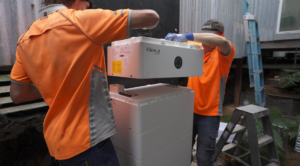
Smart Battery Management
A solar battery needs more than battery cells. It also needs a smart management system that controls how the battery charges, discharges and protects itself.
SolaX highlights smart BMS technology across its Triple Power battery range. The purpose of the BMS is to help manage safety, efficiency and battery health over time.
This can help protect the system from issues such as overcharging, excessive discharge and temperature-related stress. For homeowners, the benefit is that the battery can operate more intelligently in the background, rather than simply acting as a passive storage box.
Expandability: Why It Is a Big Advantage
One of the main reasons homeowners consider SolaX Triple Power is expandability.
Energy use is changing quickly. A home that only needs a modest battery today may need more storage in a few years if it adds:
- An electric vehicle
- Heat pump hot water
- Induction cooking
- Ducted air conditioning
- A pool pump
- A home office
- A larger solar system
- More people living in the home
SolaX’s Australian residential battery page says the system is modular and expandable, allowing users to scale capacity according to their energy needs.
This is a practical advantage because it reduces the pressure to get the perfect battery size from day one. However, expansion still needs to be planned properly. Your installer should confirm inverter compatibility, battery model limits, wiring requirements and whether future expansion will be possible under the same system design.
Example: TSYS-HS51 Expandability
The SolaX TSYS-HS51 series is a good example of how the newer Triple Power battery range can scale. It uses 5.1kWh LFP battery modules and can be configured from 10.2kWh up to 66.5kWh, depending on the number of modules installed and inverter compatibility.
For most residential homes, 66.5kWh is far more storage than they will need. But it shows why SolaX can be attractive for households that want room to grow, especially larger properties, homes with high evening loads, or families planning to add EV charging, electric hot water, heating, cooling and backup power.
Example: T-BAT-SYS-HV-S3.6 Expandability
Another SolaX option is the T-BAT-SYS-HV-S3.6, which is listed as a high-voltage battery system with a capacity range of 7.37kWh to 47.92kWh. The datasheet says it supports battery expansion, stackable modules and plug-and-play design, with support for multiple battery towers depending on the configuration.
This kind of modular design can suit homeowners who want a staged approach: start with a sensible battery size now, then add more capacity later if the home’s energy use increases.
Charging and Discharging Performance
Battery capacity tells you how much energy the battery can store. Charging and discharging performance tells you how quickly that energy can move in and out of the battery.
This matters because a battery needs to respond to household demand. If your home is using several appliances at once, the battery and inverter need enough power output to support those loads.
The SolaX T-BAT-SYS-HV-S3.6 datasheet lists a maximum 50A charging / discharging current and cycle life above 6,000 cycles. The T-BAT H 5.8 V3 datasheet also lists cycle life above 6,000 cycles and a 10-year warranty.
For homeowners, the key point is that battery performance is not just about “how many kWh”. A good installer should check your daily loads, peak usage, inverter size and backup expectations before recommending a battery configuration.
Outdoor and Installation Considerations
Many Australian homes do not have a perfect indoor battery location. Batteries are often installed in garages, side passages, utility areas or on external walls.
SolaX’s HS51 battery and T-BAT H 5.8 V3 are both listed with IP66 ingress protection, supporting indoor and outdoor installation suitability. The T-BAT H 5.8 V3 datasheet also lists wall or floor mounting, while the T-BAT-SYS-HV-S3.6 datasheet lists IP65 ingress protection, stackable modules and battery heating technology for low-temperature operation.
That does not mean a battery should be placed anywhere. A good installer should still avoid unnecessary heat exposure, poor ventilation, flood-prone areas and non-compliant locations. Outdoor-ready does not replace good installation practice.
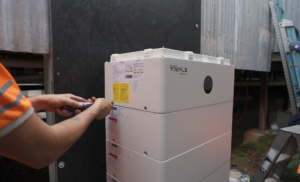
Backup Power: What Homeowners Should Know
A SolaX Triple Power battery can be part of a backup power system when paired with the right compatible inverter and switchboard setup.
However, backup power should be explained clearly. A battery does not automatically mean your entire home will run as normal during a blackout. In many cases, the system is designed to support selected essential circuits, such as:
- Fridge
- Lights
- Internet
- Garage door
- Selected power points
- Basic appliances
Large loads such as ducted air conditioning, ovens, pool pumps and EV chargers may need to be excluded or carefully managed. Backup performance depends on battery capacity, inverter output, wiring design and which circuits are backed up.
Who Is the SolaX Triple Power Battery Best Suited To?
The SolaX Triple Power battery may be a good fit for homeowners who want:
- To store more excess solar power
- A modular battery that can grow over time
- LFP battery chemistry
- Smart battery management
- A strong-value battery option
- Compatibility with SolaX hybrid inverters
- Backup power for selected circuits
- A system suitable for future EV charging or electrification
It is particularly suitable for homes where energy use is expected to grow. If you are planning to move more appliances from gas to electric, add an EV or install a larger solar system, expandable storage can be a major advantage.
Final Verdict: Is the SolaX Triple Power Battery Worth Considering?
Yes, the SolaX Triple Power battery is worth considering for Australian homeowners who want a safe, expandable and practical solar battery system.
Its main strengths are its LFP battery chemistry, modular capacity, smart battery management, strong cycle life, flexible installation options and ability to grow with household energy needs.
The most important part is getting the system designed properly. The right SolaX battery size should match your solar system, evening usage, backup expectations and future energy plans.
For homeowners wanting a flexible battery that can store excess solar power today and adapt to tomorrow’s energy needs, SolaX Triple Power is a serious option to put on the shortlist.
FAQs
What is the SolaX Triple Power battery?
The SolaX Triple Power battery is a modular solar battery range designed to store excess solar energy for later use. It uses LFP battery technology and smart battery management.
How much capacity does a SolaX Triple Power battery have?
Capacity depends on the model and configuration. SolaX lists Triple Power battery options across a broad range, with residential systems commonly configured from smaller modular setups through to larger multi-module systems.
Is the SolaX Triple Power battery expandable?
Yes. SolaX Triple Power batteries are designed with modular expansion in mind, although the exact expansion limit depends on the model, inverter compatibility and installation design.
Is the SolaX Triple Power battery safe?
SolaX Triple Power batteries use LFP / LiFePO₄ battery chemistry and smart battery management, both of which are important for safe, stable residential battery operation.
Can a SolaX battery be installed outside?
Some SolaX battery models are designed for indoor and outdoor installation. For example, the T-BAT H 5.8 V3 datasheet lists IP66 ingress protection and indoor/outdoor suitability.
Is SolaX Triple Power good for backup power?
It can be, when paired with the right inverter and backup circuit design. Homeowners should ask their installer exactly which circuits will be backed up and what appliances can realistically run during an outage.