Fast read
Minor EV crashes are turning into months-long waits or total write-offs because repair parts, certified technicians and battery assessments can't keep pace with the cars being sold. Ethan Lambert (Your Energy Answers) argues the fix is rules, not technology: no country legally requires carmakers to supply parts.
- A small repair can mean 6+ months waiting on parts, so insurers pay for hire cars until writing the car off is cheaper.
- Carmakers run just-in-time parts supply, and catalogs have grown as petrol, hybrid and electric models are sold side by side.
- The problem shows up in the UK, Germany, Norway and Sweden, and dealers in Australia report the same delays.
- Right-to-repair laws cover information sharing, not parts supply. Cars are not covered by the EU directive.
- Buyers can research a brand's repair record before purchase and choose a vetted home-charger installer.
Why small damage becomes a total loss
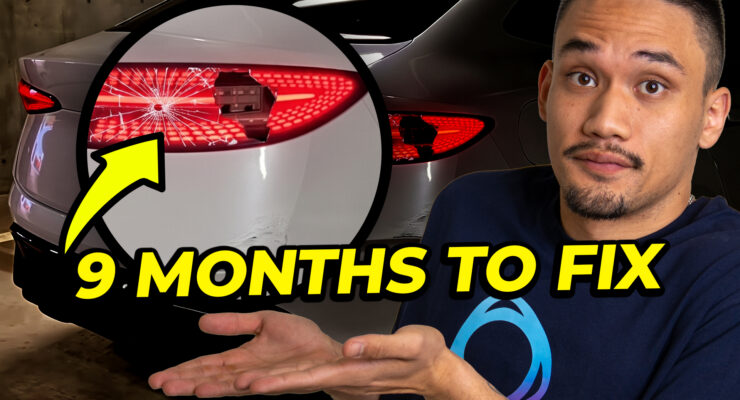
The repair maths has flipped: a job that once took a fortnight can now take 6 months or more, and the insurer pays for a hire car every week of the wait. The video opens with a new EV hit from behind (boot lid, door, wing mirror) that has waited 9 months because the manufacturer can’t give a parts lead time.
- Parts delays: the UK’s insurer-owned research lab clocked one bracket at 7 months. Around month two, the video says, it becomes cheaper to write the car off.
- Battery uncertainty: a pack can be worth up to 40% of the car, and it is hard to prove one is safe. Packs get rejected because nobody can prove they’re fine, not because they’re shown to be broken.
- Skills shortage: there is a global shortage of mechanics certified to work on high-voltage systems.
Why manufacturers don’t stock parts
Carmakers are cutting warehouse costs while funding the EV transition, so they order parts after the crash (“just in time”). Selling petrol, hybrid and electric models side by side has also roughly quadrupled the parts catalog while stocking budgets shrank.
The example the video uses: UK insurance researchers crash tested a Hyundai Ioniq 5 at under 15 km/h, a typical car-park speed. The radar sensor survived, but the plastic bracket holding it snapped, and its lead time was 7 months.
Who gets blamed
The dealer takes the blame, but a review commissioned by the peak body for Australia’s new car dealers traced the delays up the supply chain.
- Manufacturers are slow to approve warranty work, and there are disputes over who pays.
- Batteries can’t be air freighted, so they travel by sea.
- Diagnosing a fault or processing a claim can take 6 to 8 weeks.
- Some dealers now refuse to look at cars they didn’t sell, and several brands won’t sell genuine parts to independent mechanics, which funnels owners back into the same congested official network.
The international picture
The same pattern appears in every market the video checks.
| Country | What the video reports |
|---|---|
| UK | EV write-offs cost businesses more than £41 million a year, and about 1 in 5 EVs in a collision is written off. Insurers call some newer Chinese brands almost uninsurable, because repair methods assume cheap labour (for example, replacing the whole body side after a side hit). |
| Germany | A study of 37 matched pairs (each EV against its closest petrol twin) found EV repairs cost 30 to 35% more. Water-bath dunking as a fire precaution can turn a repairable car into a write-off. |
| Norway | Nearly 98% of new cars sold this year are fully electric, and over a million EVs are on the road. Insurance premiums rose 16.6% in a single year, which the insurer blamed on expensive components, high-voltage batteries and long workshop stays. |
| Sweden | A 5-month-old car worth about A$180,000 was declared repairable, but the workshop couldn’t get any parts and had no delivery date. The owner called it “parts limbo”. |
Right to repair covers information, not parts
No law anywhere requires a carmaker to keep parts available. Europe’s new right-to-repair directive requires repair and parts supply at reasonable prices for products such as washing machines, fridges, dishwashers, vacuum cleaners and phones, but cars are not on the list. The video notes that a washing machine carries a legal parts guarantee of 7 to 10 years while a car carries none.
- Germany: the motoring club ADAC (20 million members) wants 12 to 15 years of mandatory parts supply and 15 years of free software updates. The responsible ministry has been slow to respond.
- Australia: the motor vehicle service and repair information sharing scheme, running since 2022, forces manufacturers to share technical and diagnostic information with independent repairers at a fair price. The government’s review ties it to $2.4 billion a year in extra industry turnover, and the scheme is under review for strengthening.
- The gap: the scheme does not require parts on shelves, set supply deadlines, or force sales to independents. The dealer body is pushing for enforceable time frames and real parts obligations.
Silver lining and what buyers can do
The presenter remains pro-EV and says the problem is a supply chain and rule book issue, not physics. Norway shows the cars work at scale, and written-off low-kilometre EVs go to dismantlers, where their batteries, motors and electronics become a secondhand parts supply, a poor but real substitute for a warehouse.
- Research the repair record, not just the car: search owner forums for the brand name plus “waiting for parts”.
- Pay attention to who installs your home charger. The video recommends the Zappi charger, which charges from excess solar, and a vetted installer, and it points to the channel’s installer finder at yourenergyanswers.com. This is the channel’s own recommendation, and it sells related services.
- Share your experience of parts waits or minor-damage write-offs, including brand and duration, in the video’s comments; the next video may name the brands involved.
The video’s closing argument is that no country has legislated parts supply, so Australia could be the first.