Transcript
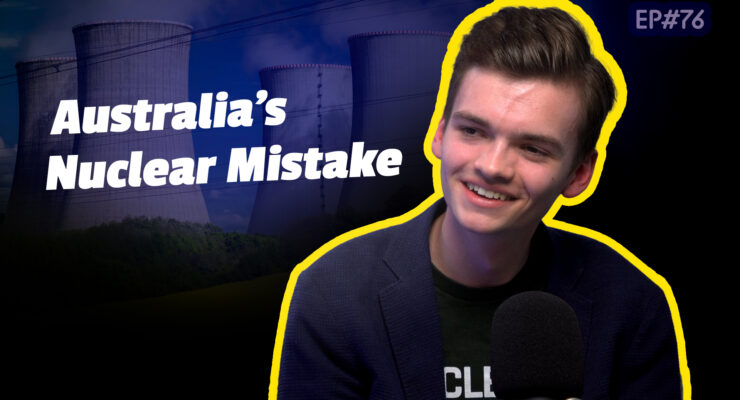
Will Shackel founded Nuclear for Australia at 16. Now 20, he joins Markus Lambert to explain why nuclear power is illegal in Australia, how the ban was horse-traded through Parliament in 10 minutes back in 1998, and what it would take to lift it. They dig into cost, waste, the Chernobyl fear factor, why we export uranium we can’t use ourselves, and whether nuclear could ever sit alongside solar and batteries to bring power bills down.
Will’s organisation: Nuclear for Australia (nuclearforaustralia.com)
The ban most Australians don’t know exists
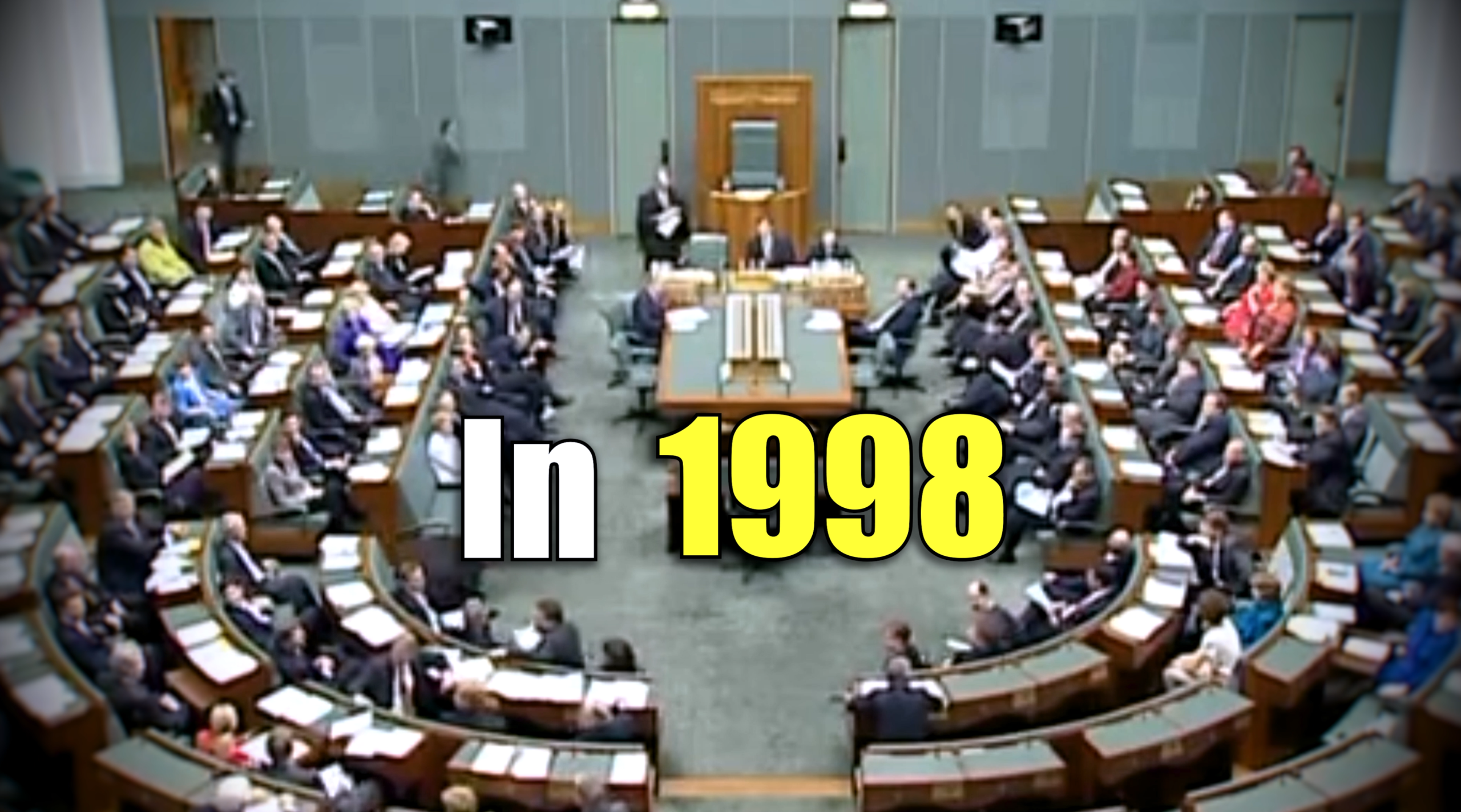
Most Australians don’t know this: nuclear power isn’t just unbuilt in Australia, it’s illegal. A federal ban has sat on the books since 1998, and according to Will Shackel, it was debated for about 10 minutes on the last day of Parliament as a piece of political horse trading. Will founded Nuclear for Australia at 16. He’s 20 now, and in this episode he makes the case for why the ban should go, while Markus, who grew up within sight of a German nuclear plant and a stack of American warheads, pushes back on the fear, the cost and the timing.
How Australia banned nuclear in 10 minutes
The national ban was introduced in the late 1990s under the Howard government. Will’s account is that it was a deal to get legislation through for the OPAL research reactor at Lucas Heights, with Labor and the Democrats extracting the ban as the price. It wasn’t an energy policy decision. Nobody modelled it. It was traded.
His argument for lifting it is deliberately narrow: if nuclear doesn’t stack up on cost or time, nobody will build one anyway. The ban only stops the conversation, not a bad investment. “It took 10 minutes to ban it. Why can’t it take 10 minutes to lift it?”
What the Coalition got wrong
Markus says it plainly: as a voter, the Liberals’ nuclear pitch at the last election wasn’t sold well. Will agrees the policy was rushed, with the plan effectively built in about a year, and that the debate quickly turned into playing the person rather than the argument. He’s had plenty of that himself, from jokes about his age to accusations of being a lobbyist. His view is that the election was the start of the nuclear conversation in Australia, not the end of it.
Why Will thinks nuclear is misunderstood
The numbers Will leans on:
- A fuel pellet the size of your fingernail produces as much energy as a tonne of coal.
- The uranium one person needs for a lifetime of electricity fits in roughly a can of Coke.
- Australia’s entire high-level waste from decades of research reactors sits in two canisters at Lucas Heights, after reprocessing in France.
- Nuclear plants can run for 80 years or more, which is where the cost case lives.
- France runs a near-100% clean grid with around 70% nuclear, load-following alongside renewables.
He also points out that Australia has the world’s largest uranium resources but is only the fourth-largest producer, and exports it from South Australia alone. We dig it up, ship it out and let everyone else run reactors on it.
The waste question
Markus goes straight at it: what about radioactive waste? Will’s answer is that every energy source creates waste, and nuclear’s energy density means the dangerous part is tiny in volume. The gloves and aprons outnumber the spent fuel. Spent fuel from Australia’s research reactors has been sent to France for reprocessing, and what comes back is a small amount of vitrified waste. Whether that reassures you is a fair thing to decide after listening.
Can it arrive before the coal plants close?
This is Markus’s strongest challenge. The coal fleet is scheduled to close from around 2030, and AGL and the other operators are already saying the plants are too old to extend. The international estimate for a country new to nuclear is 10 to 15 years to get a first plant running, and Australia took 40 years to deliver a Western Sydney airport.
Will’s response: Snowy Hydro took a long time too, the grid build never actually stops, and solar panels and wind turbines need replacing every 20 to 30 years anyway. He also argues nuclear needs far fewer sites, which means fewer of the transmission lines that are quietly adding more to power bills than some solar farms cost to build. Markus’s counter is that solar and batteries are filling the gap right now, at a cost people can see on their own roof.
Small reactors, Bill Gates and the back of a ute
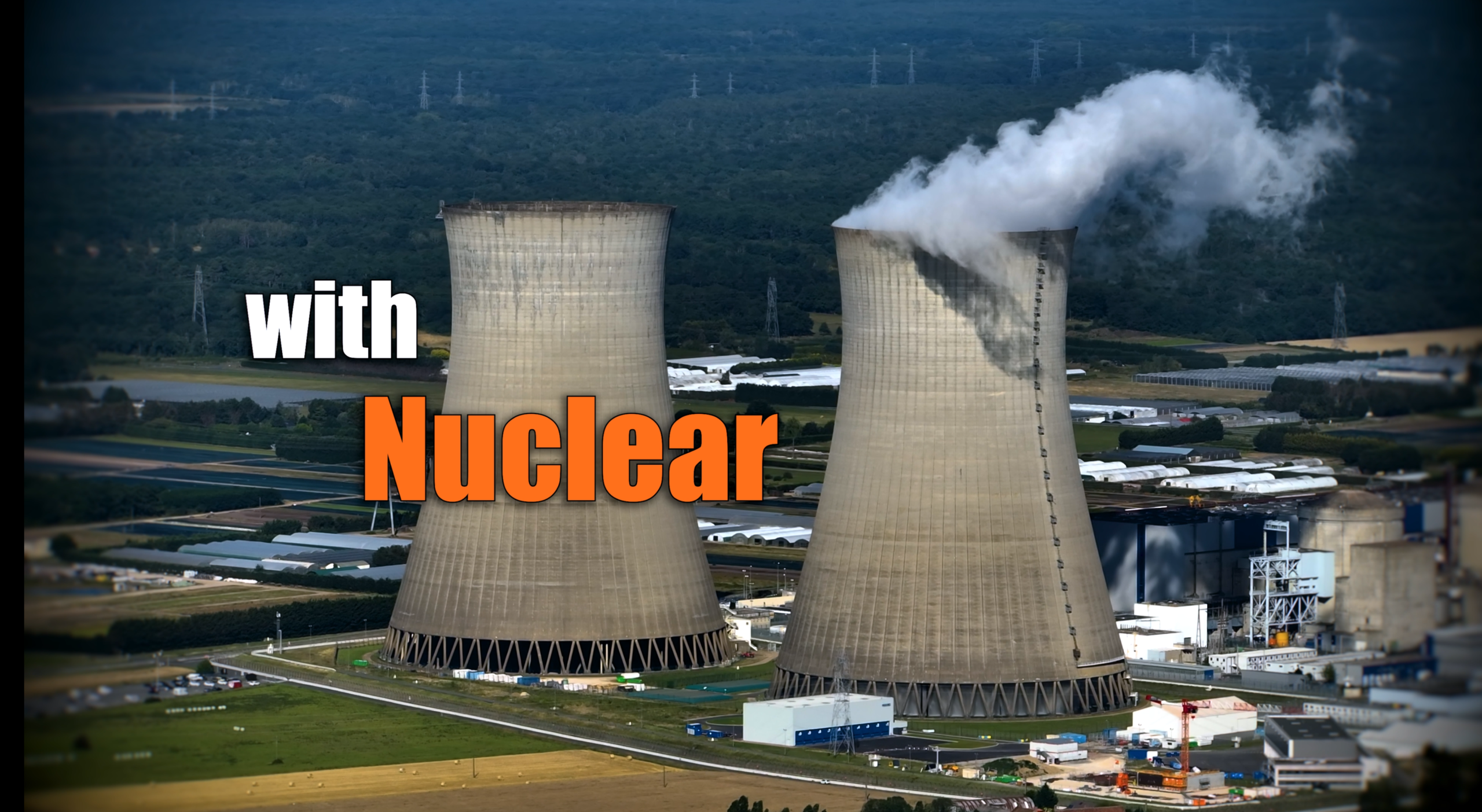
The technology Will is most excited about isn’t the big plant Markus remembers from Germany. He covers Bill Gates’s TerraPower and its Natrium reactors, the UK Labor government’s deal with Rolls-Royce for small modular reactors, and a US microreactor that fits in the back of a pickup truck and recently achieved criticality. These are designed to follow load alongside renewables rather than fight them.
Chernobyl, Three Mile Island, Fukushima
Markus admits the fear is real for him. He lived near the Biblis plant and heard about Chernobyl like everyone else. Will doesn’t dodge it. He goes through each accident: Chernobyl as a Soviet design with no containment, Three Mile Island where radiation exposure to the public was less than a chest X-ray, and Fukushima where there’s no evidence anyone died from radiation. His line is that the lessons were learned, the fear hasn’t caught up, and the zombie-in-a-yellow-suit image is doing more work than the data.
Germany, China and the rest of the world
Germany shut down its last three reactors and its new chancellor has since called the exit a major strategic mistake. China runs nuclear at around 5% of its grid but is building so fast it’s set to overtake the United States as the biggest nuclear producer. Canada, the US and the UK are all pushing ahead. Will’s frustration is that Australia, with the uranium, the stable geology and the climate targets, is treated as a joke in that room.
Where Markus lands
Markus doesn’t come out of this a convert, and the episode is better for it. His closing point is the one this channel keeps coming back to: it’s all part of the energy mix, and all anyone really wants is cheaper electricity so Australia can make stuff again. Whether nuclear belongs in that mix is a question he thinks Australians should at least be allowed to ask.