The $500K Solar Farm Disaster Nobody Regulates
A wind gust well below the design rating left more than half a million dollars of damage on a NSW solar farm, and the installer who built it says no one in Australia was checking the equipment that failed.
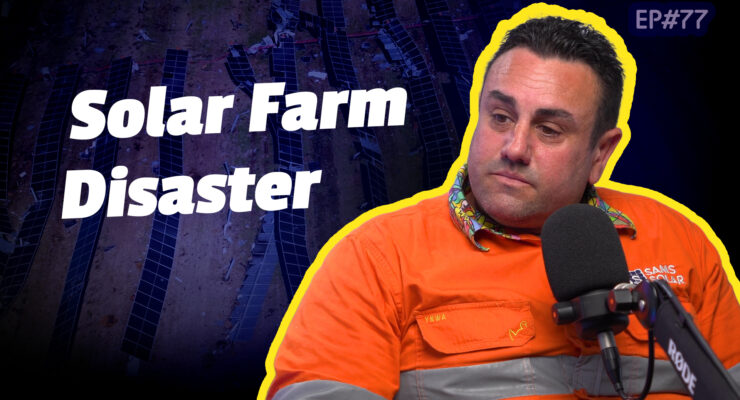
On this episode of the Your Energy Answers podcast, Markus Lambert sits down with Sam Makis. Sam spent 10 years as an electrician, moving from residential solar to commercial rooftops and then to solar farms, keeping some clients for a decade. His biggest job yet ended with 22 twisted tracker rows, a lost client and his business in administration.
Fixed vs tracking solar farms
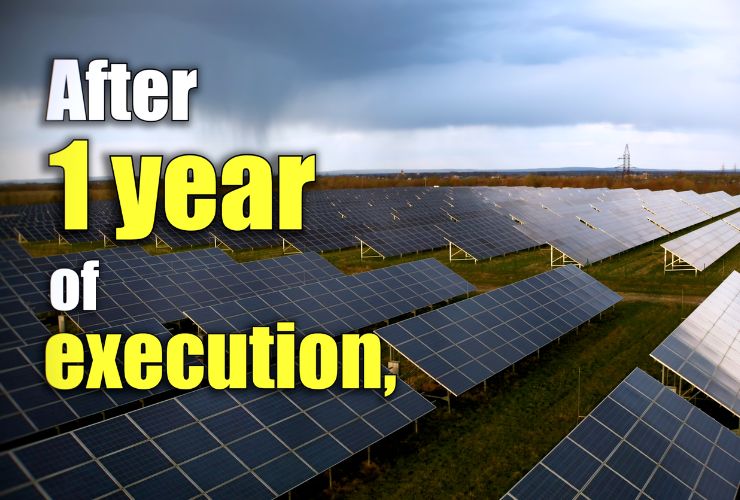
Tracking solar farms tilt their panels to follow the sun, which Sam says lifts yield by around 15%. Fixed-frame farms work like a rooftop system: panels are bolted at a set tilt, often angled northwest for more afternoon output.
Trackers cost more, and Markus suspects the extra cost often outweighs the 15% gain. Sam’s answer is that trackers make sense when land is limited, because you can’t simply add more panels. The trade-off is engineering: long rows of panels act like a sail in the wind, so trackers rely on dampers (shock absorbers) to soak up gusts.
Markus also raises a bigger point about where solar farms go. Building them far from cities makes the power cheap at the source, but the network costs to carry it back push bills up. Both agree more generation on city warehouse roofs would make more sense, and that grid-connected solar farms should come with batteries.
The two-versus-four damper dispute
Sam won a tender from a long-term agricultural client for two tracking solar farms: more than 6.5MW near Griffith and around 2MW near Tamworth, both in NSW. For scale, he puts a typical 5MW solar farm at around $8 million.
Before any gear arrived, Sam says he was promised four dampers per row. When the equipment landed, the bill of materials came up short. The supplier’s design, he says, gave four dampers only to the outer rows on the east and west sides, with two on each internal row, on the basis that the outer rows shield the rest from wind.
Sam’s objection was simple: the wind also blows from the north and south. Each table was about 65 metres long, carrying four to five tonnes of panels and acting as a 260 square metre sail. He installed to the supplier’s drawings anyway, because that is what the warranty depended on.
| When | What happened (per Sam) |
|---|---|
| Late 2024 | Agreements exchanged; damper numbers questioned before delivery |
| March 2025 | Project completed; independent engineer’s risk assessment sent to the supplier |
| 29 August 2025 | 82–89km/h winds damage 22 of 80 tracker rows |
| After August 2025 | Site rebuilt with stronger, re-engineered dampers |
| November 2025 | Panels start breaking; rails found to be too short |
| At time of recording | Business enters administration; offer made to creditors |
When the build finished in March 2025, Sam asked for certified structural engineering to complete his handover. He says it never came, so he paid for his own independent engineer. That engineer warned high winds could twist the rows or throw panels. Sam says the supplier dismissed the report because the engineer lacked solar tracker experience. He did not receive his final payment.
29 August 2025: the wind that should not have mattered
On 29 August 2025, Griffith Airport recorded winds of 82 to 89km/h. Sam says the system was designed for 42 metres per second, roughly 140 to 150km/h. The area’s highest recorded gust, in 2007, was just over 94km/h.
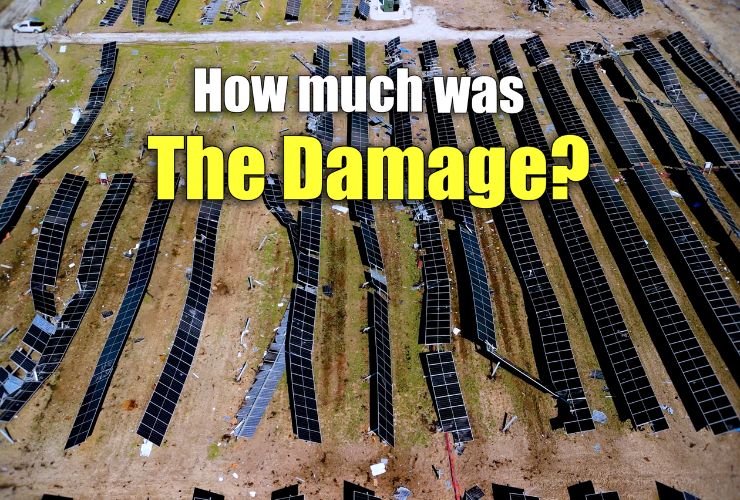
The result: 22 of the 80 tracker rows suffered torsional yielding. The torque tubes the panels sit on twisted “like a pretzel”, some panels ended up almost vertical, and the whole farm had to be isolated and shut down. An emergency crew had to bring the damaged rows down before the next windy day.
To the supplier’s credit, Sam says, it quickly flew an expert in from overseas, who confirmed the damage. That representative also said they had seen the same failure in other states and countries. Sam then asked for the engineering behind the design so both sides’ engineers could find the fault together, and says he met strong resistance.
The rebuild and the rails problem
The damage came to well over half a million dollars, on a job where Sam was still waiting on his final payment. With no help from the supplier, he pulled funds from other projects to fix the site for his client.
He commissioned new engineering in Australia and China, had stronger dampers manufactured, and retrofitted the site. Later winds matched or exceeded the 29 August event, and no further torque tubes twisted.
Then, in November, panels started snapping. Digging through correspondence between the panel maker and the tracker supplier, Sam says the panel load testing had been done with longer mounting rails than the ones he was sent. The rails needed to be about 400mm longer. As he puts it, no rooftop rail maker would accept a 2.3 metre panel overhanging its rails by a metre.
What Sam wants changed
Sam’s central point: panels and inverters must be on the Clean Energy Council’s approved list, but solar trackers are not on any list at all. Solar farms earn LGCs and STCs, which are taxpayer-backed, yet the machines holding up the panels go unchecked.
He is calling for:
- An approved list for solar trackers, with wind-loading and engineering certificates verified by an Australian wind engineer or a reputable testing body.
- Mandatory reporting of structural failures and warranty claims to an industry body, so a failure on one site isn’t repeated quietly on the next.
- Independent legal advice for contractors before signing big supply contracts. Sam’s own dispute has been tied up for 12 months over whether it should be heard in Australia or in arbitration in New York, a clause he admits he missed.
When he took the issue to the Clean Energy Council, the Smart Energy Council and ARENA, Sam says the answer was that they don’t regulate it.
Markus adds a wider risk. Regions like Moree host many solar farms close together, so one major windstorm could take out 20 or 30 at once, a real threat to energy supply. Sam argues three fixes would prevent it: stronger torque tubes, the right number of dampers, and panels fixed to the manufacturer’s specifications.
The personal toll
Sam went from a $10 million-plus contract to rebuilding from scratch. He lost the client he had served for 10 years, and the losses pushed his business into administration. He has made an offer to his creditors, hoping to regain control of the company, and says any money won from the supplier would go to paying them more.
He describes being told, in effect, to be “a nice little puppet”: fix it, stay quiet and move on. He refused, because he believes the industry needs to change. His own video of the damage has passed 15,000 views, and he says engineers have contacted him to say his case is not isolated.
Sam also wants other contractors to know they are not alone. He says many small installers in his position go silent, close up and leave the industry. Markus gently urges him to talk to someone too, rather than carrying a year of stress on adrenaline alone.
Work is coming back. Sam has installed 200 to 300 systems of around 100kW, and past clients are returning as commercial solar and battery demand grows.