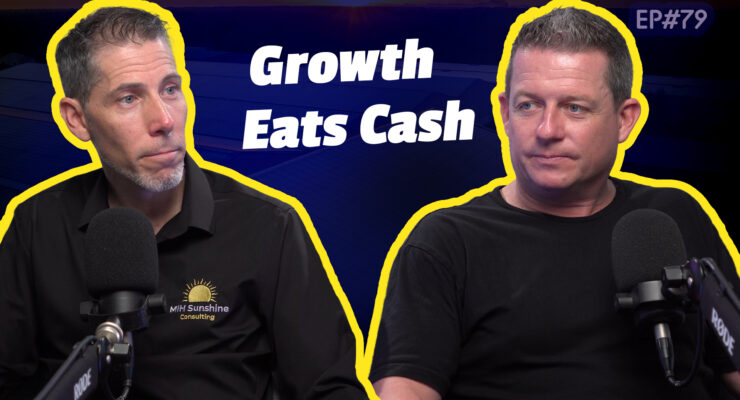
Growth eats cash: How solar businesses fund the battery boom
Battery orders are bigger, rebates take longer to land and wholesaler credit runs out fast. Tirone Khan takes over the host chair and asks Tim Barry from Octet how growing installers and wholesalers keep the cash coming.
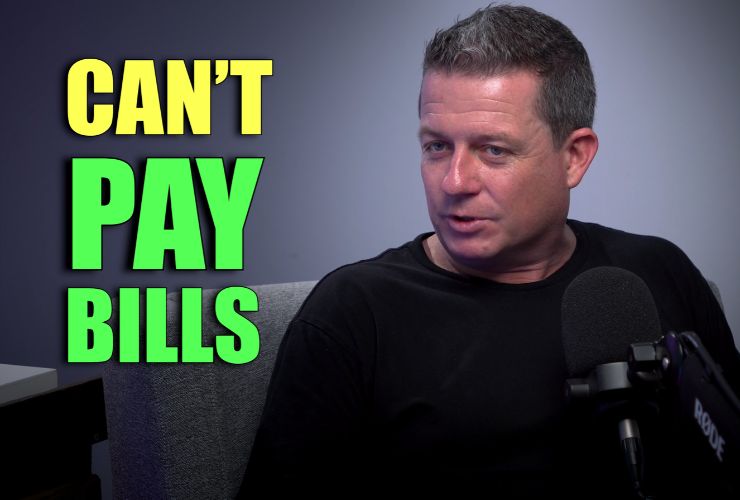
You can’t pay wages with sales.
Tim’s point is simple. When sales double, you buy twice the stock and do twice the installs, but the money from customers comes in later. You can juggle that for a while. The moment you can’t pay wages, it becomes a tipping point.
In Tim’s view, businesses that go under are often less short of profit than short of cash. This episode is about closing that gap before it bites.
The three problems Tim keeps seeing
- Credit limits. You max out a $500,000 limit with one wholesaler, then have to chase credit from a second and a third. Batteries have pushed account needs from around $300,000 towards $1 million.
- Timing. Commercial jobs run on progress claims, and rebate money can take months to come back. The gap between paying for stock and getting paid stretches out.
- Bad debts. Wholesalers carry the risk when an installer falls over or pays late. When the market tightens, that risk goes up.

From $1 million to $4 million every 60 days
Tim’s example: a residential installer had a $1 million limit with a large wholesaler and hit it every two months. Octet approved a $2 million limit on top, then lifted it to $3 million about three months later. The installer went from buying $1 million of stock every 60 days to $4 million.
The wholesaler was paid on day one and gave an invoice discount that, Tim says, covered the whole cost of the facility for the installer. Once Octet pays the wholesaler, nothing is owed to the wholesaler. The debt sits between Octet and the installer.
- 1.5% of invoice value for 30 days
- 2.5% of invoice value for 60 days
- 180 days is the longest funding from invoice date
- 85% of an invoice you can draw on with invoice finance
- $500,000 is the smallest facility Octet looks at
- 3 to 4 weeks to set up, with the paperwork ready
Your questions, answered in the episode
What does it cost? Tim’s rough figures: about 1.5% of the invoice value for 30 days and about 2.5% for 60 days, charged per invoice, a bit like tapping a credit card. After day 60 it switches to daily interest, so paying back on day 70 means ten days of interest. You can go out to 120 days. Invoice finance is a little cheaper.
Who qualifies? Tim’s rule of thumb for trade finance: turnover over $3 million a year, at least three years in business, and profitable in two of the last three years. Octet looks at the balance sheet and how fast cash turns, not property. For invoice finance, a smaller or newer business can qualify if it has good commercial customers and the person behind it knows solar.
Do I need my bank’s permission? Tim says Octet sits behind your bank and doesn’t replace it. For trade finance you generally don’t need permission. For invoice finance the bank signs a deed of priority so Octet can access your invoice book.
Is it limited by credit insurers? No. Tim says Octet is separate from credit insurers and secures the facility against the business itself. In his experience limits are often two to four times what a credit insurer will cover.
Can it help with slow rebate payments? Tim says trade finance can stretch purchasing out to 180 days if you already have 60 days from your supplier, and invoice finance can release up to 85% of an invoice you’ve issued. Tirone notes some installers are moving from net to gross pricing because they can’t carry rebate risk.
What happens when interest rates rise? Tim says Octet’s pricing isn’t pegged to the Reserve Bank. Its funding comes from a big four bank, and the fee changes rarely.
What about credit card points? Tim says Octet works with Velocity and Qantas. Installers can choose how many points to earn per dollar, at a cost added to the fee, and switch it on or off. Wholesalers can also run a points program for their customers through Octet.
Who’s in this episode
- Tirone Khan. Started selling solar from a shop in Glebe around 2008, grew into a large commercial installer with about 100 staff, and now runs his own consultancy helping solar businesses solve the problems he once faced.
- Tim Bowring. Over 25 years in banking, mostly with the major banks. Now at Octet, an Australian family owned trade and working capital financier founded in 2008. Tim says Octet handles about $7 billion of transactions.
- Markus Lambert. Opens the show, then hands Tirone the host chair. He and Tirone were competing for the same solar customers back in 2008.
What to take away
- Put a facility in place before the growth arrives. Tim says an unused facility costs very little, and it is much easier than scrambling in a week you can’t pay wages.
- If you are juggling three wholesalers to get enough credit, a bigger limit with one can mean simpler logistics and better pricing.
- Paying a wholesaler on day one gives you room to ask for an early settlement discount.
- Check what your short term loans really cost. Tim has seen rates in the mid 20s to early 30s per cent.
- To talk to Octet, Tim says to find him on LinkedIn or contact Octet through its website for your state’s manager.
This episode explains how one finance company works, as described by its own representative. It is general information, not financial advice. Talk to your accountant or adviser before taking on finance.