Why The Cheapest Solar Quote Can Cost You More In The Long Run
Choosing a solar array or home battery system is one of the most impactful financial choices a property owner can make. However, falling into the trap of selecting the lowest quote on the market often leads to severe financial regret, equipment failure, and abandoned warranties.
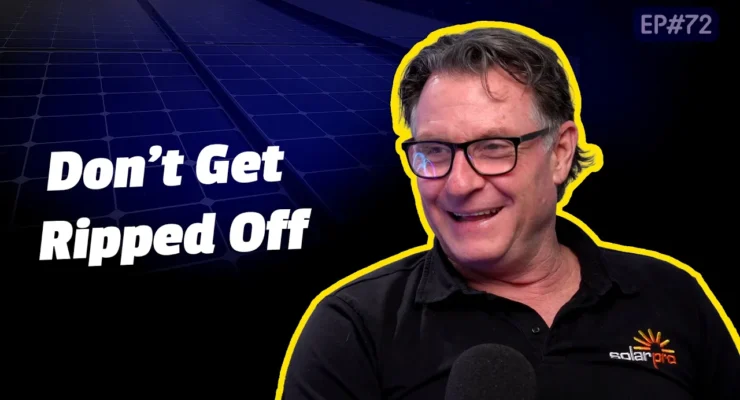
In a detailed discussion on the Your Energy Answers podcast, host Markus sat down with David Veal, founder of Solarpro on Sydney Northern Beaches. With eighteen years of direct industry experience, David breaks down why low-cost solar offers carry hidden risks, how installer shortcuts cause system breakdown, and what homeowners must evaluate to secure true energy independence.
The Hidden Trap of Low-Cost Solar Offers
When an installer offers a price significantly below market average, money is inevitably cut from essential areas. Budget operators frequently cut corners on structural safety, wiring quality, and ongoing support.
Common Shortcuts Used By Budget Installers:
Inadequate Cable Gauges: High-quality installation requires heavy-duty copper wiring such as sixteen-millimetre cable. Budget installers frequently use thinner ten-millimetre cabling to cut costs, then derate the inverter. This causes power losses, increased thermal stress, and potential system trips.
Bypassing Home Warranty Insurance: In New South Wales, residential jobs over twenty thousand dollars legally require home warranty protection. Cheap companies regularly omit this mandatory consumer protection to shave hundreds of dollars off their quote.
Switchboard Omissions: Adding high power loads such as electric vehicle chargers or heavy battery storage demands modern switchboard components like Type A RCBO protection and upgraded main switches. Cheap installers ignore these vital safety upgrades, leaving homeowners exposed to blown service fuses when running heavy appliances.
Subcontractor Chaos: Budget solar companies frequently ship materials directly to a site and hire cheap third-party subbies who have no connection to the business. This often leads to improper mounting hardware usage, such as tile roof hooks forced onto corrugated metal roofs.
Installer Longevity: Avoiding Solar Orphans
Australia has seen thousands of solar businesses fold over the last decade. When a fly-by-night installer goes out of business, their ten-year workmanship warranty becomes completely worthless.
Property owners left with broken systems installed by defunct companies are known in the industry as solar orphans. Reputable companies like Solarpro often receive calls from distressed homeowners seeking repairs. However, taking over orphaned systems presents legal and technical risks because poorly installed wiring and loose connections create hidden fire dangers.
Choosing an established local installer who has operated for nearly two decades guarantees that your warranty will be honoured and technical help remains available when needed.
Battery Storage Myths, Degradation, And Safety
Home battery adoption is accelerating rapidly, yet many property owners harbour misgivings about safety and product lifespan.
Battery Lifespan And Heat Control
Batteries do not rapidly degrade if positioned properly. Solarpro has maintained battery systems for up to eight years with minimal capacity loss. Placing storage units on south-facing walls away from direct sun, keeping them clean, and installing ventilated Colorbond protective shrouds ensures long life and complete operational safety.
Cold Weather Performance
In colder climates or frosty winter conditions, batteries require internal heating elements to maintain optimal capacity. Budget battery units lacking built-in thermal management experience heavy performance drops during cold mornings.

Backup Capabilities
Not every battery installation offers whole-home power during a grid outage. Homeowners must clarify backup expectations prior to signing:
Dedicated Power Point: Basic emergency power from a single socket located near the inverter.
Essential Circuits Backup: Powers critical loads such as refrigeration, lights, internet, and automatic driveway gates.
Whole House Backup: High-capacity backup capable of running heavy loads across all domestic circuits.
Navigating Rebates And Financing Options
Government incentives dramatically improve return on investment timelines for both residential and commercial projects.
NSW Interest Free Electrification Loans
Property owners in New South Wales can access ten-year interest-free loans up to fifteen thousand dollars delivered through approved finance providers like Brighte or Plenti. This state government scheme covers panel arrays, batteries, heat pumps, EV chargers, and mandatory switchboard upgrades.
Commercial Battery Incentives
Recent updates to energy schemes have expanded commercial battery support up to thirty megawatt hours of capacity. For commercial enterprises, upfront support reduces capital expenditure by around forty percent, bringing payback periods down to under four years.
What To Ask Before Accepting A Solar Quote
To ensure you are comparing true quality rather than flawed bids, ask these vital questions before signing any contract:
Is this the absolute final installed price? Confirm whether switchboard upgrades, meter changes, or steep roof fees are fully included.
Who performs the installation? Ensure the work is carried out by accredited in-house electricians rather than anonymous third-party subbies.
What after-sales technical support exists? Verify that the business operates a dedicated local technical support desk rather than relying on remote offshore call centres.
Is home warranty insurance included? Confirm that statutory warranty insurance is issued for all high-value installations.
Investing in high-calibre solar equipment installed by experienced local tradespeople guarantees decades of reliable clean energy, maximum bill reduction, and complete peace of mind.