
Stop Treating Your EV Like a Petrol Car: 10 Mistakes to Avoid
Welcome to the great EV boom. Fuel prices are swinging up and down like a volatile tech stock, and let’s be honest—it is finally time to let “Mr. Dino” have a well-deserved rest. Fossil fuels have had a solid 65-million-year run, but they belong in the history books, not combusting in your engine block.
Today, you can pick up a brand-new electric vehicle packed with incredible tech for a fraction of what they used to cost. But here is the massive problem: people are bringing these high-tech machines home and applying 20th-century logic to a smartphone on wheels.
Before you accidentally pay triple for your electricity or stress your car’s battery, let’s fix it. Here are the 10 rookie EV charging mistakes that catch everyone out—and exactly how to avoid them.
1. Treating Your EV Like a Petrol Car
This is the biggest mental hurdle for new owners. Most people wait until their battery gauge gets dangerously low, then go hunting for a charger like they’re racing to a service station on empty fumes.
The Fix: Shift your mindset. You don’t wait until an EV is empty; you top it up when it suits you—overnight at home or during cheap power windows. Treat your EV like your smartphone, not a fuel tank. The real rookie issue isn’t range anxiety; it’s cost anxiety from charging at the worst, most expensive times.
2. Charging to 100% All the Time
It is tempting to want to “fill it to the brim” every night, but for standard day-to-day driving, constantly pushing your battery to 100% is overkill.
The Fix: For normal weekly routines—work commutes, school runs, and errands—smart charging beats max charging. Save the 100% full charges for proper long-distance road trips where you actually need the extra range.
3. Letting the Battery Get Too Low, Too Often
The exact opposite of mistake number two is running your battery down to zero because you’re stuck in the old habit of “I’ll deal with it when I have to.”
The Fix: Limping into a charging station on 4% only to find it occupied or broken is a recipe for pure stress. Always maintain a buffer to give yourself breathing room and options.

4. Relying Long-Term on a “Granny Charger”
When people see the price of a dedicated wall charger, many think, “Nah, I’ll just use the free trickle cable that plugs into a standard wall socket.” While you can technically survive on one temporarily, there is a massive safety flag dealerships rarely warn you about.
Safety Warning: Standard domestic 10-amp sockets were designed to run a vacuum cleaner or a toaster for 10 minutes, not to have maximum electrical current pulled through them for 18 hours straight. Over time, heat builds up, wiring resists, and plastic melts. Old or loose sockets can easily short-circuit and start a house fire.
The Fix: If you must use a trickle charger, have a licensed electrician inspect that specific circuit first. Long-term, you need a dedicated, hardwired smart charger.
5. Buying a Cheap, “Dumb” Charger
A dealership might throw in a free charger, or you might find a cheap online special and think you’ve scored a bargain. But not all chargers are created equal. Buying an impressive-sounding 11 kW charger is useless if your house supply or car can’t handle it.
The Fix: Don’t buy based on hype. Choose a charger based on your home’s phase supply (single-phase vs. three-phase), your car’s capabilities, and your future solar needs. Investing in an intelligent energy management device—like a Zappi charger, allows the unit to dynamically respond to solar output and household demand rather than just blindly drawing power.
6. Charging at the Wrong Time of Day
Many people buy an EV to escape skyrocketing petrol prices, only to plug it in during peak evening hours and get hit with massive utility bills.
The Fix: Understand your electricity tariff. If you charge overnight on off-peak rates or utilise daytime solar advantages, EV running costs become incredibly cheap.
7. Using Fast Chargers as Your Default
Public fast chargers are brilliant for travel, but they shouldn’t become your lazy weekly habit. Furthermore, sitting at a fast charger trying to nurse the battery all the way to 100% is an expensive waste of time. The last 10% of a charge can take just as long to fill as the previous 50% because the vehicle slows down the charging speed to protect the battery.
The Fix: Let your home setup do the heavy lifting. Use fast public chargers for convenience and road trips, and unplug once you hit 80% to save time and money.
8. Failing to Plan Your Public Charging Route
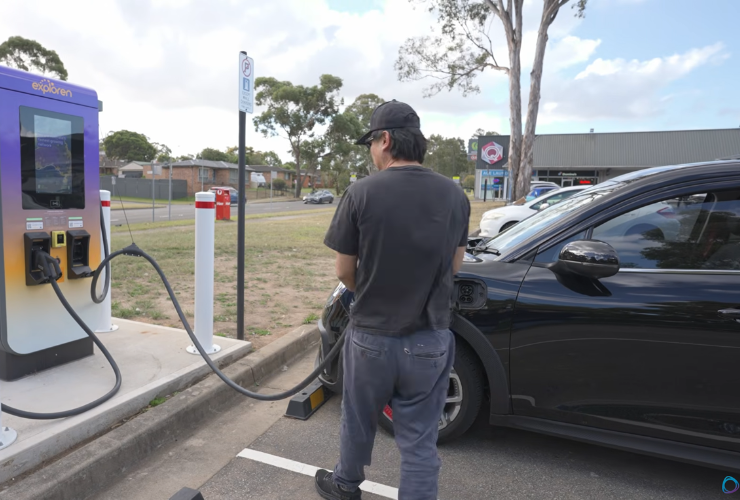
New drivers often assume public charging works exactly like a petrol station: pull up, tap a debit card, and drive away. The reality is fragmented. You will encounter different operators, incompatible apps, broken plugs, and areas with terrible mobile reception right when you need to download a digital wallet.
The Fix: Do the admin before you leave the driveway. Check your route, verify the charging brands, look at recent user reviews to ensure the plugs are operational, and always have a backup station in mind.
9. Accidentally Draining Your Home Battery Into Your EV
This is a massive trap for homes equipped with solar panels and fixed storage batteries. If your setup isn’t integrated correctly, you might come home, plug your car in, and unknowingly flatten your entire home storage battery into the vehicle.
The Fix: Because an EV battery is significantly larger than a standard home battery, it will drain your house storage instantly, forcing you to buy expensive grid power later that night. Use an open, brand-agnostic smart charger that uses monitoring clamps to only route excess solar generation into the car, leaving your home battery untouched.
10. Going Cheap on the Installer
You spend serious money on a high-tech vehicle, only to hire a random contractor to bolt your charger to the wall without checking your property’s electrical infrastructure. This results in poorly configured units that trip your switches.
The Fix: Hire an EV specialist, not just any general electrician. A quality installer doesn’t just mount the box; they check your total household load, set up dynamic load balancing (so your car doesn’t trip the power when the oven and air conditioning are running simultaneously), and properly configure your solar integration.
The Hidden Bonus: Future-Proofing Home Value
A proper EV charging setup is no longer just a personal luxury, it is actively becoming a massive piece of property value. Ensuring your home is EV-ready, correctly wired, and fitted with a smart charger acts as an incredibly attractive feature for future buyers.
The biggest EV rookie mistakes aren’t actually about the cars themselves. They are entirely about behavior, strategy, and setup. Ditch the petrol-car mentality, optimize your home infrastructure, and let Mr. Dino finally retire in peace.