
SNEC Shanghai Solar Insights: What Top Australian Installers Learned About Batteries, Prices, and Tech Trends
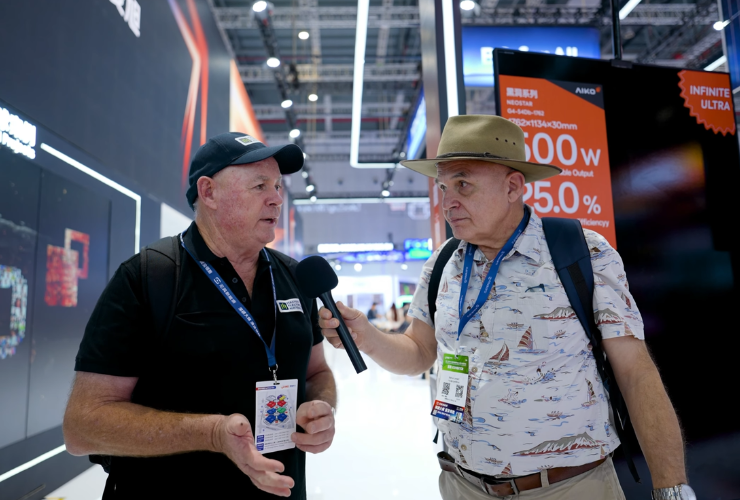
When host Markus from Your Energy Answers stepped into the SNEC PV Power Expo in Shanghai, China, he joined over 500,000 global renewable energy professionals. Among the sea of displays were seasoned Australian solar veterans checking out cutting-edge automation, factory tech, and energy storage innovations.
Compared to local events like All Energy or Smart Energy in Australia, the sheer scale of SNEC is eye-opening. Australian installers Luke from Sunergy Solar and Steve noted that the event felt 16 to 20 times larger than domestic trade shows, showcasing display halls filled with next-generation equipment.
From high-tech automated manufacturing facilities to massive EV adoption across Shanghai streets, the trip provided a clear picture of where renewable technology is heading—and what it means for homeowners back in regional Australia.
The Great Shift: From Solar-Only to Battery Storage in Australia
The Australian solar landscape has undergone a dramatic transformation. For over a decade, homeowners installed solar panels primarily to earn generous grid feed-in tariffs. Today, shrinking feed-in tariffs (often down to just 4 cents per kilowatt-hour in states like NSW) have flipped the economic script.
1. Central Coast & Gosford Market (NSW)
Steve from Coastal Solar Solutions on the NSW Central Coast highlighted how drastically customer demand has pivoted:
50% of installations are combined solar and battery systems.
40% of installations are battery-only retrofits added to existing solar arrays.
Only 10% of installations remain solar-only.
Homeowners are increasingly deciding to store their generated power for nighttime use rather than sending cheap electricity back to the grid.
2. Toowoomba Market (QLD)
In Toowoomba, Queensland, Michael Reiken of Excel Power noted that legacy 44-cent feed-in tariffs are gradually fading out. Homeowners with older 3 kW solar systems are now upgrading to larger 7 kW–10 kW arrays alongside battery storage.
In winter, a battery system often needs a larger solar array to charge fully, pushing more customers toward full system replacements that take advantage of modern monitoring, higher panel efficiencies, and current rebates.
Solar Battery Pricing & Market Dynamics
Despite fluctuations in government rebate structures, battery storage is becoming significantly more affordable for Australian households.
Lithium Cost Reductions: Raw lithium prices dropped by roughly 30%.
Manufacturer Price Adjustments: To stay competitive after federal/state rebate reductions, major battery manufacturers reduced wholesale buy prices by 15% to 20%.
Price Drops on Major Brands: Tesla lowered its Powerwall pricing by $1,500.
Payback Periods: The combination of lower battery prices and reduced solar costs keeps the typical payback period for a complete solar and battery setup around 4 to 6 years in many regions.
Top Battery & Equipment Brands Recommended by Australian Installers
With dozens of battery manufacturers flooding the market, picking a proven brand with local, on-the-ground technical support is critical. Top choices highlighted by experienced installers include:
Tesla Powerwall: Renowned for software support, reliability, and brand backing.
FranklinWH & Enphase: Highly regarded for reliability, off-grid capacity, and microinverter integration.
Sungrow, Sigenergy (Sig), & Fox ESS: Strong options offering flexible scale and competitive feature sets.
Clenergy Racking: Preferred mounting hardware for both rooftop and ground-mount installations due to long-term structural quality and availability of spare parts.
Interestingly, many competing battery brands rely on cell manufacturing from a select few major producers, such as REPT, demonstrating that internal cell technology is heavily standardised across top-tier manufacturers.
Why Local Expertise Matters: Service Over “Cheap & Run”
One recurring warning from industry veterans with 20 to 30+ years of experience is the danger of chasing the absolute lowest price. Cheap systems often come from “fly-by-night” operators who omit long-term after-sales budget and support.
Excel Power (Toowoomba, QLD): Operating for over 33 years, employing in-house technicians and apprentices rather than subcontractors.
Coastal Solar Solutions (Central Coast, NSW): Bringing over 20 years of hands-on solar installation experience to ensure long-term maintenance and warranty backup.
Working with an established local business ensures that when a software update or component repair is needed years down the line, a real technician is available to handle the issue.
New Tech on the Horizon: BIPV and Solar Robotics
Beyond batteries, SNEC highlighted several emerging technological shifts that will soon impact the Australian market:
Building-Integrated Photovoltaics (BIPV): Solar materials directly integrated into structural building materials, creating seamless solar roofs and facades.
Robotic Panel Maintenance: Remote-controlled and autonomous cleaning robots designed for commercial and large residential arrays (20+ panels). These systems simplify maintenance and help maximize system output over time.
Summary Checklist for Australian Homeowners
Evaluate Your Feed-in Tariff: If you are earning low returns for grid export, adding a battery can store that energy for night use.
Match Solar Capacity to Battery Storage: Ensure your roof array is large enough to charge your battery during low-sun winter months.
Choose Tier-1 Brands: Look for established manufacturers with local technical support (e.g., Tesla, Enphase, Sungrow, FranklinWH).
Prioritise Local Installers: Work with licensed, long-standing local installers who use in-house staff and provide guaranteed after-sales support.